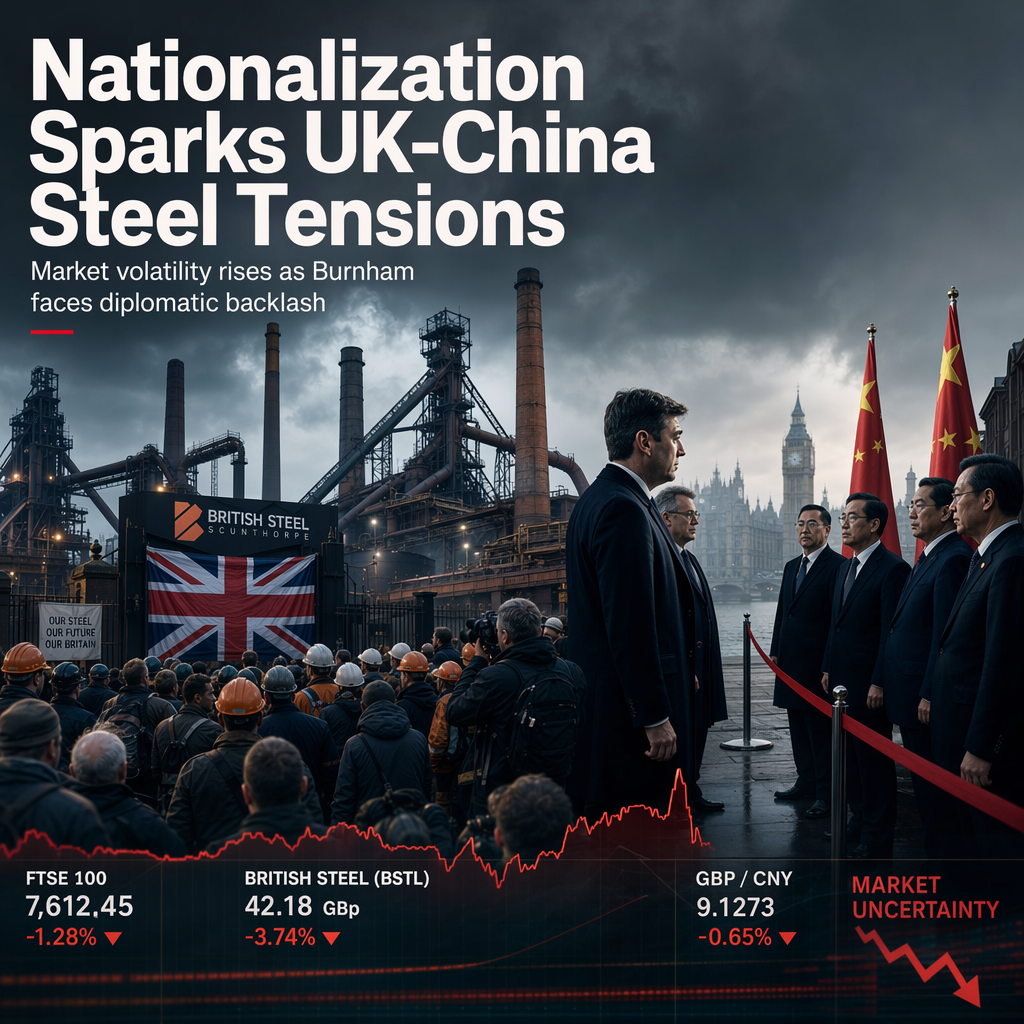
The United Kingdom's new prime minister, Andy Burnham, is facing a significant diplomatic challenge following the government's decision to nationalize British Steel's Scunthorpe plant in northern England. The move was made in March 2025 to 'protect the future of steel production' after Jingye, the Chinese owner of British Steel, indicated plans to shut down the facility, raising concerns about the country's steelmaking capabilities and industrial security [1].
China has strongly condemned the nationalization, labeling it as economic protectionism and warning of possible retaliatory measures against British interests in China. Ministries in Beijing and Jingye have both expressed backlash, intensifying tensions between the two nations [1]. This dispute comes amid broader worries in Westminster about Chinese companies' growing presence in key UK industries, which has heightened concerns over strategic vulnerabilities [1].
Industry analysts attribute the government's intervention to fears over critical supply chains and the need to maintain domestic industrial capacity in the face of global competition. Financial markets are closely monitoring the situation, with analysts warning that prolonged diplomatic tensions could disrupt trade flows between the UK and China, particularly in metals and manufacturing sectors [1]. Although no specific price levels or technical indicators were mentioned, market sentiment has been negatively affected by the uncertainty, and volatility in the broader metals sector is expected to persist until further governmental statements or responses from Beijing are issued [1].
Observers anticipate that the Burnham administration will seek negotiations to mitigate the fallout, but the risk of retaliatory tariffs or restrictions by China remains a concern for UK exporters. The steel dispute highlights the increasing interplay between industrial policy and international diplomacy, underscoring the challenges facing the new UK government in balancing domestic priorities with global relationships [1].
CONCLUSION
The nationalization of British Steel has triggered immediate diplomatic tensions between the UK and China, with potential repercussions for trade and market stability. Market sentiment is cautious, and volatility in metals and manufacturing equities is expected to continue as stakeholders await further developments. The Burnham government faces a delicate task in managing both industrial security and international relations.