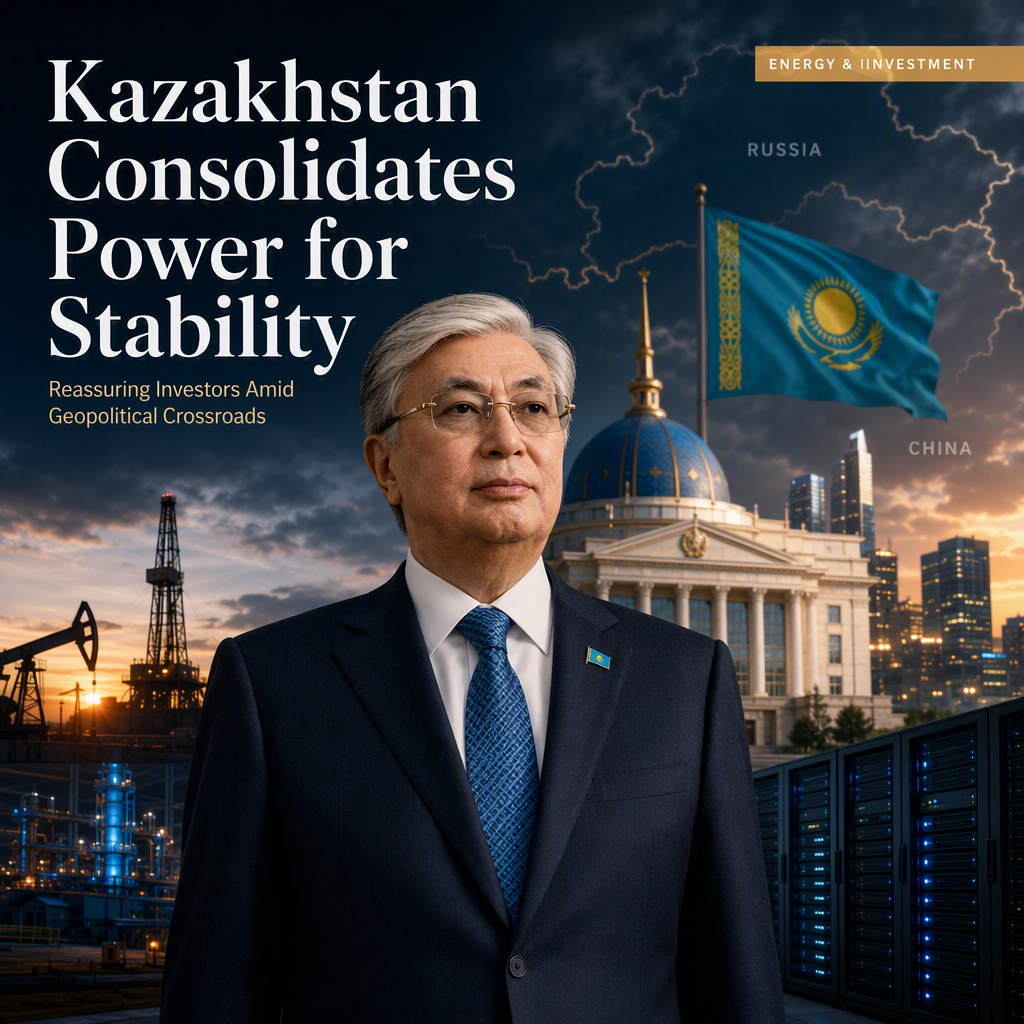
Kazakhstan, recognized as a pivotal geopolitical hedger, is intensifying its pursuit of stability following a snap parliamentary election in which President Kassym-Jomart Tokayev consolidated his authority [1]. The country’s strategic location between China, Russia, and the United States makes its balancing act crucial for regional stability, energy markets, and broader geopolitical dynamics [1]. Tokayev’s centralization of power is interpreted as a move to ensure domestic stability while maintaining Kazakhstan’s multi-vector foreign policy, a stance considered essential for attracting foreign investment, particularly in the energy sector [1].
Kazakhstan is a leading global producer of uranium and a significant exporter of oil and natural gas. Any instability in the country could disrupt international markets and supply chains, underscoring the importance of Tokayev’s efforts to reassure investors [1]. Market analysts have observed that the Kazakh tenge has demonstrated relative resilience despite global economic challenges, and investors are closely monitoring signals of policy continuity in light of regional tensions and shifting alliances [1]. Tokayev’s consolidation is expected to reinforce Kazakhstan’s reliability as a partner for international energy companies and its commitment to existing contracts [1].
A senior Central Asia analyst emphasized Kazakhstan’s unique position, noting that the country must maintain autonomy by balancing relations with Moscow, Beijing, and Western interests. Tokayev’s hedging strategy is seen as a means to preserve autonomy and attract investment, especially as the global energy transition accelerates [1].
In addition to its energy sector, Kazakhstan is actively working to diversify its economy by developing new sectors such as data centers and technology. The government has announced incentives for foreign companies to establish operations in Kazakhstan, aiming to transform the country into a regional hub for digital infrastructure [1]. The effectiveness of these policies will be closely monitored, as Kazakhstan’s stability is viewed as a bellwether for Central Asia [1].
CONCLUSION
Kazakhstan’s consolidation of power under President Tokayev is expected to reassure investors and maintain the country’s status as a reliable energy partner. The government’s efforts to diversify the economy and attract foreign investment signal a commitment to long-term stability. Market participants will continue to watch Kazakhstan’s balancing strategy as a key indicator for regional and global energy markets.