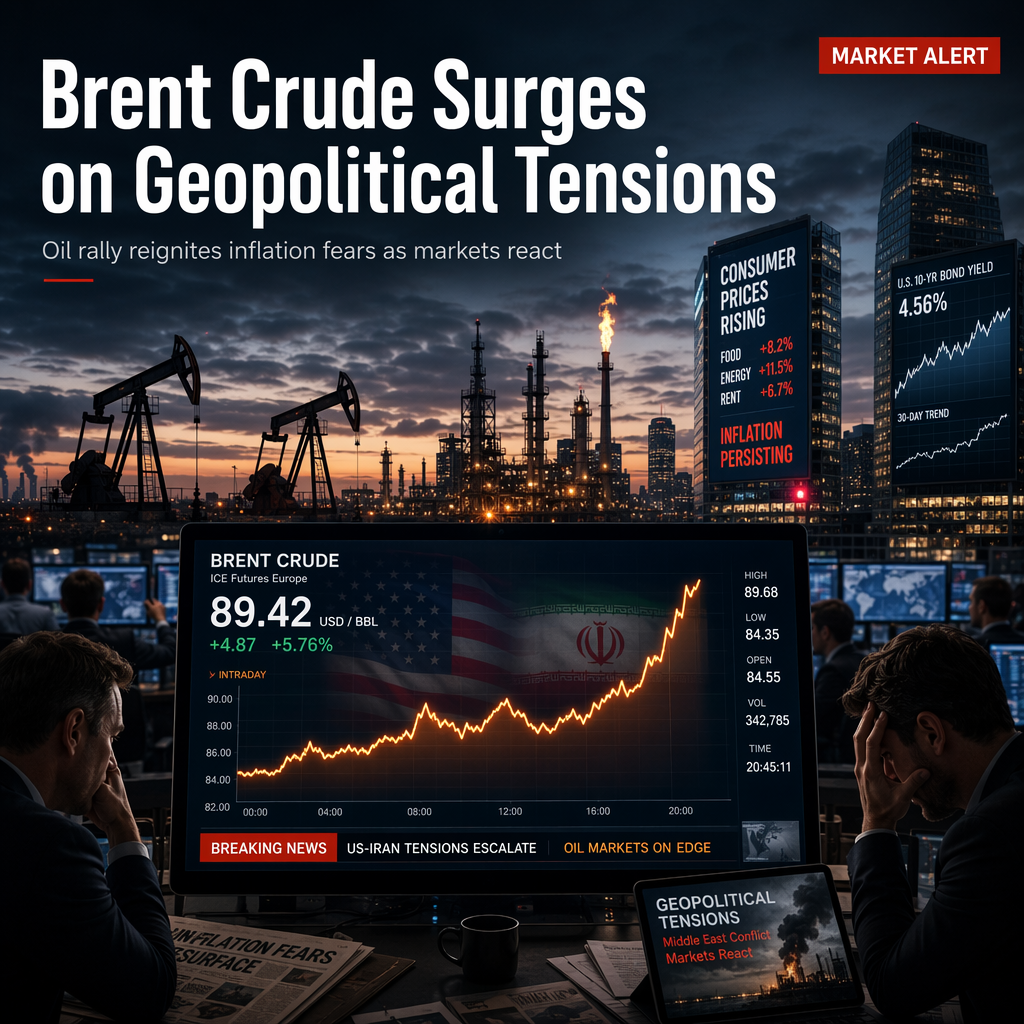
Brent crude oil experienced a significant rebound, posting its largest weekly gain since April as geopolitical tensions between the US and Iran intensified. According to Deutsche Bank strategists, Brent crude prices surged by 15.91% over the week, closing at $88.10 per barrel, with a notable 4.59% increase on Friday alone. The rally continued into the following morning, with Brent rising an additional 2.45% to $90.26 per barrel after a ninth consecutive night of US strikes against Iran [1].
This sharp escalation in oil prices has reignited concerns about persistent inflation, particularly as European natural gas prices also climbed. The front-end European natural gas future jumped 19.95% last week, including a 5.79% rise on Friday, reaching €58.01 per megawatt-hour, its highest level since March [1]. The increase in energy prices has contributed to weaker bond futures, reflecting market apprehension about inflationary pressures [1].
Despite these inflation concerns, US equity futures showed resilience, with S&P contracts up 0.15% and Nasdaq contracts rising 0.47% in early trading [1]. Deutsche Bank also highlighted thematic research exploring the potential for higher oil prices to trigger a broader risk selloff, underscoring the market's sensitivity to ongoing geopolitical developments [1].
CONCLUSION
Brent crude's sharp rise, driven by escalating US-Iran tensions, has heightened inflation fears and impacted bond markets, though US equity futures remain relatively stable. The situation underscores the market's vulnerability to geopolitical shocks and the potential for broader risk-off moves if energy prices continue to climb.