
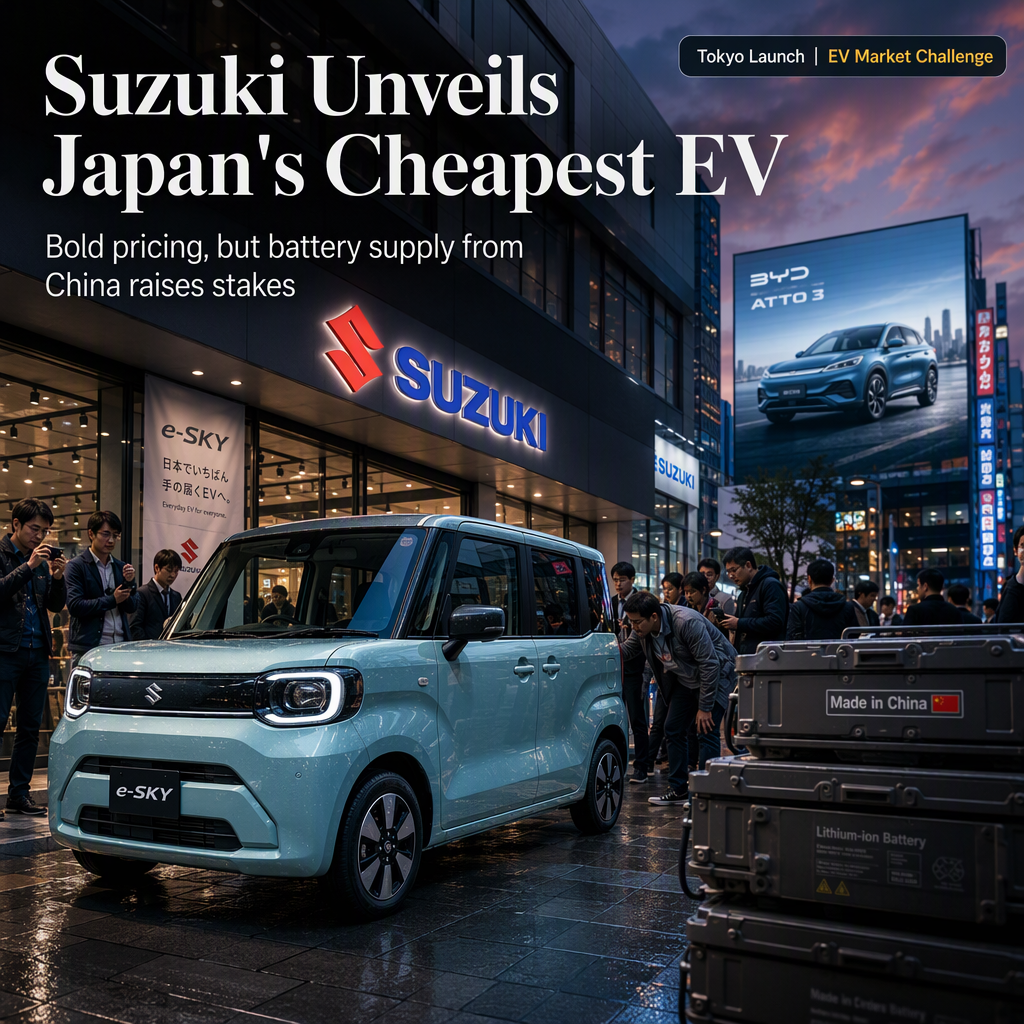
Suzuki Motor has unveiled its new e-SKY kei minicar in Tokyo on October 6, positioning it as the lowest-priced electric vehicle in Japan to date [1]. This aggressive pricing strategy is aimed at countering the growing presence of Chinese automaker BYD, which has gained global market share with affordable EVs [1]. The launch is seen as a direct challenge to Chinese brands that are rapidly expanding in the Japanese market [1].
Despite the competitive price point, Suzuki's move exposes a broader vulnerability for Japanese automakers: their reliance on Chinese-made batteries [1]. Industry analysts warn that this dependence could threaten the stability of Japan's auto manufacturing sector, especially amid geopolitical tensions and potential supply chain disruptions [1]. One analyst commented, "Japanese automakers are increasingly vulnerable due to their reliance on Chinese battery suppliers. This could impact their ability to compete if supply disruptions arise" [1].
Suzuki is not only targeting domestic consumers with the e-SKY but also plans to export the vehicle to European markets as early as 2027, intensifying competition with Chinese and other international brands [1]. The success of the e-SKY will hinge on Suzuki's ability to secure stable battery supplies, in addition to consumer demand and pricing strategy [1].
As Japanese automakers accelerate their push into the EV market, the issue of battery sourcing remains a critical challenge that could shape their competitiveness in both domestic and international markets [1].
CONCLUSION
Suzuki's launch of the e-SKY minicar marks a bold move to defend its market against Chinese EV rivals, but also underscores Japan's strategic vulnerability due to reliance on Chinese batteries. Analysts highlight that stable battery supply will be as crucial as pricing in determining the success of Suzuki and other Japanese automakers in the evolving EV landscape.