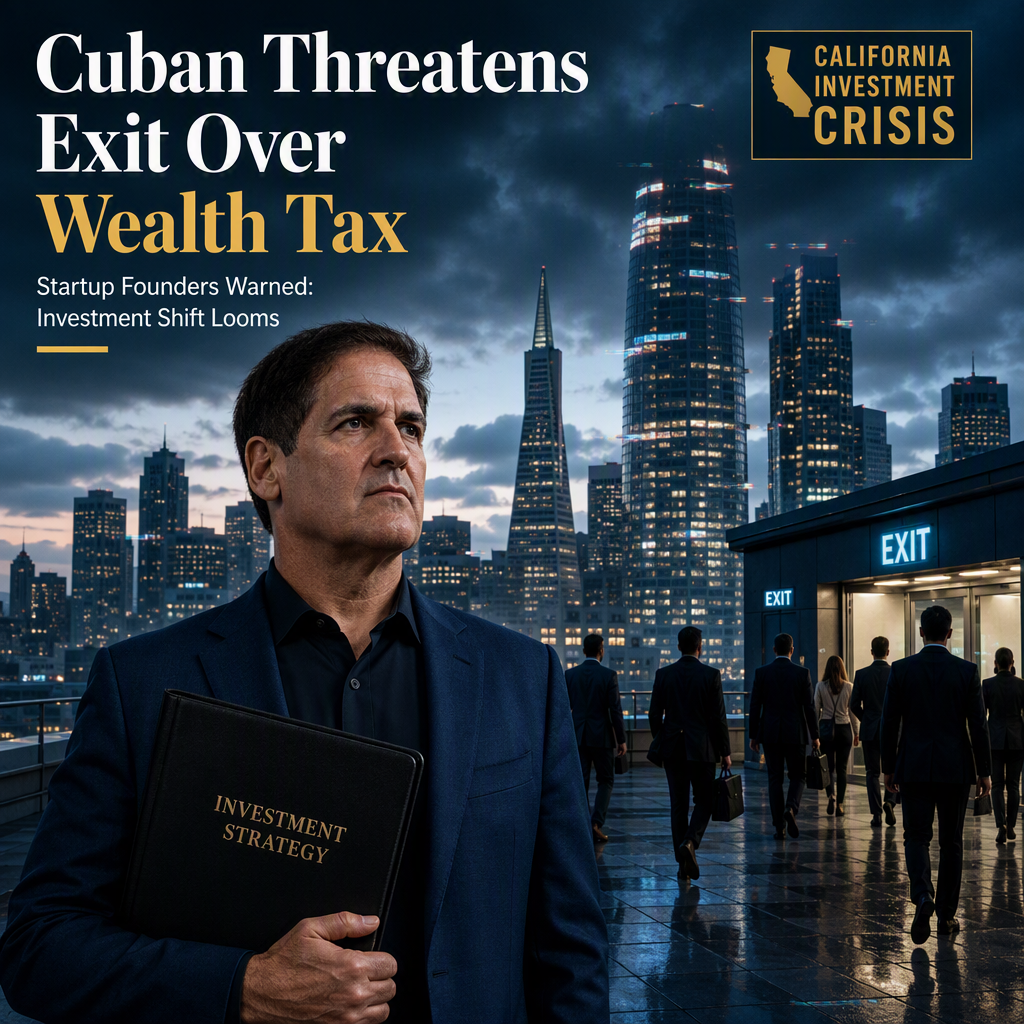
Mark Cuban publicly clashed with Rep. Ro Khanna, D-Calif., over California's Proposition 40, a proposed ballot measure that would impose a one-time 5% wealth tax on residents with more than $1 billion in assets [1]. Cuban criticized Khanna, stating he 'doesn't understand business,' and warned that the tax could drive startup founders and investors out of California [1]. The California Democratic Party has endorsed the measure, but some leaders, including Gov. Gavin Newsom, have expressed opposition [1].
Cuban highlighted the issue of illiquid wealth among startup founders, noting that many are 'cash poor, stock rich,' and may not have the liquid assets needed to pay the proposed tax [1]. He warned that if the measure passes, only 'idiot startup founders' would remain in California, and he would require companies not to be based in California as a prerequisite for his investments [1].
Khanna suggested a workaround for founders whose wealth is tied up in private-company stock: a nonrecourse government loan using pledged shares as collateral, which could be repaid over ten years or result in the government taking possession of the shares if not repaid [1]. Cuban strongly rejected this proposal, arguing it would generate no immediate cash revenue and could ultimately result in California owning shares in private companies if founders defaulted [1].
Khanna countered that the government would still collect the tax from billionaires with liquid assets, but Cuban remained critical of both the tax and the proposed workaround [1].
CONCLUSION
Mark Cuban's vocal opposition to California's proposed billionaire wealth tax underscores concerns about the potential exodus of startup founders and investors from the state. The heated debate highlights significant market implications, with Cuban threatening to shift his investment strategy away from California if the measure passes. The controversy signals uncertainty for California's startup ecosystem and investment climate.