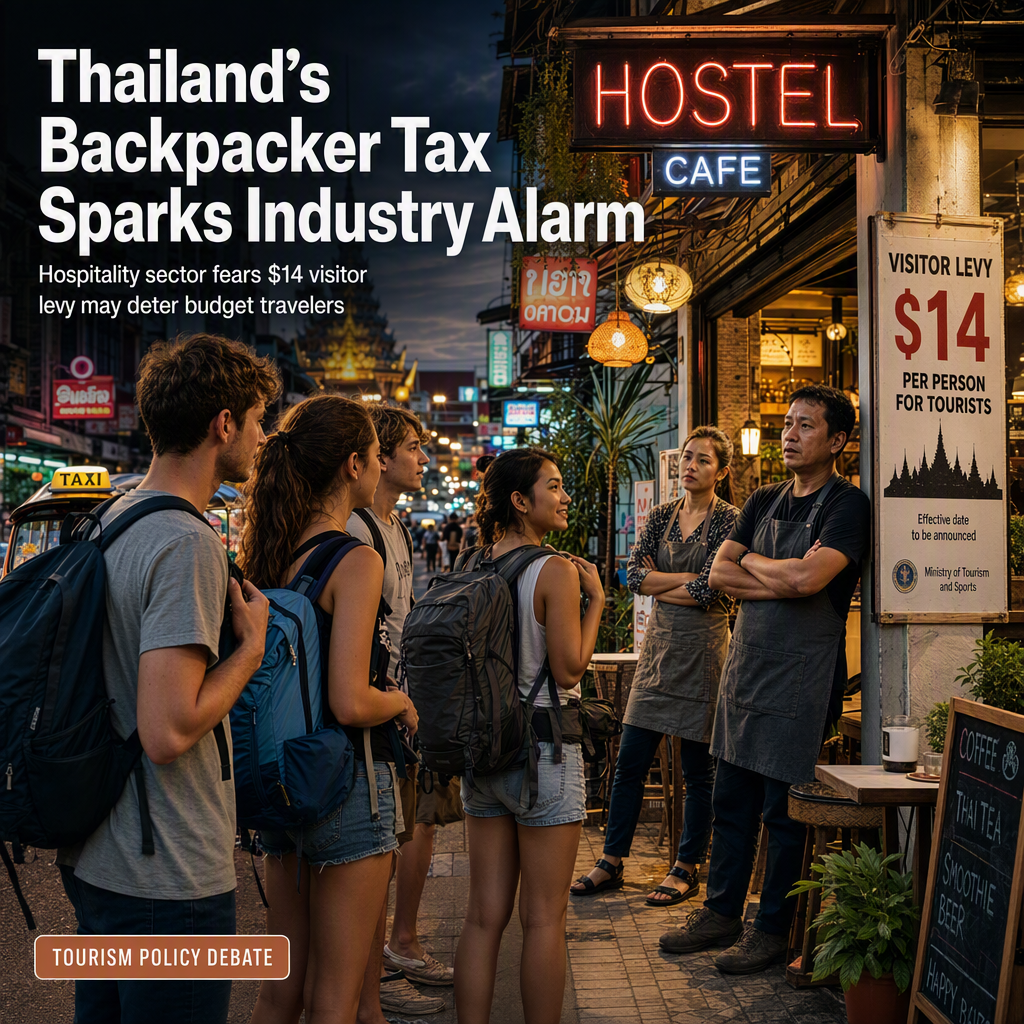
Thailand's government has proposed a new tax scheme that would collect approximately $14 from every inbound tourist, sparking significant concern among local hotels, restaurants, and other businesses within the hospitality sector [1]. Industry representatives argue that this levy could deter price-sensitive travelers, particularly backpackers and budget tourists, who are a vital segment for the country's tourism ecosystem [1].
The proposed visitor levy comes at a time when Thailand is experiencing recent declines in tourist arrivals, with recovery lagging behind other Southeast Asian destinations following the COVID-19 pandemic [1]. Business operators warn that the new tax could further impact an industry still struggling to regain momentum, especially as backpackers are known to stay longer and spend at local businesses, contributing significantly to the hospitality and food industries [1].
A Bangkok hotel manager emphasized the importance of backpackers, stating, "Backpackers are an important group for Thailand’s tourism ecosystem. They stay longer and spend at local businesses, so this kind of tax could push them to other countries in the region" [1]. Industry associations have urged the government to reconsider or modify the plan, warning that the $14 levy could lead to a further drop in arrivals and negatively affect revenues for hotels, restaurants, and related small businesses [1].
While the government aims to raise additional revenue through the proposed tax, business operators stress that the policy could undermine Thailand’s attractiveness among young travelers and those seeking low-cost experiences, potentially shifting tourism flows to neighboring countries [1].
CONCLUSION
The proposed $14 visitor levy has raised alarm among Thailand's hospitality sector, with industry representatives warning of potential declines in backpacker and budget tourist arrivals. Stakeholders are urging the government to reconsider the plan, citing risks to the ongoing recovery of the tourism industry and the broader economy.