
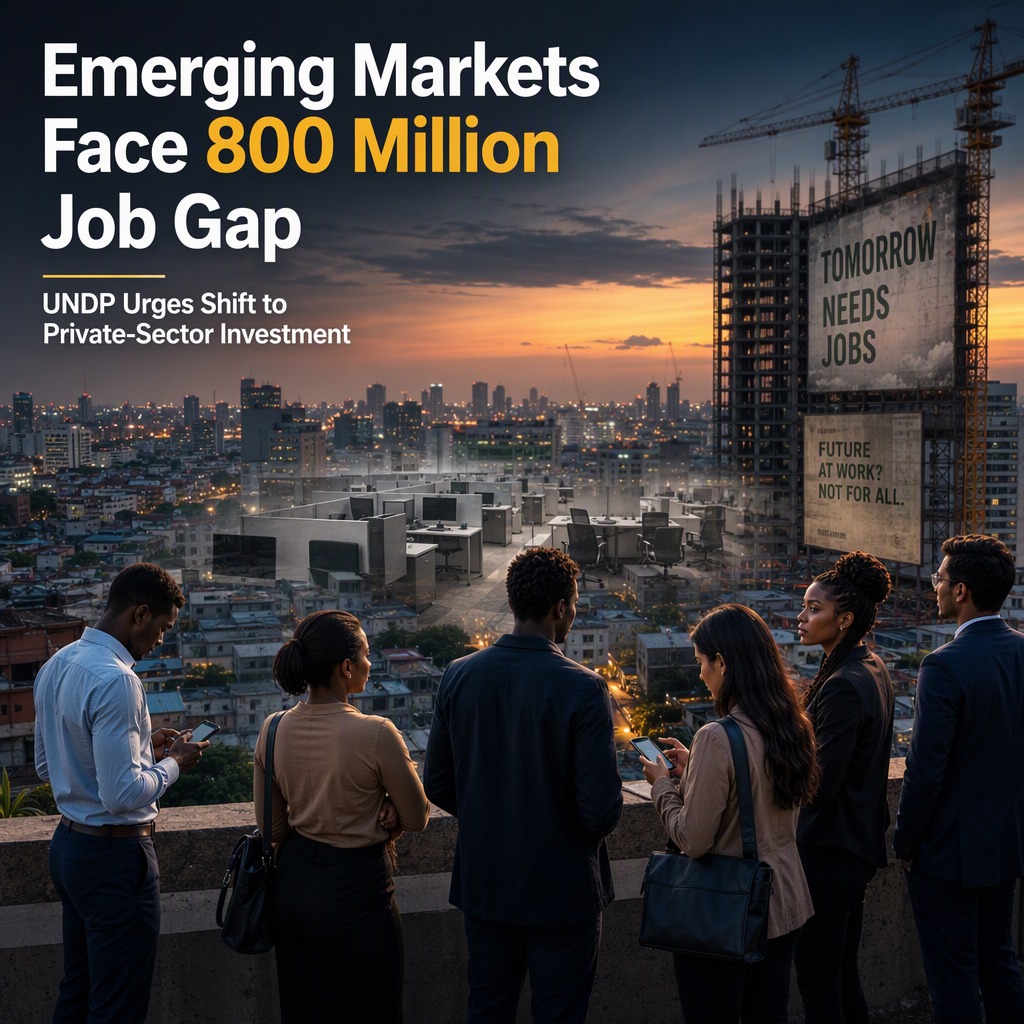
United Nations Development Programme (UNDP) Administrator Alexander De Croo has issued a stark warning regarding the employment outlook in developing countries, projecting a shortfall of 800 million jobs over the next decade. Speaking on the sidelines of the International Monetary Fund and World Bank meetings in Bangkok, De Croo described the looming job deficit as a 'ticking time bomb' for emerging markets, emphasizing the urgent need for action to prevent severe economic and social consequences [1].
De Croo argued that traditional foreign aid will not be sufficient to address the crisis, advocating instead for a shift toward mobilizing private-sector investment. He stated, 'We need to move away from traditional aid models and focus on mobilizing private-sector investment. This is not just about charity, but about sustainable economic growth' [1]. The UNDP chief highlighted the importance of capital markets and called for policies that attract foreign direct investment and foster entrepreneurship, particularly in sectors such as manufacturing, technology, and services [1].
The potential consequences of failing to address the job shortage include increased poverty, social unrest, and instability in developing economies. De Croo suggested that blending finance from international development institutions with private sector capital, as well as forming public-private partnerships, could unlock new opportunities for job creation [1].
While no specific market price levels or technical indicators were discussed, the overall sentiment conveyed is one of urgency and concern, with a clear call for structural reforms and investment to avert a global economic crisis stemming from the projected jobs deficit [1].
CONCLUSION
The UNDP's warning underscores the critical need for emerging markets to transition from reliance on aid to fostering private-sector investment and public-private partnerships. Without urgent reforms and capital mobilization, the projected 800 million job shortfall could have severe repercussions for global economic stability.