
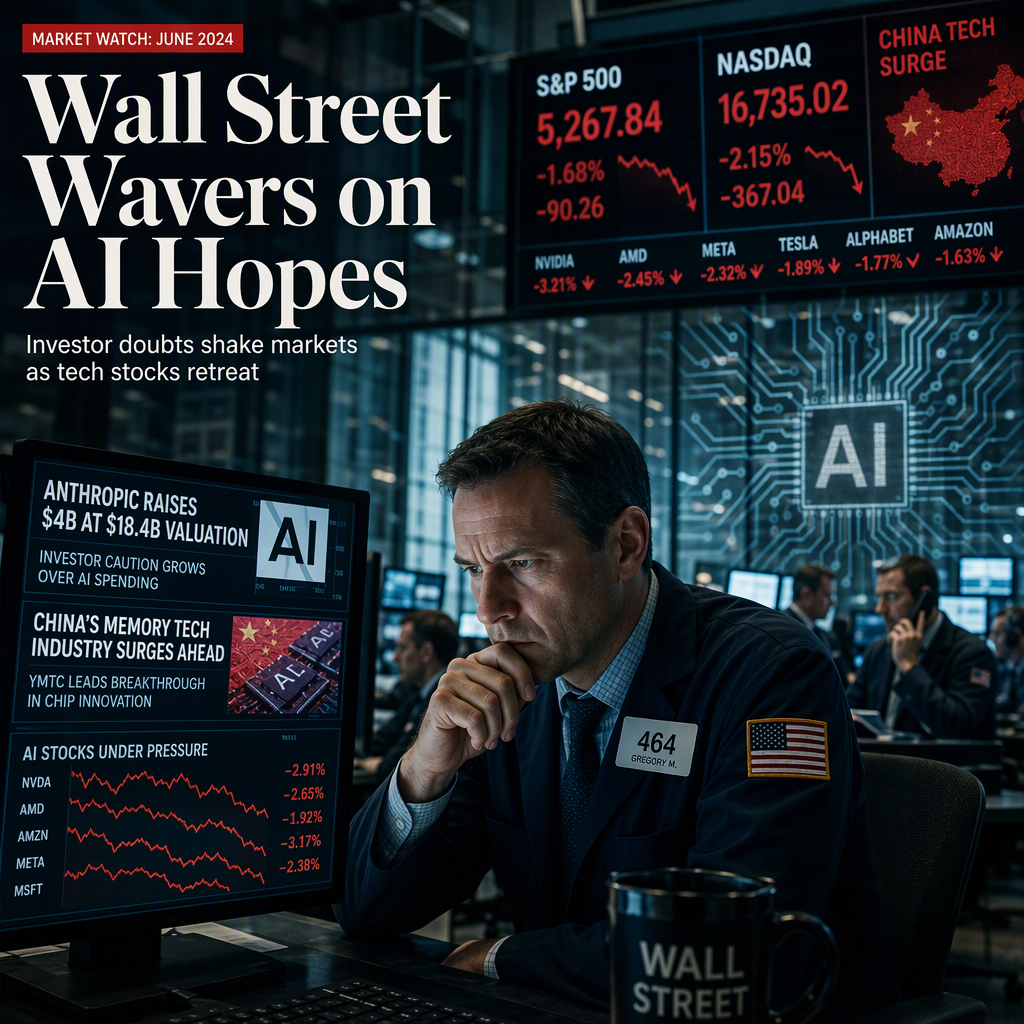
U.S. stocks have begun to show signs of weakness just one week after reaching new all-time highs, as investors express growing concerns about the returns on the trillions of dollars invested in artificial intelligence (AI) infrastructure [1]. As of Thursday morning, the S&P 500 had declined by more than 1% from its record high the previous week, while the Nasdaq had fallen approximately 4% below its recent peak [1].
A key factor driving the market downturn is the slowdown in quarterly revenue growth at Anthropic, a major AI company. Despite being profitable and generating nearly $17 billion in revenue, the company’s growth has decelerated, raising questions about the sustainability of AI-driven gains. Anthropic is expected to be valued at over $1 trillion when it goes public [1].
Additional concerns have emerged regarding competition from China-based memory technology companies, which could potentially undermine or surpass their Western counterparts. There are fears that Chinese mass production of memory chips could lead to a market oversupply, despite the current global shortage of processing chips due to the AI data center buildout [1].
Investor anxiety has also led to a sell-off in bonds backing some data centers, primarily due to doubts that AI revenues will be sufficient to cover the substantial borrowing used to finance these projects [1]. In response to these developments, economist Ed Yardeni lowered his year-end target for the S&P 500 to 7,900 from 8,400, citing increased investor caution about the AI sector, as well as ongoing concerns about inflation and higher interest rates. The S&P 500 currently stands at around 7,600 [1].
Despite these headwinds, nearly half of all U.S. economic growth this year is attributed to tech-related spending, which has buoyed the stock market even as many other sectors have seen sharp declines in share prices. This tech-driven wealth effect has supported steady consumer spending and job market resilience, although lower- and middle-income households continue to face challenges from persistent inflation and declining earnings. Wells Fargo CEO Charlie Scharf noted that while risks such as higher interest rates and inflation persist, strong investments in AI infrastructure, high employment, and wage growth are currently outweighing these risks [1].
CONCLUSION
The U.S. stock market is experiencing notable pressure as doubts about the profitability and sustainability of AI investments intensify. While tech spending continues to drive economic growth and support consumer activity, investor caution is rising amid concerns over slowing AI revenue growth, competition from China, and macroeconomic risks. Market sentiment has turned more cautious, with analysts lowering expectations for year-end performance.