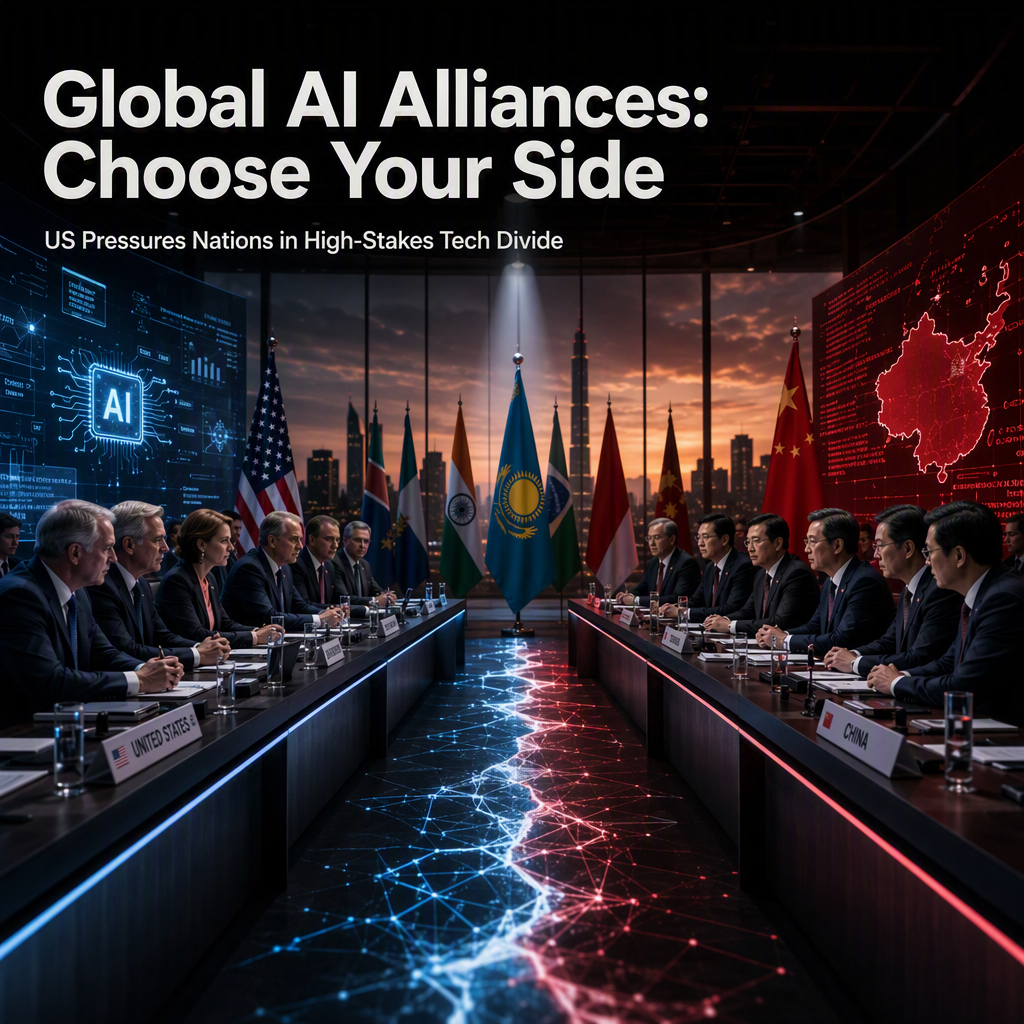
The United States is intensifying its strategy to align global artificial intelligence (AI) development with its interests, according to Rabobank’s Senior Macro Strategist Bas van Geffen. Washington is extending its Pax Silica framework, which was initially designed to secure access to critical resources and strengthen semiconductor supply lines, into the AI sector. The US is now preparing a carrot-and-stick policy that would force countries to choose between joining its AI coalition or aligning with China’s rival alliance. Countries that sign agreements with Beijing could face the risk of being cut off from US AI technologies and research [1].
The report highlights that several countries have already joined the US-led agreement, though it remains non-binding. In response, China has established its own competing alliance. Kazakhstan is noted as a unique case, as it is effectively a signatory to both the US and Chinese frameworks. This dual participation is a concern for Washington, particularly because Kazakhstan possesses significant reserves of critical minerals essential for AI and semiconductor development [1].
The US aims to prevent its rivals from accessing its frontier AI models and research, and may soon take more direct action. The report suggests that the Trump administration could send letters to allies, urging them to formally commit to the US side or risk losing access to American technologies. This development underscores the growing importance of 'gross domestic compute'—a measure of a country's computational capacity—as a new pillar of strategic autonomy and global influence [1].
CONCLUSION
The US is escalating its efforts to shape global AI alliances, pressuring countries to align with its coalition or face technological exclusion. This policy shift highlights the strategic significance of AI and computational resources in international relations, with potential implications for global technology supply chains and geopolitical alignments.