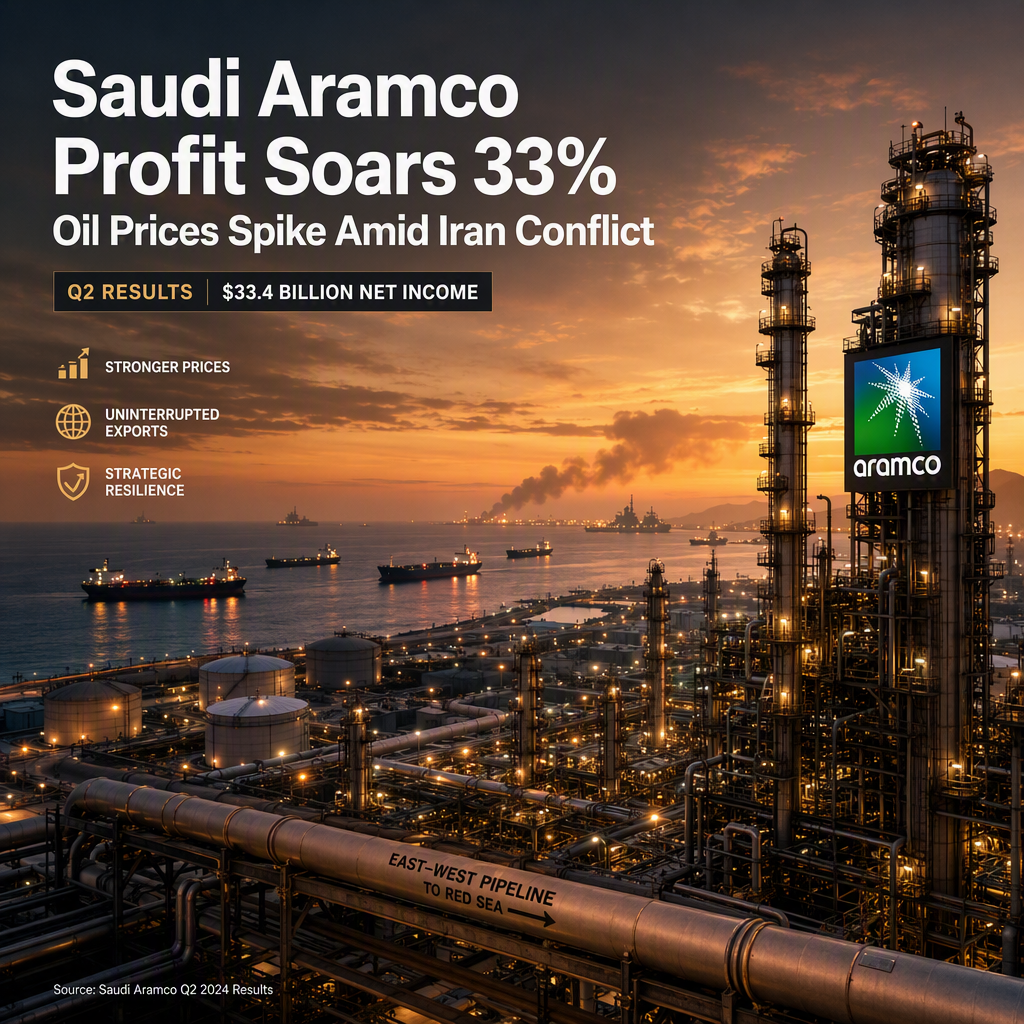
Saudi Aramco reported a significant increase in second-quarter profit, with adjusted net income reaching 125.2 billion Saudi riyal ($33.4 billion) for the April to June period, marking a 33% year-on-year rise and surpassing analyst expectations of $31.59 billion [1]. This surge in profit was attributed to higher prices of refined and chemical products and crude oil, driven by the ongoing Iran war, which has caused severe disruptions in the Strait of Hormuz and heightened regional tensions involving countries such as Iraq and Egypt [1].
To mitigate the impact of these disruptions, Aramco leveraged its 1,200-kilometer East-West pipeline to the Red Sea, allowing the company to bypass the Strait of Hormuz and maintain exports at a maximum capacity of 7 million barrels per day [1]. The company also reported cash flow from operating activities of $25.4 billion in the second quarter and a gearing ratio of 6.2% at the end of June, up from 4.8% at the end of the first quarter [1].
Aramco's board announced a second-quarter base dividend of $21.9 billion to be paid over the next three months [1]. The company noted that while higher prices boosted revenue, this was partially offset by lower volumes sold of crude oil and refined and chemical products [1]. President and CEO Amin H. Nasser emphasized Aramco's ability to sustain production and exports despite the challenging regional environment, citing the company's diverse asset base and strategic infrastructure [1].
The broader market context saw oil supermajors reporting strong quarterly profits due to elevated fossil fuel prices amid the conflict. In the U.S., President Donald Trump criticized domestic oil majors Exxon Mobil and Chevron for profiting from higher fuel prices, calling for lower prices at the pump and stating, "They're making too much money based on a shortage" [1].
CONCLUSION
Saudi Aramco's robust Q2 results underscore the company's resilience and strategic agility in navigating geopolitical disruptions, with profits and cash flow surging on the back of higher oil prices. The market impact is high, as Aramco's performance reflects broader trends among oil supermajors benefiting from the ongoing Middle East conflict and supply constraints.