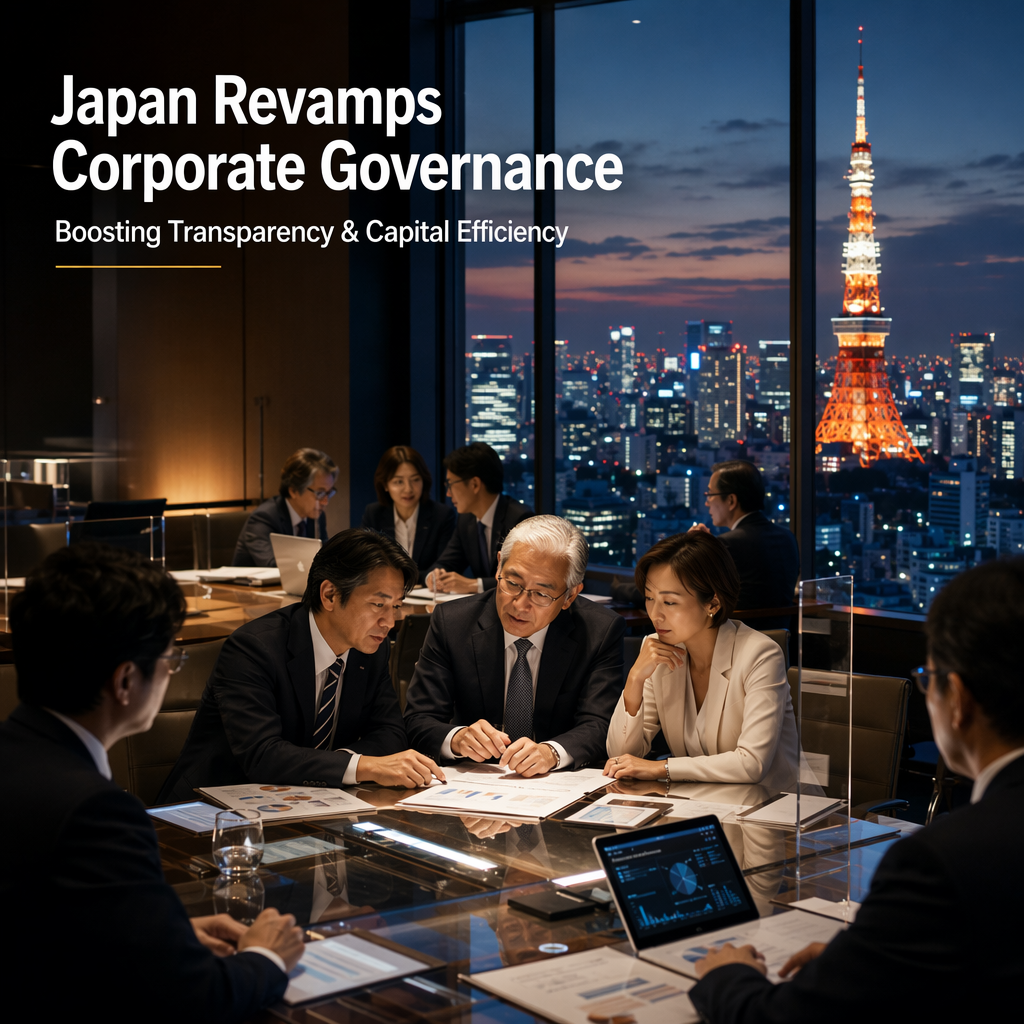
Japan released an updated version of its Corporate Governance Code on Tuesday, marking a significant step in the country's growth strategy and efforts to enhance the value of listed companies [1]. The revised code introduces several key measures aimed at improving transparency, accountability, and capital efficiency among Japanese corporations [1].
One of the main changes is the encouragement for companies to appoint more independent outside directors, which is intended to strengthen board oversight and ensure more objective decision-making [1]. The code also places a strong emphasis on raising return on equity (ROE) and other capital efficiency metrics, directly addressing longstanding criticism from global investors regarding Japanese companies' tendency to retain excessive cash and underutilize capital [1].
Additionally, the revised code calls for improved disclosure practices, requiring companies to provide more detailed and timely information on business strategies, capital allocation policies, and sustainability initiatives to shareholders [1]. Companies are also urged to regularly review and explain the rationale behind cross-shareholdings, a practice that has faced criticism for reducing accountability and entrenching management [1]. Furthermore, the code highlights the importance of board diversity and succession planning, asking companies to set and disclose clear policies in these areas [1].
Authorities and market participants view these revisions as a cornerstone of Japan’s ongoing efforts to attract global investors and stimulate sustainable economic growth. Listed companies are expected to adapt their governance practices in line with the new code, with the ultimate goal of boosting corporate value and improving market sentiment [1].
CONCLUSION
Japan's revised Corporate Governance Code introduces robust measures to enhance transparency, accountability, and capital efficiency among listed companies. These changes are expected to attract global investors and support sustainable economic growth, signaling a positive shift in Japan's corporate landscape.