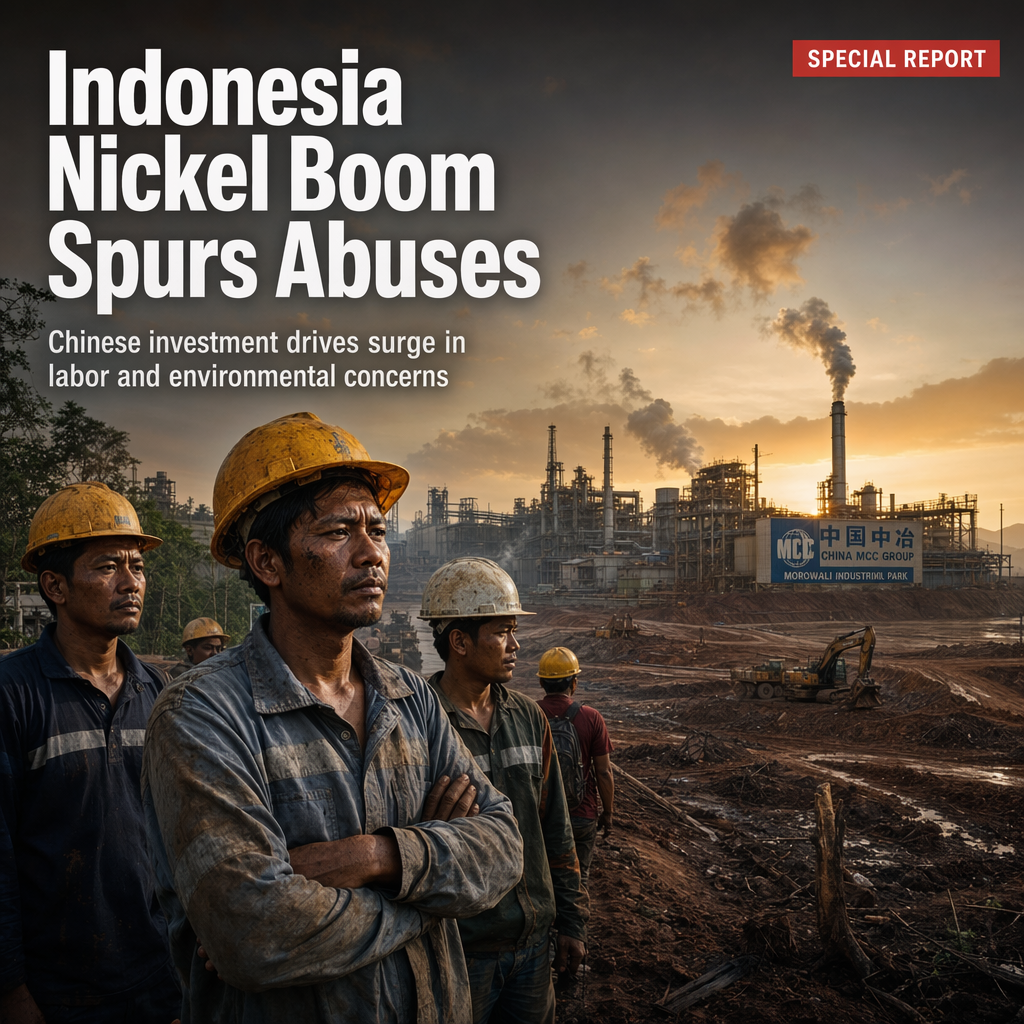
A new report highlights a significant rise in alleged human rights and environmental abuses linked to China's critical minerals supply chains, with Indonesia recording more incidents than any other country due to its rapidly expanding nickel sector [1]. The report, released Wednesday, points to Indonesia's nickel boom as a primary driver of these allegations, particularly in the Morowali mining and processing hub in Central Sulawesi province, where workers have been affected by unsafe conditions and labor disputes as the sector grows to meet global battery material demand [1].
Indonesia has now surpassed countries such as Congo and Myanmar in the number of recorded abuses associated with the mining and processing of critical minerals, especially nickel, which is essential for electric vehicle batteries and other green technologies [1]. The sharp increase in nickel production is attributed largely to Chinese investment and demand, resulting in reported environmental violations and labor issues [1].
Analysts warn that policy uncertainty in Indonesia, combined with ongoing global conflicts such as the war in Iran, is expected to contribute to a nickel supply deficit, increasing volatility in global commodities markets [1]. The rising demand for critical minerals—including nickel, tin, and rare earths—is also impacting prices. For instance, rare-earth costs have surged over 20% for Japanese firms, and tin demand for AI servers is projected to triple by 2030, with industry analysts cautioning that unresolved environmental and human rights issues in supplier countries could exacerbate supply pressures [1].
The report urges greater scrutiny of supply chains and stronger enforcement of environmental and labor standards, especially as Indonesia continues to attract foreign investment into its mineral processing industries [1].
CONCLUSION
Indonesia's rapid nickel sector expansion, fueled by Chinese investment, has led to a surge in reported human rights and environmental abuses, raising concerns about supply chain integrity and market volatility. Analysts anticipate ongoing supply deficits and price pressures in critical minerals if these issues remain unaddressed. The report calls for stricter oversight and standards enforcement to mitigate risks as global demand continues to rise.