
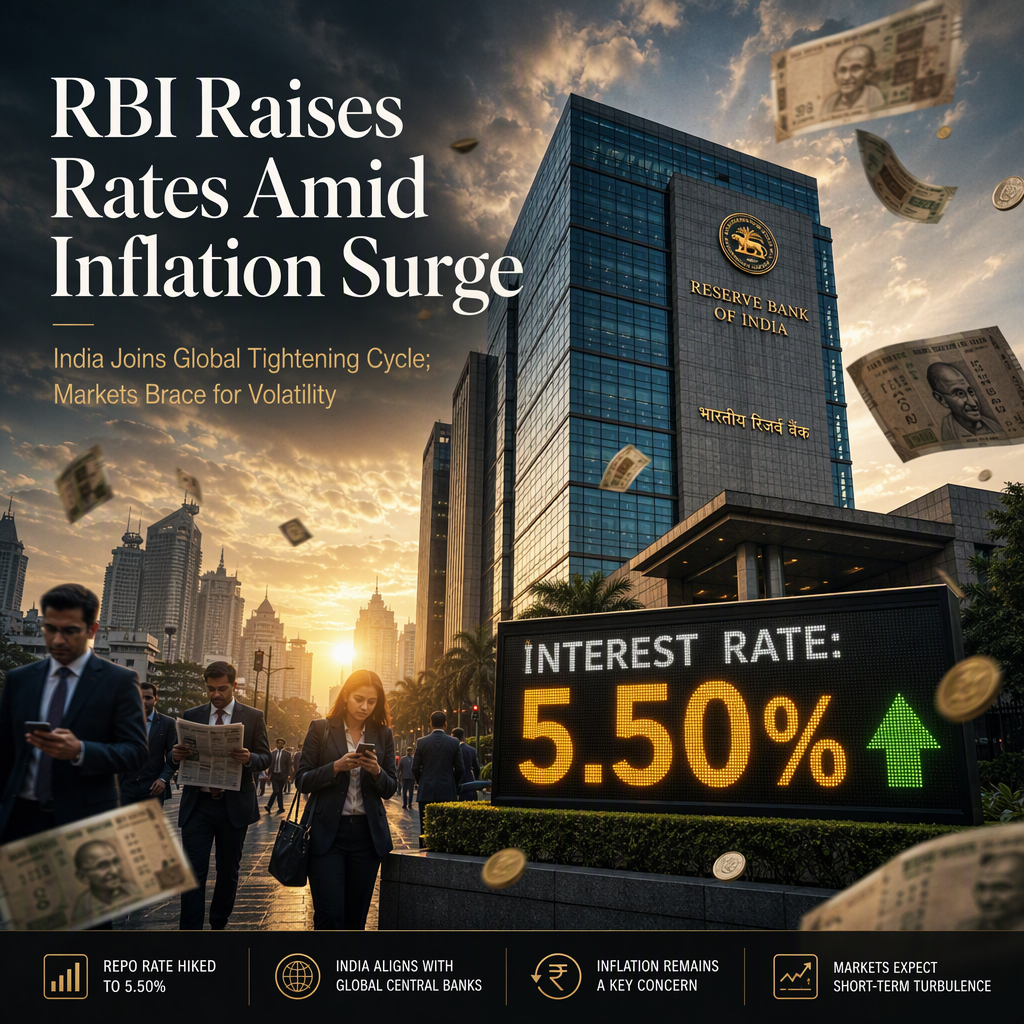
The Reserve Bank of India (RBI) raised its key interest rate by 25 basis points to 5.50% on Wednesday, marking its first rate hike since February 2023 as inflation continues to accelerate beyond the central bank's target level [1]. This move signals a significant shift in the RBI’s policy stance, transitioning from a focus on supporting economic growth to prioritizing the containment of inflation, and brings India in line with other major central banks that have recently tightened monetary policy [1].
Prior to this decision, the RBI had refrained from raising rates in 2026, even as central banks in Japan, Indonesia, and the Philippines implemented hikes, citing the need to spur economic growth [1]. The latest rate increase comes amid mounting concerns that inflation has exceeded the RBI’s target range, prompting the central bank to act in order to rein in price pressures [1].
Financial analysts suggest that the 25 basis point hike to 5.50% could mark the beginning of a more hawkish cycle for the RBI, as persistent inflation and global rate tightening exert pressure on India’s monetary authorities [1]. Market participants are closely monitoring the RBI for further guidance on future rate movements and accompanying statements regarding the inflation outlook and economic growth [1].
Traders noted that the rate hike may provide some support to the Indian rupee, which has experienced volatility due to rising oil prices and global geopolitical risks [1]. Technical analysts observed that the move could establish a new support level for the rupee around recent lows, with resistance likely at earlier highs if inflation persists and further hikes are anticipated [1]. Market observers expect continued volatility in response to central bank actions and global developments [1].
CONCLUSION
The RBI’s decision to raise its key interest rate reflects a shift toward combating inflation, aligning with global central bank trends. While the move may stabilize the rupee, market participants anticipate ongoing volatility and are watching for further guidance from the RBI on future policy direction.