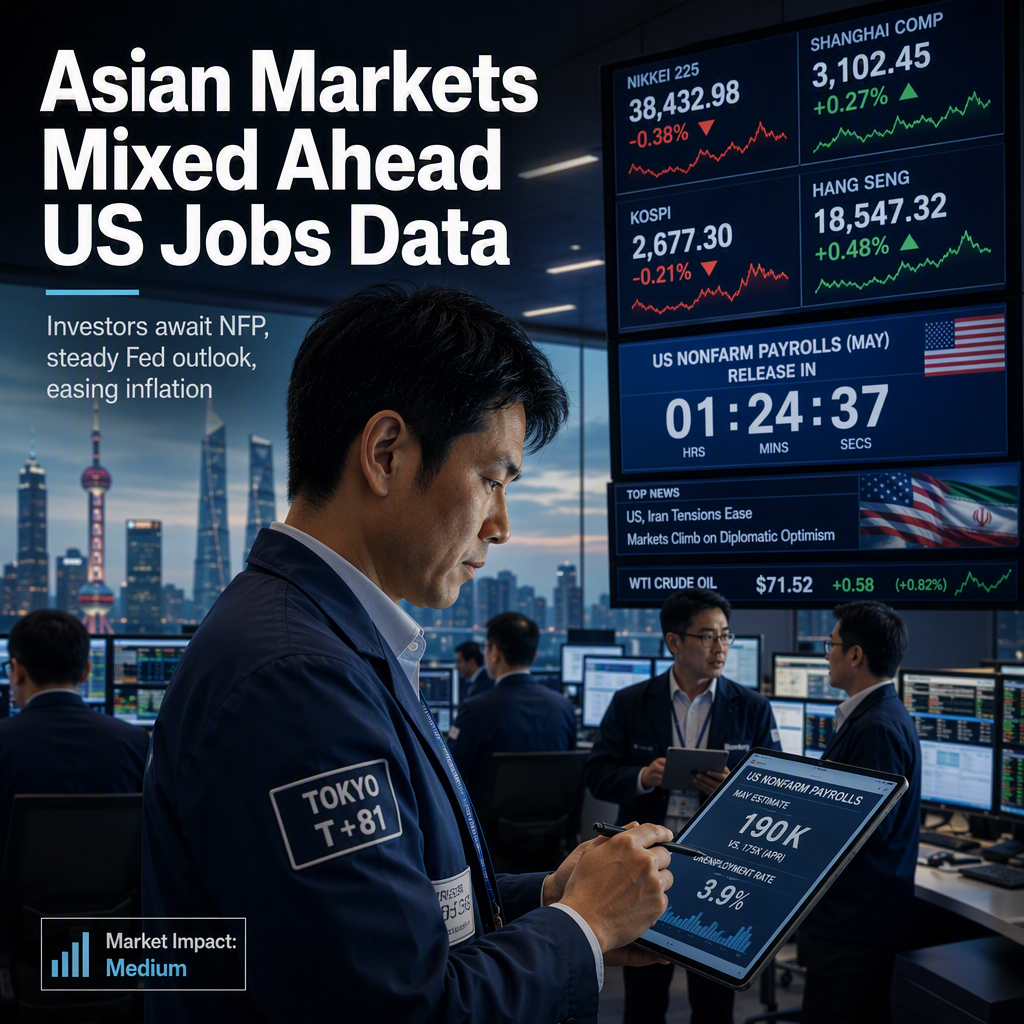
Asian stock markets exhibited a mixed trend as investors shifted their attention to the upcoming United States Nonfarm Payrolls (NFP) data for August, scheduled for release on Friday [1]. At the time of reporting, the Nikkei 225 was slightly down near 64,250, Shanghai traded 0.2% higher at approximately 3,450, KOSPI rose 0.3% to around 6,585, and Hang Seng declined 0.3% to near 25,230 [1].
TD Securities forecasts a modest rebound in August NFP, projecting an increase of 95,000 jobs after a decline of 23,000 in July [1]. The firm expects the unemployment rate to remain steady at 4.1%, with balanced risks, and notes that even a stronger-than-expected employment report is unlikely to significantly change the Federal Reserve's policy outlook. TD Securities states, "a hawkish employment report will reaffirm the Fed's attention on inflation, but it will be unlikely to push the Committee towards hikes" [1].
New York Fed Bank President John Williams commented that inflation continues to ease as the impact of tariffs fades, but cautioned that higher energy prices have not yet affected other services [1]. Meanwhile, the ADP Employment Change data for August showed private employers hired 38,000 jobs, which was below both the estimate of 47,000 and the previous figure of 46,000 [1].
On the geopolitical front, concerns about further military aggression between the US and Iran have lessened after President Donald Trump remarked that he does not expect renewed fighting to last "too long," according to Reuters [1]. This development has contributed to slight selling pressure in oil prices, with WTI struggling to surpass the $90.00 mark [1].
CONCLUSION
Asian markets are showing mixed performance as investors await key US employment data, with expectations of a modest NFP rebound and steady unemployment. Despite easing inflation and diminished geopolitical tensions, weaker ADP job numbers and oil price pressures are contributing to cautious sentiment. The overall market impact is medium, with no major shifts anticipated in Federal Reserve policy based on current forecasts.