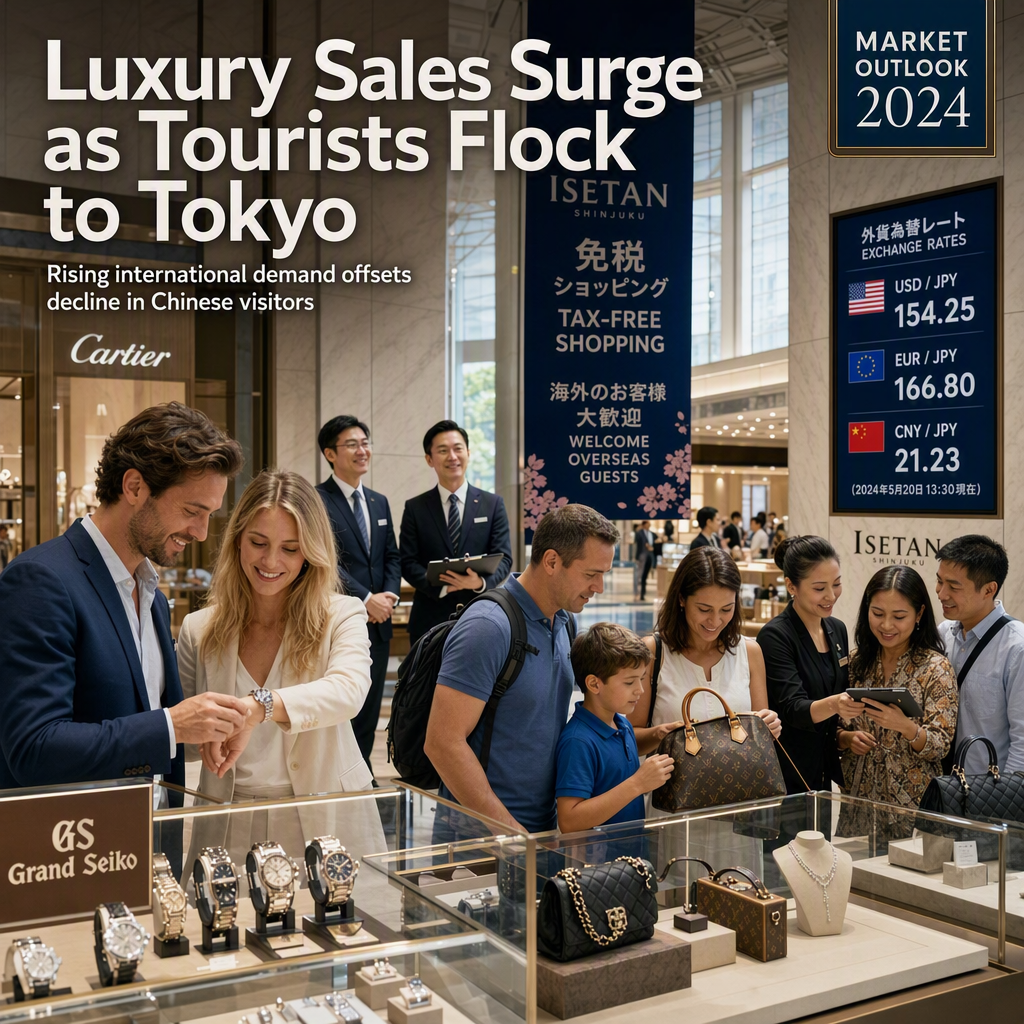
Nearly 40% of department stores in Japan expect sales from international tourists to increase during the current fiscal year, according to retail surveys cited in the article [1]. This optimism is driven by a recovery in inbound traffic, with visitors from Europe, the U.S., and Southeast Asia helping to offset a decline in travelers from China [1]. The depreciation of the yen has made luxury goods more attractive to foreign shoppers, particularly at flagship locations such as Isetan's Shinjuku store in Tokyo [1].
Store managers report positive market sentiment, anticipating sustained growth in tourist spending despite the drop in Chinese visitor numbers [1]. The shift in inbound traffic patterns is being closely monitored, as European, American, and Southeast Asian tourists increasingly account for a larger share of department store sales [1]. Financial data from retail surveys indicate that the luxury segment, especially watch and jewelry sales, is outperforming other categories [1].
Department store executives highlight the weak yen as a technical support for inbound sales, and note that localized marketing efforts are being implemented to capture the new mix of visitors [1]. One manager stated, "We are seeing steady demand from overseas customers, especially for premium brands," underscoring the continued resilience in the luxury market [1]. Operators are adjusting inventory and promotional strategies in anticipation of further increases in tourist-driven revenue throughout the fiscal year [1].
CONCLUSION
Japanese department stores are optimistic about rising tourist spending, particularly in the luxury segment, as the weak yen attracts more visitors from Europe, the U.S., and Southeast Asia. Despite fewer Chinese tourists, operators are adapting strategies to capture new demand and expect sustained growth in inbound sales. The market outlook remains positive, with department stores preparing for further increases in tourist-driven revenue.