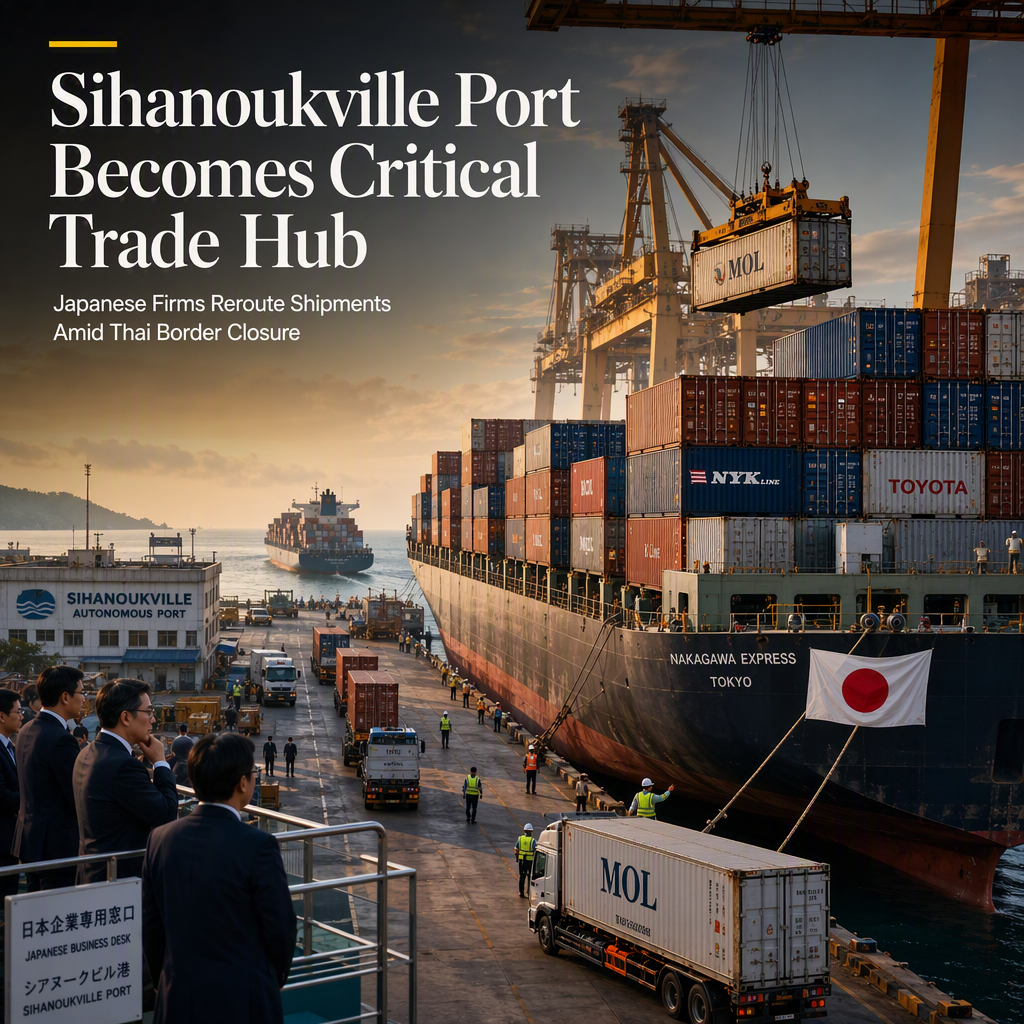
Cambodia's Sihanoukville deep-water port has experienced a significant increase in cargo volume following the closure of the country's land border with Thailand, according to a report published on August 8, 2026 [1]. The border closure has disrupted established supply chains and bilateral trade, forcing companies—particularly Japanese multinationals operating in the region—to reroute shipments by sea instead of relying on overland trucking through Thailand [1].
This shift to maritime transport has resulted in higher costs and greater logistical complexity for affected companies. Japanese firms have expressed concerns about the elevated cargo fees at Sihanoukville Port and are calling for relief measures to help offset the increased financial burden caused by the change in transport routes [1].
While the surge in cargo volume is financially benefiting Sihanoukville Port, the high fees have raised questions about the port's long-term competitiveness. There are calls for policy adjustments to support the manufacturing and export sectors, as the current situation is putting pressure on operational costs for multinational companies [1].
The ongoing disruption highlights the port's growing importance as a regional logistics hub, but also underscores the need for measures to ensure its continued attractiveness and to mitigate the economic impact on businesses reliant on cross-border trade [1].
CONCLUSION
The closure of Cambodia's land border with Thailand has made Sihanoukville Port a critical logistics hub for Japanese multinationals, driving up cargo volumes but also operational costs due to high fees. Calls for fee relief and policy adjustments suggest that the port's long-term competitiveness and the region's supply chain resilience are under scrutiny.