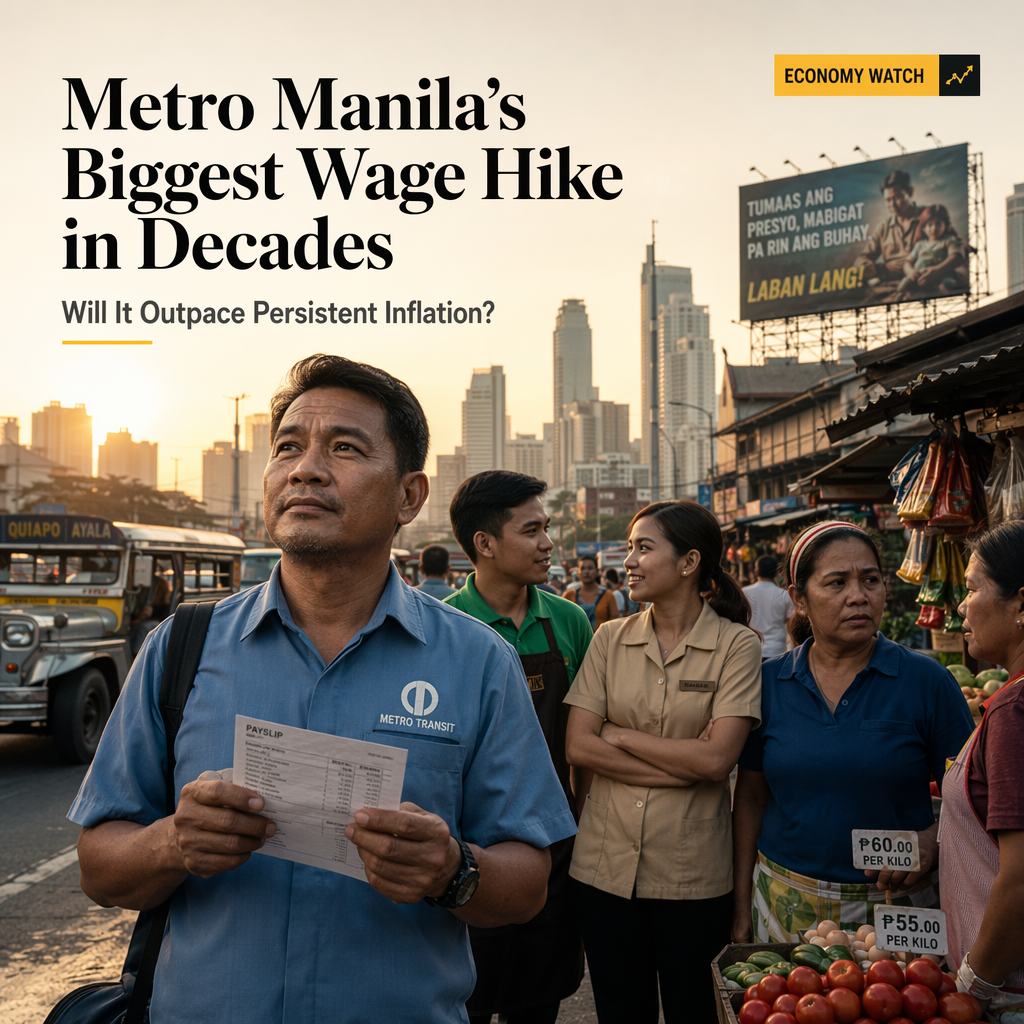
The Philippine government has approved a significant increase in the daily minimum wage for Metro Manila, raising it from 695 pesos to 780 pesos, which represents a 12% hike and is described as the largest such increase in more than two decades [1]. This decision was announced on Tuesday and is a direct response to ongoing inflationary pressures that have been eroding the purchasing power of workers in the region [1].
Despite the magnitude of the wage hike, some critics maintain that the new minimum wage remains inadequate to meet basic living expenses, especially as inflation in the Philippines is projected to average 5.1% in 2026 [1]. The persistent rise in prices continues to strain household budgets, and the effectiveness of the wage increase is being debated among policymakers and labor groups [1].
The wage adjustment is part of broader government efforts to mitigate the impact of high inflation on consumers. However, observers caution that if inflationary trends persist, the real benefits of the wage hike may be limited, and many families could still struggle to keep up with the cost of essential goods and services [1].
Discussions among policymakers and labor organizations are ongoing, focusing on whether the increase is sufficient to address the needs of Metro Manila's workforce in the face of sustained inflation [1].
CONCLUSION
The Philippine government's approval of the largest minimum wage hike in Metro Manila in over 20 years aims to counteract the effects of persistent inflation. While the increase is substantial, concerns remain about its adequacy as inflation continues to pressure household budgets, leaving the long-term effectiveness of the measure under debate.