
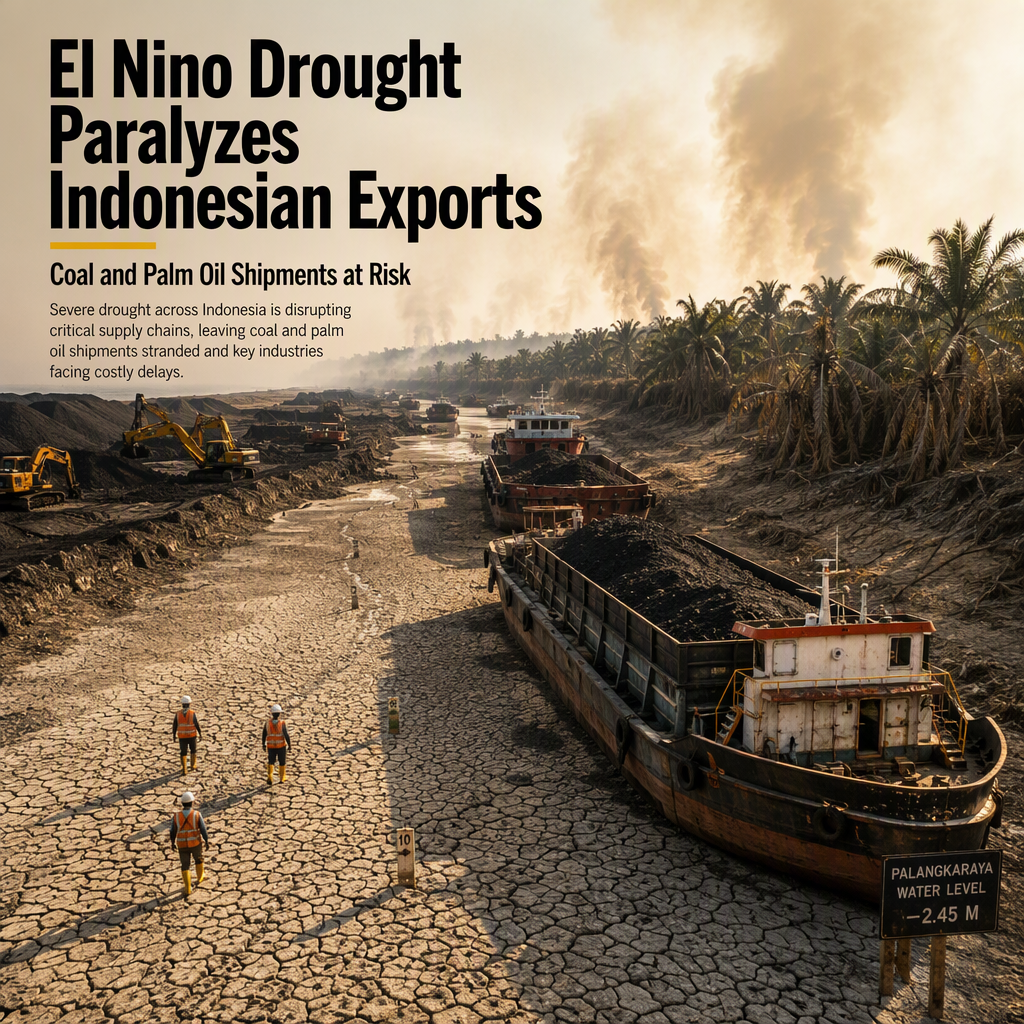
A severe drought caused by a particularly strong El Nino climate phenomenon has significantly lowered river levels in Kalimantan, Indonesia, which is a major production hub for coal and palm oil [1]. The dried-up river at Palangkaraya in central Kalimantan exemplifies the widespread impact on crucial waterways used for transporting these commodities [1]. Climate forecasts indicate that the drought is likely to persist into early 2027, exacerbating concerns about ongoing disruptions [1].
Coal shipments have been notably affected, with river transport routes experiencing reduced capacity and delays [1]. This has led to expectations of decreased coal production output and potential increases in coal prices in both domestic and export markets [1]. Market participants are closely monitoring price levels, supply chain bottlenecks, and the progress of river recovery, as a prolonged drought could further tighten supply [1].
Palm oil transport has also suffered due to logistical constraints, resulting in higher costs and threats to timely delivery [1]. Industry analysts highlight that the ongoing drought presents upside risk to palm oil prices, particularly if export volumes are reduced [1]. Technical analysis suggests that support levels for both coal and palm oil prices may be reinforced in the coming months as supply-side constraints persist [1].
Commodity traders and logistics operators have expressed widespread concern about the duration of the drought and its impact on production targets [1]. One Kalimantan-based coal exporter stated, "If river levels don't improve soon, we may need to find alternative transport routes, which are costlier and less efficient" [1]. Market sentiment remains cautious, with trading advice focusing on hedging strategies and close monitoring of weather patterns [1]. Analysts warn of potential volatility and recommend that traders pay attention to price movements, support and resistance levels, and supply chain developments as the situation evolves [1].
CONCLUSION
The El Nino-driven drought in Kalimantan has emerged as a critical factor for Indonesia's coal and palm oil markets, causing significant transport disruptions and raising the risk of price increases and volatility. Market participants are advised to remain vigilant, monitor supply chain developments, and consider hedging strategies as the drought is expected to persist into early 2027.