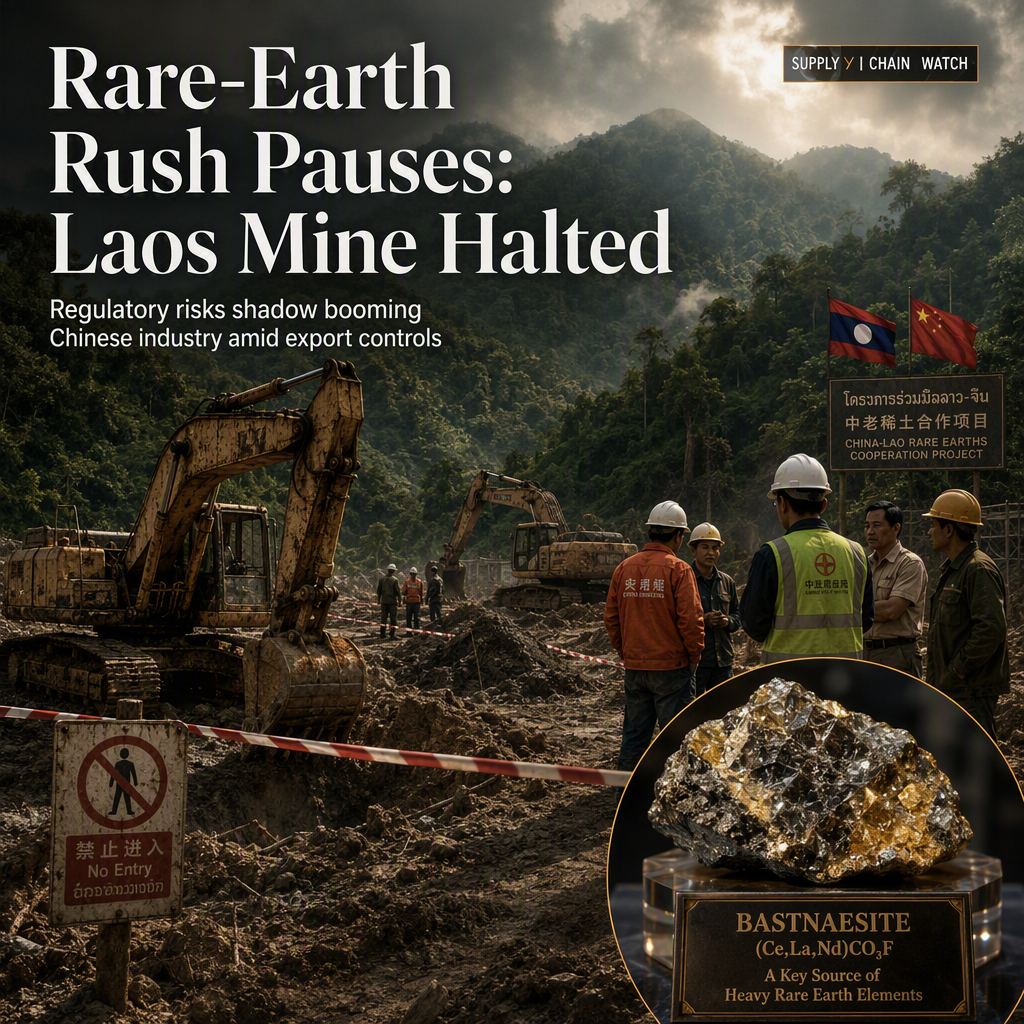
A Chinese rare-earth mining operation in Laos has come to a halt, as confirmed by the companies involved, due to the need to ensure 'compliance with law' [1]. The specific reasons for the suspension were not fully disclosed, but the event highlights the regulatory and operational risks present in the rapidly expanding rare-earth industry [1]. This stoppage raises concerns about potential vulnerabilities in supply chains and the global markets that depend on these critical minerals [1].
Despite the setback in Laos, Chinese miners of rare-earth materials are reporting strong earnings for the first half of the year, driven by robust global demand and recent export restrictions that have tightened supply [1]. The industry's profitability is underscored by these positive financial results, even as individual projects face challenges [1].
The broader context includes China's tightening of rare-earth export controls, which has led to significant price gaps in the market [1]. This development has motivated other countries to seek alternative sources and invest in domestic extraction and processing capabilities to reduce reliance on Chinese supply [1].
A sample of bastnaesite ore, a key mineral for rare-earth extraction, was displayed at the Geological Museum of China in October 2025, reflecting ongoing development and interest in rare-earth resources despite operational setbacks in certain regions [1].
CONCLUSION
The suspension of the Chinese rare-earth project in Laos underscores ongoing regulatory and operational risks in the sector, even as the industry posts strong profits. Market participants are likely to remain attentive to supply chain vulnerabilities and the impact of China's export controls on global rare-earth markets.