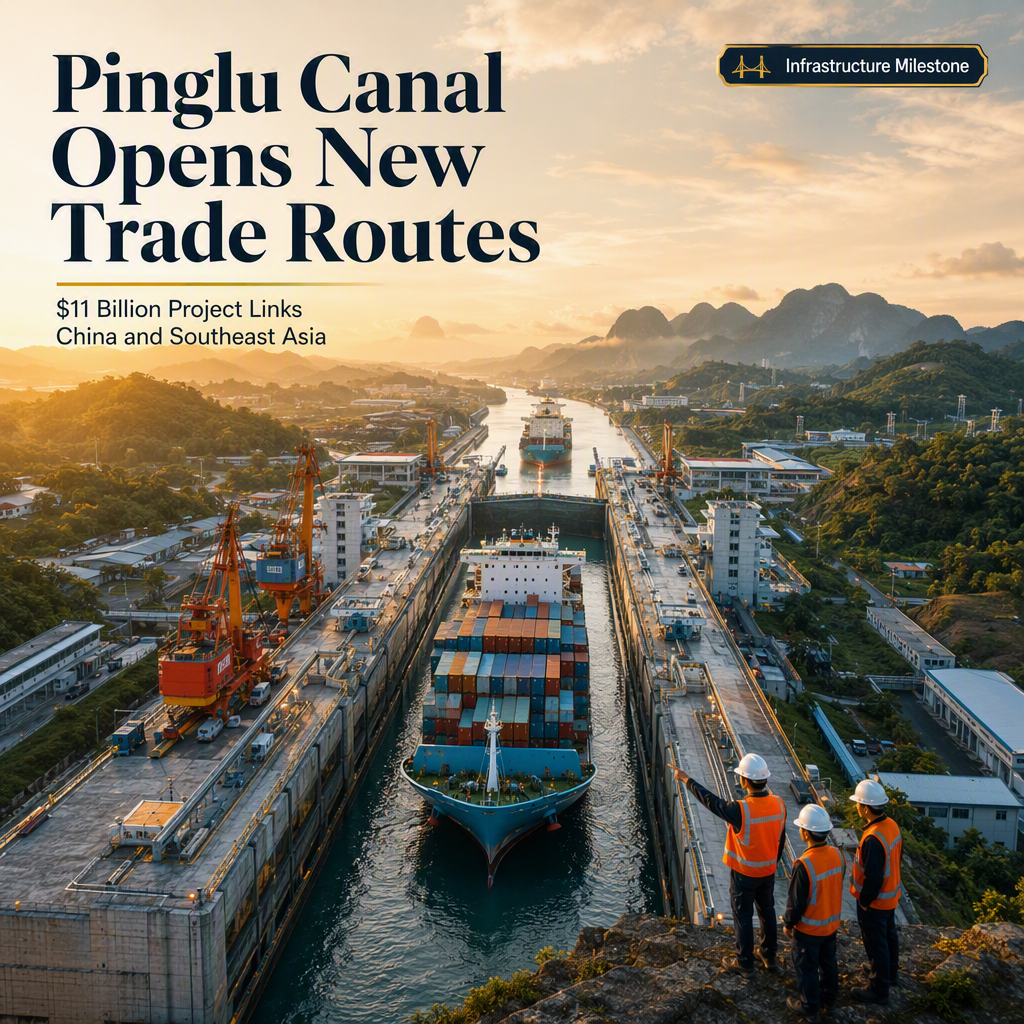
China has completed construction of the $11 billion Pinglu Canal, a major infrastructure project aimed at enhancing trade connectivity between the southern Chinese region of Guangxi, neighboring inland provinces, and Southeast Asia [1]. The canal, which was finished in just four years, features three sets of locks designed to bridge a 65-meter elevation decline and accommodate ships weighing up to 5,000 metric tons [1]. Ship lock testing began on August 12 [1].
Policymakers hope the canal will bring new economic growth to Guangxi and surrounding areas by improving transportation and logistics [1]. The project is expected to support increased movement of goods, boost exports, and facilitate broader economic development in the region [1].
The rapid completion of the Pinglu Canal stands in contrast to the slower progress of many of China's overseas infrastructure initiatives in recent years [1]. The canal's operationalization is anticipated to strengthen China's trade links with Southeast Asia, potentially reshaping regional supply chains and export flows [1].
CONCLUSION
The completion of the $11 billion Pinglu Canal marks a significant step in China's efforts to enhance regional trade and logistics. The project is expected to drive economic growth in southern China and improve connectivity with Southeast Asia, with medium-term positive implications for trade and exports.