
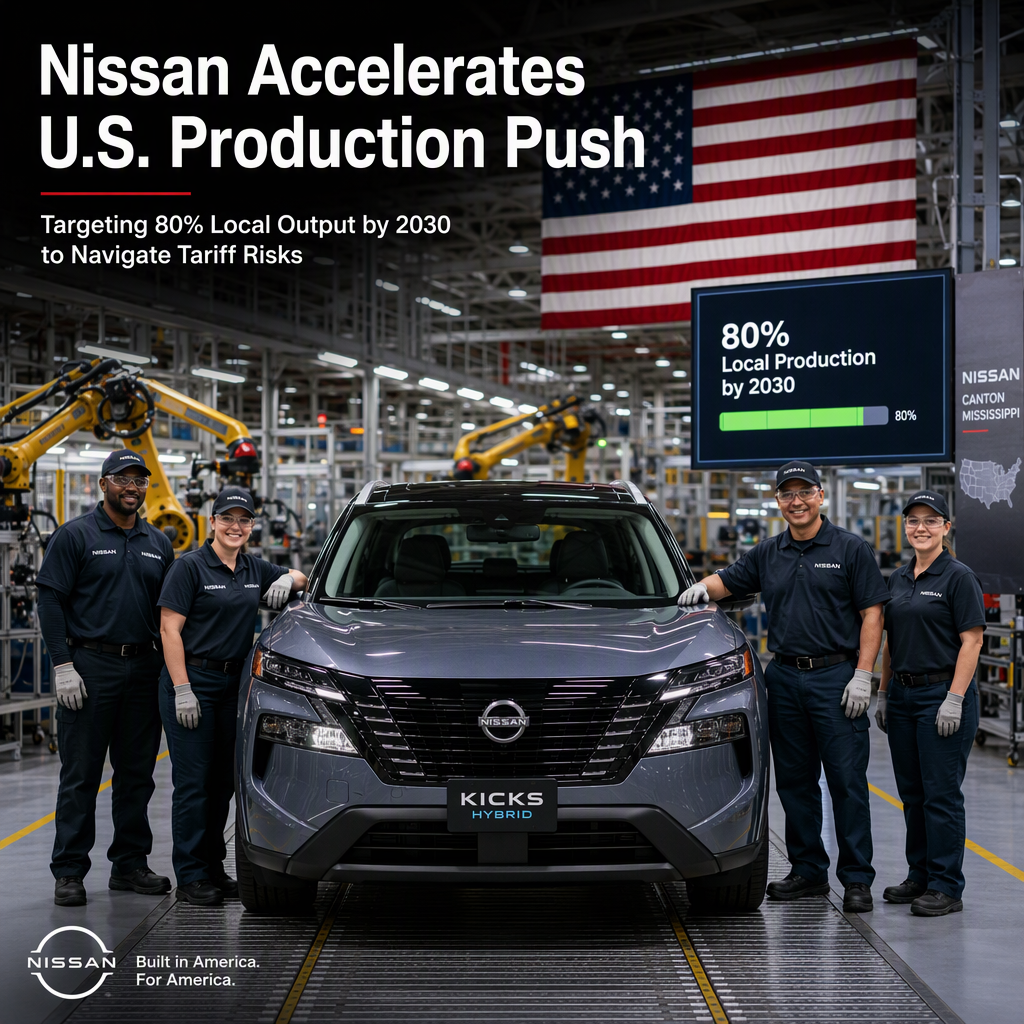
Nissan Motor has announced a strategic plan to manufacture 80% of the vehicles it sells in the United States locally by the end of 2030, a significant increase from its current local production rate of 65% [1]. This initiative is part of Nissan's broader response to ongoing tariffs and trade tensions, aiming to secure its position in the American market by reducing reliance on imports and enhancing supply chain flexibility [1].
The company has also ceased production of its plug-in hybrid model for North America, indicating a shift in product strategy to better align with evolving regulatory and market conditions [1]. Nissan's move mirrors industry-wide trends, as other automakers such as Honda and Toyota supplier Toyoda Gosei are also investing in local manufacturing facilities to address similar challenges. For example, Honda recently announced plans to build a $2.5 billion hybrid vehicle plant in the U.S., while Toyoda Gosei is constructing an auto parts plant in India [1].
Nissan's commitment to local production in the U.S. follows its recent $228 million investment in its Sunderland, UK plant to produce the Kicks hybrid SUV, demonstrating a global approach to production flexibility and regional market adaptation [1]. While the article does not provide specific financial forecasts or technical analysis, it emphasizes Nissan's strategic direction to increase local content and ensure competitiveness amid shifting trade policies [1].
By targeting 80% local production by 2030, Nissan aims to strengthen its U.S. operations and minimize exposure to international trade uncertainties, positioning itself alongside other major automakers adapting to the changing industry landscape [1].
CONCLUSION
Nissan's plan to boost U.S. local production to 80% by 2030 reflects a proactive strategy to mitigate tariff risks and adapt to evolving market conditions. This move aligns with broader industry trends and signals Nissan's commitment to maintaining competitiveness in the American market. The market impact is medium, with the potential for increased operational stability and supply chain resilience.