
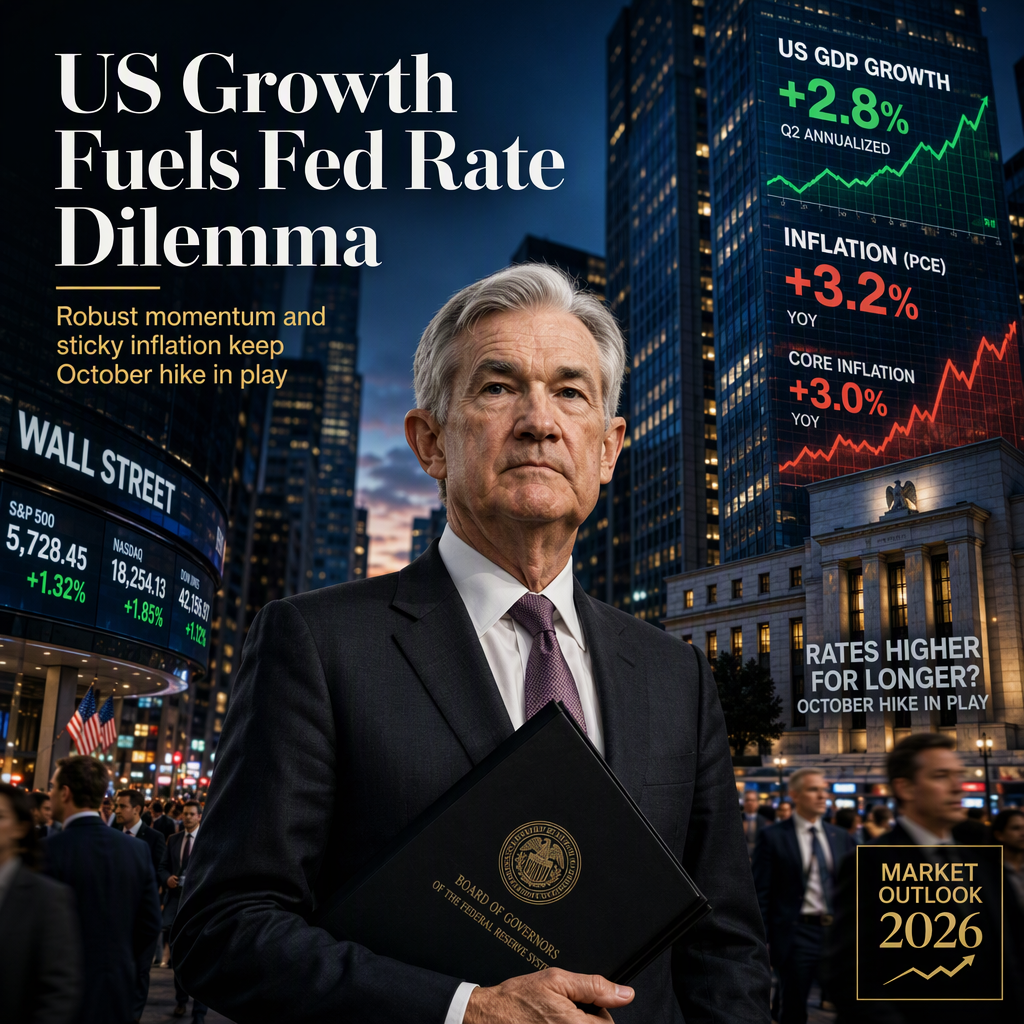
Recent US economic data revisions have painted a picture of robust growth and persistent inflation, shaping expectations for the Federal Reserve's policy path. According to Societe Generale, August Core PCE inflation undershot expectations, but underlying price pressures in services and super-core inflation remain firm, suggesting that inflation is still above levels consistent with the Fed’s target [1]. Benchmark revisions lowered measured inflation, correcting earlier overstatements, yet underlying inflation has drifted higher over the past year [1]. Revisions to consumption, wage income, and GDP growth indicate the US economy entered the second half of 2026 with more momentum than previously estimated, with August spending particularly robust and household demand resilient [1].
TD Securities echoes the view that PCE and GDP revisions were mixed, with hawkish backward adjustments to growth and dovish adjustments to inflation. Despite larger-than-expected downward revisions to PCE inflation, the underlying trend remains hawkish, as robust growth and sticky inflation risks continue to dominate the Fed's outlook [2]. TD Securities has upgraded its Q3 GDP growth forecast to 3.0% quarter-on-quarter annualized rate, citing firm consumer spending and capital expenditures, and expects core PCE inflation to close 2026 at 3.0% Q4/Q4 and at 2.5% next year [2].
Both sources highlight that while inflation revisions were modestly favorable, the stronger growth backdrop is more significant for Fed policy. Societe Generale notes that a pause in October remains possible, but an October rate hike is still on the table pending September CPI and PPI data [1]. TD Securities maintains that the Fed is likely to lift rates in October, though a more gradual approach cannot be discarded [2].
The consensus across both analyses is that the US economy remains strong, with firm consumer and capex spending, rising corporate profits, and sticky inflation, supporting a still-hawkish Federal Reserve stance [2].
CONCLUSION
US economic data revisions show stronger growth and persistent inflation, reinforcing expectations for a hawkish Federal Reserve. While an October rate hike remains likely, both sources acknowledge the possibility of a pause depending on upcoming inflation data. The market takeaway is that robust growth and sticky inflation keep Fed tightening risks elevated.