
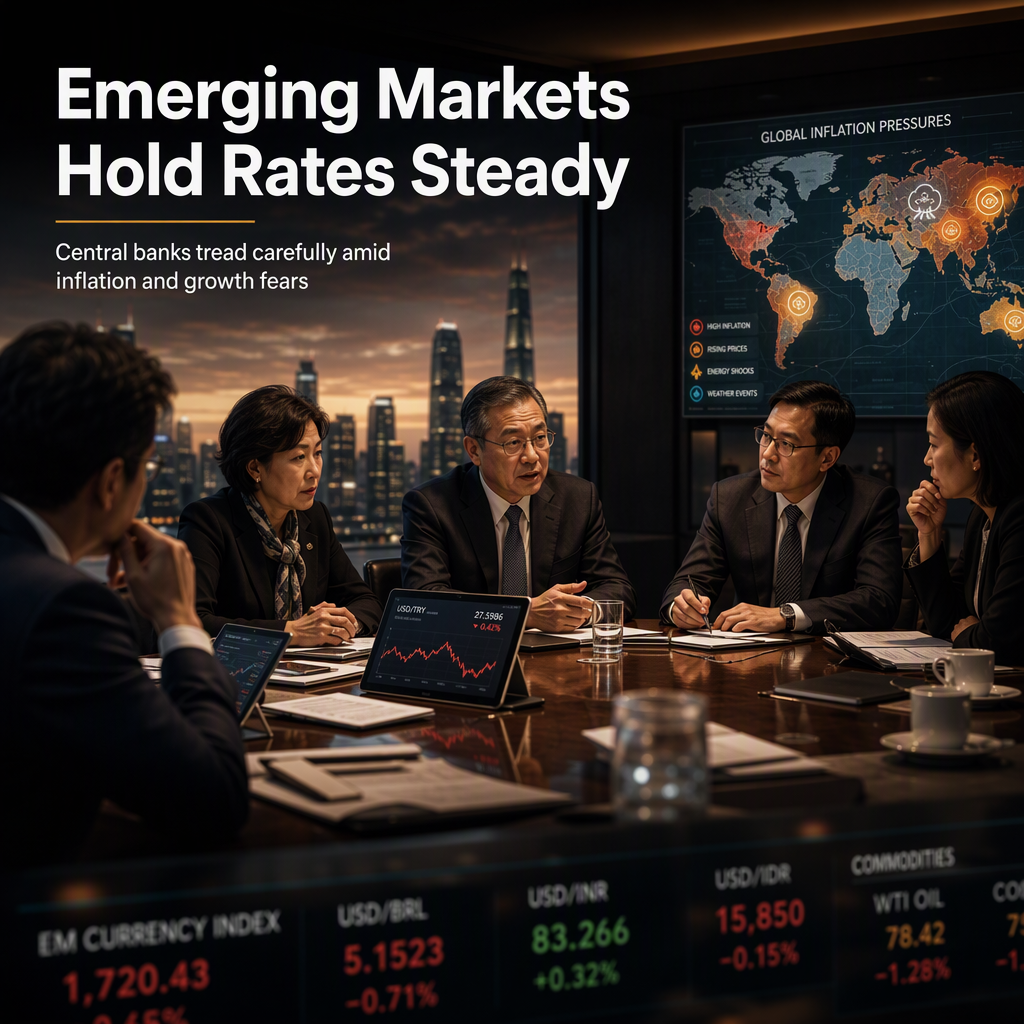
Central banks in emerging economies are facing a challenging environment as they navigate rising inflation driven by factors such as higher energy prices and abnormal weather patterns, including El Nino [1]. Despite these inflationary pressures, several central banks have opted to hold off on raising interest rates due to concerns about slowing economic growth. In India, the central bank has kept its key interest rate unchanged, prioritizing the momentum of economic growth over inflation risks. Officials cited worries that rate hikes could dampen economic activity, especially given external risks like potential price shocks from the Middle East and volatile weather conditions [1]. Similarly, Indonesia's central bank decided to maintain its current rate, aligning with market expectations. Policymakers emphasized the importance of stability and supporting domestic demand amid global uncertainties, noting that aggressive tightening could hinder economic recovery [1].
In contrast, the Philippines responded to inflation caused by energy shocks linked to developments in Iran by raising interest rates, illustrating the varied policy responses across the region [1]. Market analysts highlight that these central banks are attempting to balance the need to contain inflation with the imperative to support economic growth. The risk of stagflation—characterized by high inflation and stagnant growth—remains a significant concern for policymakers [1].
While energy prices and climate-related disruptions continue to drive inflation higher, most central banks in the region are cautious about tightening monetary policy too quickly, fearing it could undermine economic recovery. Observers are closely monitoring for any shifts in policy stance should external pressures intensify or inflation accelerate beyond current forecasts [1].
CONCLUSION
Emerging market central banks are treading carefully, opting for cautious monetary policy amid persistent inflation and growth concerns. The risk of stagflation is influencing decisions, with most banks prioritizing economic stability over aggressive rate hikes. Market participants remain watchful for any changes in policy as external risks evolve.