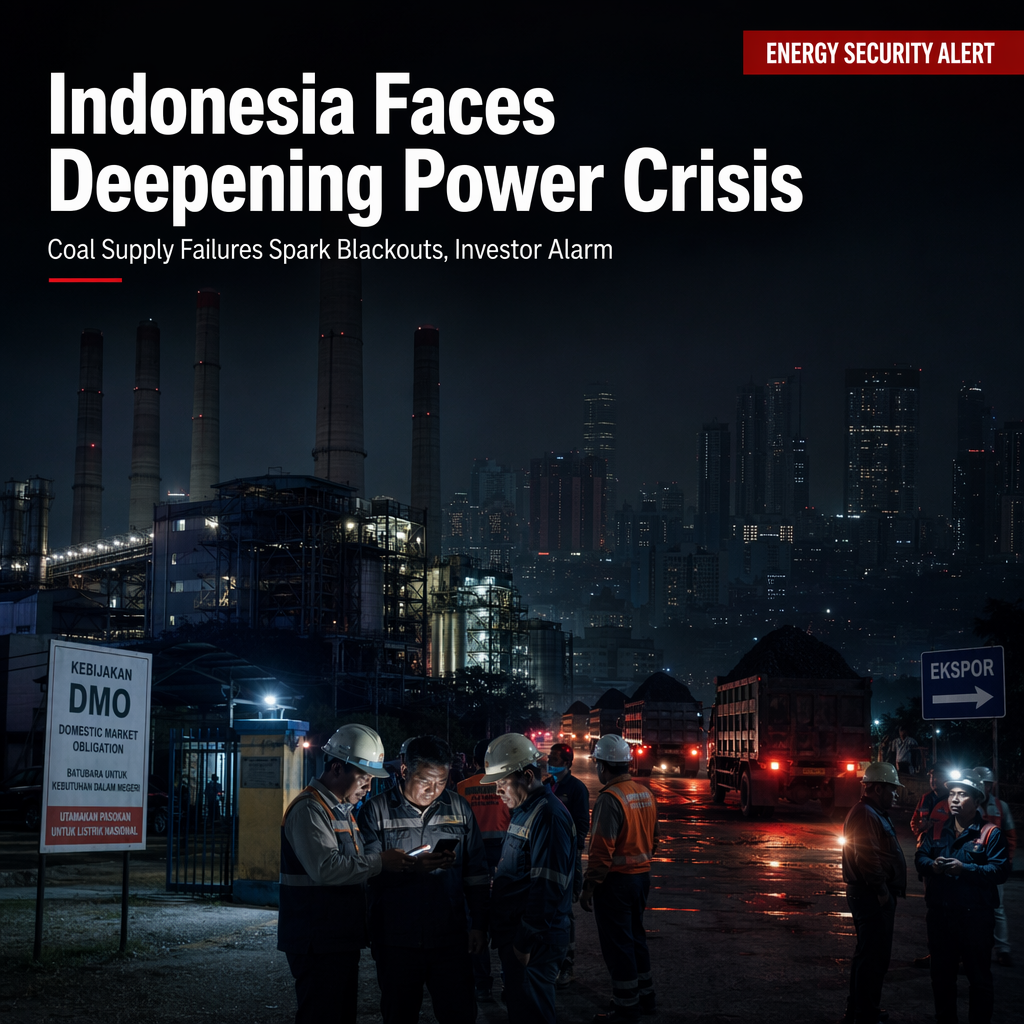
Indonesia is confronting the risk of a worsening energy crisis, following recent rolling blackouts attributed to persistent mismanagement of coal supply to its coal-fired power stations, which generate over two-thirds of the nation's electricity [1]. Industry executives and experts have highlighted that many coal miners are opting to export coal and pay fines rather than fulfill domestic market obligations (DMO), which require them to supply a portion of their production to local power plants at regulated prices [1]. This preference for exports, despite penalties, is intensifying the country's vulnerability to power shortages [1].
The failure to enforce DMO compliance has been identified as a core issue, with industry insiders warning that the stability of Indonesia's electricity supply is at risk if these problems persist [1]. The recent blackouts have exposed the fragility of the system, raising alarms about the potential for further disruptions if coal supply management is not improved [1].
Financially, power producers are facing increased operational risks and costs due to the uncertainty of coal supply, which may force them to seek alternative sources or pay higher prices [1]. This situation could lead to higher electricity tariffs and undermine investor confidence in the energy sector [1]. Market analysts caution that ongoing coal supply failures could trigger further volatility in Indonesia’s energy markets and have broader economic repercussions [1].
Analysts and industry executives are calling for structural reforms to improve supply chain management and enforce DMO compliance, warning that without such measures, Indonesia could experience more frequent blackouts, higher energy costs, and reduced competitiveness [1]. The overall market sentiment is cautious, with recommendations to closely monitor coal supply policies and their impact on the energy sector [1].
CONCLUSION
Indonesia's ongoing coal supply failures pose a significant threat to its energy security and economic stability. Without urgent reforms to enforce domestic supply obligations and improve supply chain management, the country risks deeper power crises, higher energy costs, and diminished investor confidence.