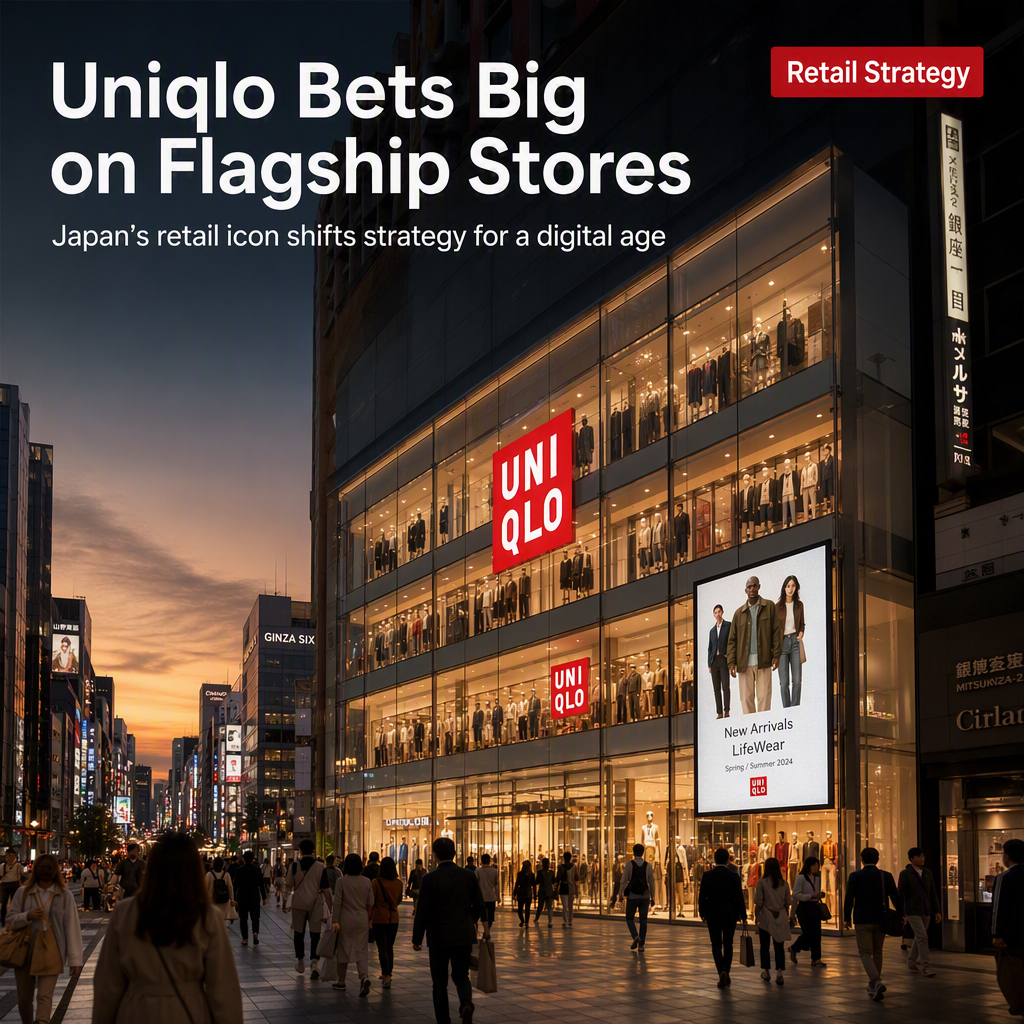
Uniqlo, the casual wear chain owned by Fast Retailing, announced a significant shift in its domestic retail strategy by planning to double the number of its flagship stores in Japan. According to CEO Tadashi Yanai, the new flagship locations will be situated in major urban centers across the country, following the model of the existing Ginza district store in Tokyo. Yanai stated, 'Our strategy is to focus on flagship stores that can showcase our full lineup and brand identity,' highlighting the company's response to the rapid growth of e-commerce and changing consumer preferences [1].
The company is moving away from opening standardized outlets in shopping centers, citing declining foot traffic in traditional retail spaces and the need to offer unique in-person experiences that cannot be replicated online. This strategic pivot is part of a broader transformation in Japan's retail landscape, where companies are increasingly balancing their physical and digital presence to adapt to evolving consumer behavior [1].
Financially, Uniqlo expects the move to optimize its store portfolio by reducing costs associated with maintaining multiple standard locations and increasing the impact of its flagship outlets. While no specific investment figures or forecasts were disclosed, the company indicated that the transition would be gradual and closely monitored for market response [1].
The decision reflects Fast Retailing's recognition of strong domestic sales and the necessity to adapt its brick-and-mortar approach to remain competitive in a changing market environment [1].
CONCLUSION
Uniqlo's plan to double its flagship stores in Japan marks a strategic shift towards experiential retail and away from standardized outlets, aiming to optimize costs and strengthen brand presence. The move is expected to help the company adapt to changing consumer habits and the rise of e-commerce, with the transition being implemented gradually and monitored for market response.