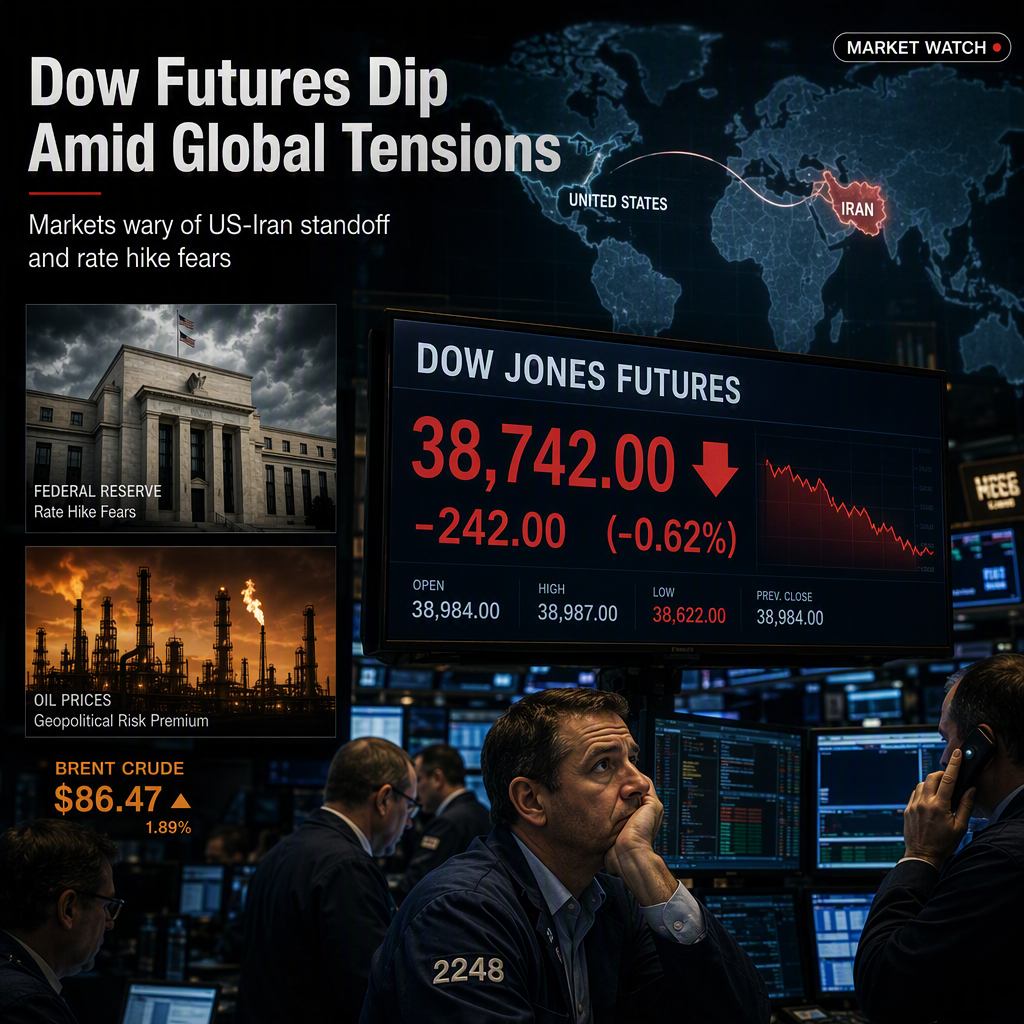
Dow Jones futures declined by 0.11% to trade around 54,000 during European hours on Tuesday, reflecting cautious market sentiment as traders react to escalating geopolitical tensions between the US and Iran, as well as renewed concerns over potential Federal Reserve interest rate hikes [1]. S&P 500 futures remained steady near 7,770, while Nasdaq 100 futures gained 0.12% to trade around 29,770, highlighting a mixed performance across major US indices [1].
The market's cautious stance is driven by fears of oil supply disruptions stemming from the US-Iran standoff, which has fueled inflation concerns and increased speculation that the Federal Reserve may raise interest rates sooner than previously anticipated. According to the CME FedWatch Tool, the market-implied probability of a 25-basis-point rate hike in September rose to nearly 52%, up from 44.4% just a day earlier [1].
On the geopolitical front, Iran has explicitly ruled out any future negotiations with US President Donald Trump, with Iranian adviser Majid Shakeri stating, 'Trump will not reach an agreement with us. We will accompany him until his term ends,' indicating that Tehran will wait until the current US presidential term ends on January 20, 2029, before considering a return to negotiations [1].
Sector-wise, the broader US equity market softened, with the NASDAQ falling 0.32% and the Russell 2000 dropping 0.56%. Chipmakers led the losses, as the Philly semiconductor index reversed sharply by dropping 2.94% after a 9.25% rebound the previous week. However, the energy (+4.63%) and health care (+1.68%) sectors helped cushion the S&P 500's decline [1].
Looking ahead, investors are closely watching upcoming inflation data scheduled for release this week to better assess the Federal Reserve's next policy move. Additionally, market participants are monitoring earnings reports from key companies, including Cardinal Health, CoreWeave, and Super Micro Computer, due later today [1].
CONCLUSION
US stock futures reflected a cautious market mood amid heightened geopolitical tensions and rising expectations of a Fed rate hike. While chipmakers led sector declines, gains in energy and health care helped limit broader losses. Investors are now focused on upcoming inflation data and key earnings reports for further market direction.