
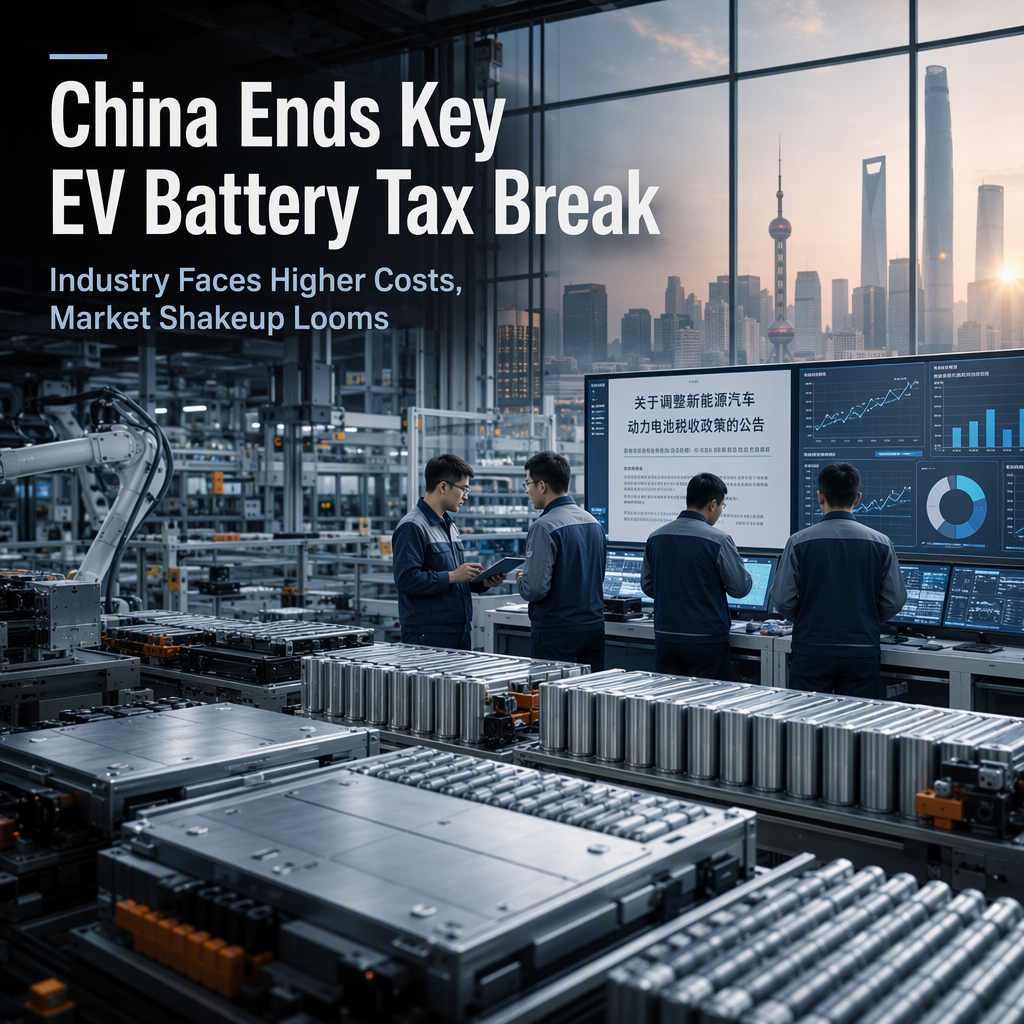
China has reinstated the consumption tax on lithium-ion batteries used in electric vehicles (EVs) as of September, ending an 11-year tax break that had supported the industry’s rapid growth [1]. This policy change is part of a broader strategy to scale back incentives for the electric vehicle sector, with the government also planning to end vehicle purchase tax exemptions for new energy vehicles in 2028 [1]. China has led the world in new energy vehicle sales for 11 consecutive years, but the government is now shifting its focus from stimulating demand to encouraging industry consolidation and technological advancement [1].
The end of the tax break is expected to impact both battery manufacturers and automakers by increasing production costs, which may eventually be passed on to consumers [1]. Market analysts cited in the article suggest that this move could trigger a shakeout in the crowded auto market, potentially forcing weaker players out and leading to consolidation within the sector [1]. Leading companies with scale and technological advantages are considered better positioned to adapt to the new regulatory environment [1].
The government’s decision aligns with its goal of fostering a more sustainable and market-driven EV industry, moving away from heavy reliance on subsidies and tax incentives [1]. Industry participants are expected to closely monitor the market impact of these changes, with some anticipating a period of adjustment as companies recalibrate their business models to accommodate the new cost structures [1].
CONCLUSION
China’s decision to end the tax break on lithium-ion EV batteries marks a significant policy shift, likely increasing costs for manufacturers and prompting industry consolidation. While leading players may adapt more easily, the overall market is expected to undergo a period of adjustment as the sector transitions to a more market-driven environment.