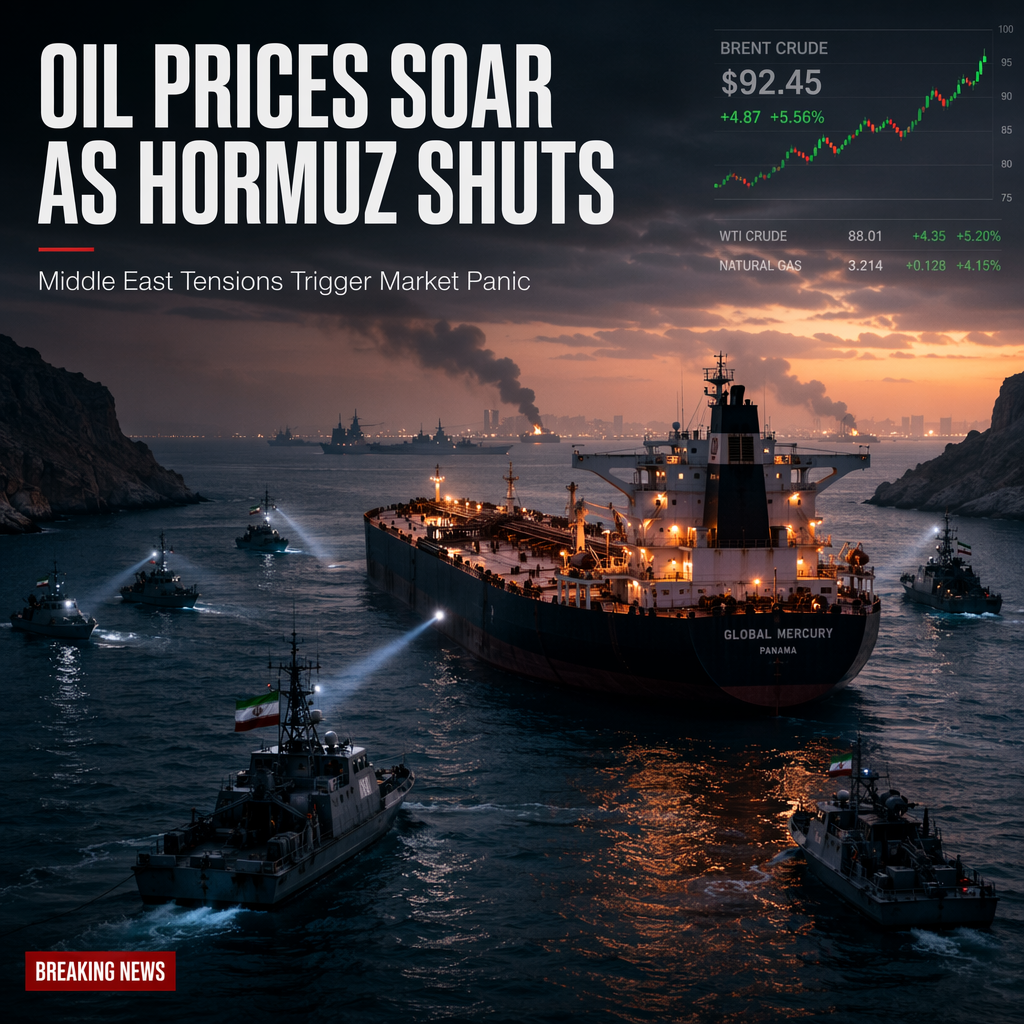
Tensions in the Middle East escalated after Iran claimed to have shut the Strait of Hormuz, citing the U.S.'s failure to uphold its commitment to stop fighting in Lebanon, a key condition in the recently signed memorandum of understanding (MOU) between the U.S. and Iran aimed at ending the regional conflict [1]. The closure of this critical waterway came less than a week after the MOU was signed, with Iran attributing its actions to ongoing Israeli attacks on Lebanon and the U.S.'s inability to enforce a ceasefire [1]. In response, U.S. President Donald Trump threatened further strikes on Iran if the country's leaders did not immediately halt the activities of their proxies in Lebanon [1].
The situation is further complicated by Israeli Prime Minister Benjamin Netanyahu's statement that Israel would not be bound by the U.S.-Iran agreement, raising concerns that parties outside the negotiation could undermine the deal [1]. High-level talks resumed in Switzerland, with U.S. Vice President JD Vance meeting Iranian officials for the first time since earlier negotiations were called off. Vance reported progress toward ending violence in Lebanon but noted the absence of a joint photo opportunity and no public interaction with Iranian Foreign Minister Abbas Araqchi before Vance's remarks [1].
The market reacted swiftly to these developments. International benchmark Brent crude oil prices surged above $80, reaching $80.84, while U.S. West Texas Intermediate crude futures climbed over 2% to $78.5 [1]. U.S. stock futures fell, with all major indexes slipping on Sunday, reflecting investor concerns over escalating geopolitical risks [1]. In contrast, Asian markets opened higher, led by gains in Japan's Nikkei 225 [1].
Looking ahead, investors are also focused on MSCI's upcoming annual market-classification review for South Korea and Indonesia, scheduled for Tuesday, which could further influence market sentiment [1].
CONCLUSION
The renewed tensions between the U.S. and Iran, highlighted by the closure of the Strait of Hormuz and threats of further escalation, have driven oil prices higher and weighed on U.S. stock futures. The situation remains fluid, with ongoing diplomatic efforts and external actors potentially impacting the fragile ceasefire agreement.