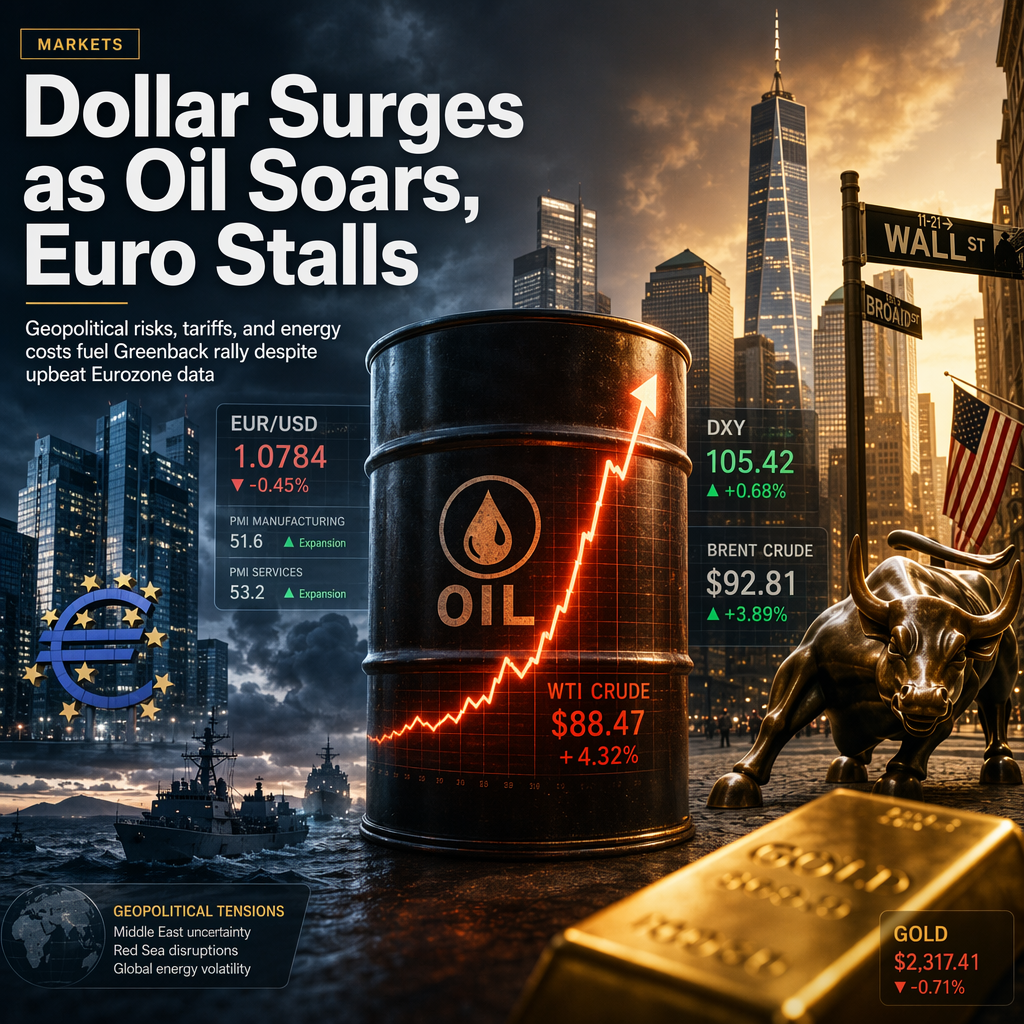
The Euro has remained capped below the 1.1400 level against the US Dollar, despite stronger-than-expected Eurozone and German preliminary PMI data for July. Eurozone Manufacturing PMI rose to 52.0 from 51.4 in June, beating consensus expectations of 51.3, while Services PMI returned to expansion at 51.6 after three months of contraction. German Manufacturing PMI improved to 52.2 from 50.3, and German Services PMI reached 49.6, both surpassing forecasts. However, these positive economic indicators failed to offset the risk-off mood driven by escalating tensions in the Middle East and surging oil prices, with Brent crude trading well above $90 per barrel following attacks on Saudi vessels in the Red Sea. US President Trump’s threat of a 'massive attack' on Iran and the announcement of new tariffs ranging from 10% to 12.5% on over 80 trading partners, including the European Union, have further soured market sentiment and fueled a rush to safe-haven assets, supporting the US Dollar’s rally [2][4].
MUFG’s Derek Halpenny notes that the ECB’s latest communication points to a likely September rate hike, which is now almost fully priced in. However, he warns that Euro support may fade as energy costs rise, and sees increased downside risks for the Euro versus the Dollar, especially as EUR/USD has broken below 1.1400 and European data remains weaker compared to a more resilient US economy. Halpenny also highlights that natural gas prices have surged, already hitting March peaks, and that momentum favors further gains for the US Dollar, with the DXY’s previous high at 101.80 now in sight [1].
The US Dollar Index (DXY) is trading around 101.30-101.25, down 0.15% for the day, but the downside appears limited amid a constructive technical setup. Elevated crude oil prices continue to fuel inflationary concerns and expectations of at least one interest rate hike by the US Federal Reserve. Technical indicators, including the RSI near 60 and a positive MACD, suggest buyers remain in control, with deeper pullbacks likely to be bought into near key Fibonacci retracement levels. The DXY was the strongest against the Swiss Franc this week, up 0.97%, and gained 0.35% against the Euro [4].
Gold has come under pressure as higher oil prices stoke inflation concerns and push yields and the US Dollar higher. ING analysts report that safe-haven demand for gold has been limited despite geopolitical risks, with recent gains driven mainly by dip-buying and short covering. Gold is hovering around the key $4,000/oz support level, but elevated oil prices and rising yields are likely to cap any recovery [3].
Forward-looking statements from MUFG and ING suggest continued downside risks for the Euro and gold if energy markets remain elevated, and a likely September rate hike from the ECB unless the inflation outlook improves markedly. Technical analysis of the DXY points to a bullish near-term tone, with buyers expected to step in on any pullbacks [1][3][4].
CONCLUSION
Despite robust Eurozone PMI data, the Euro remains under pressure due to rising oil prices, geopolitical tensions, and new US tariffs, which have buoyed the US Dollar. Analysts expect continued strength in the Dollar and downside risks for the Euro and gold if energy costs persist. Market sentiment is risk-off, with safe-haven flows favoring the Greenback amid expectations of further rate hikes and ongoing geopolitical uncertainty.