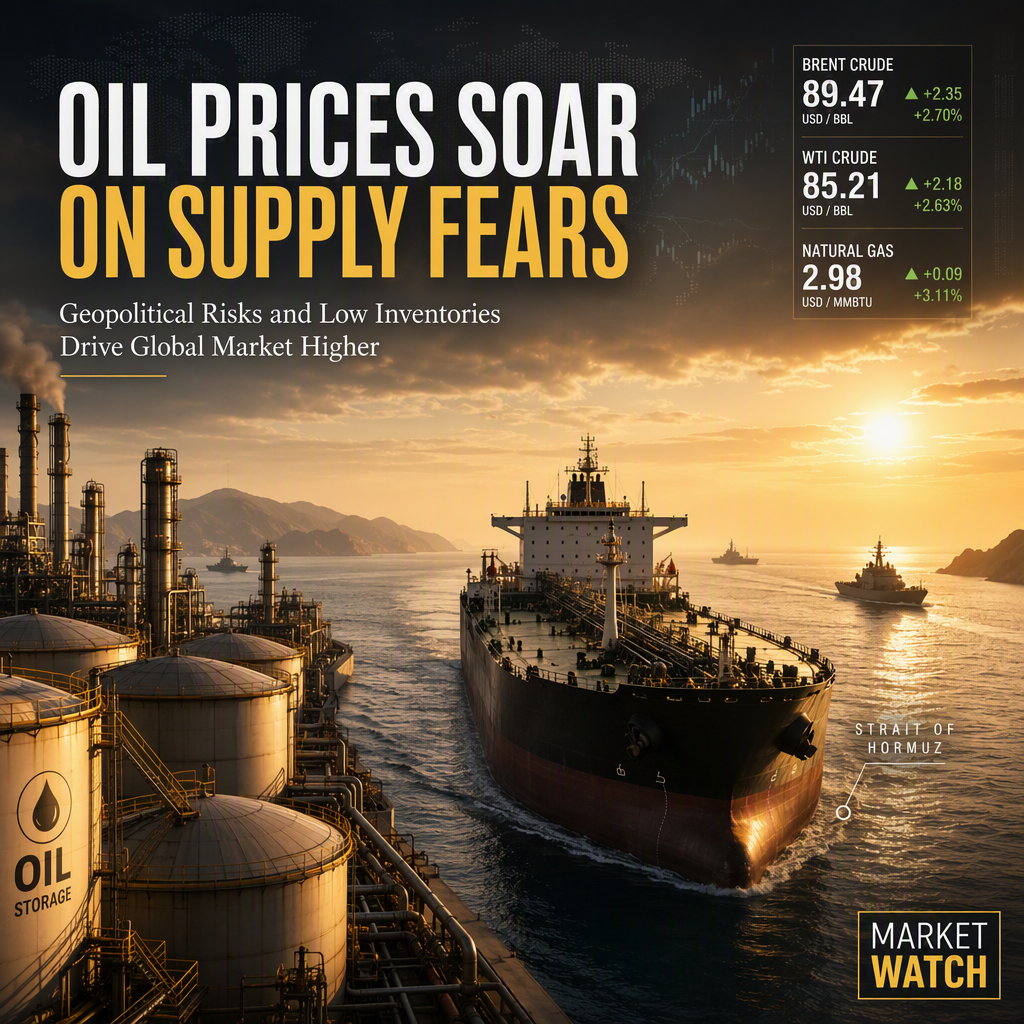
Oil prices have risen sharply amid escalating supply risks, with both Brent and West Texas Intermediate (WTI) crude supported by ongoing geopolitical tensions and tightening inventories. Brent crude is trading near $94 per barrel, marking an increase of almost 20% from its early-August lows, though it remains below its April peak [1]. WTI is trading around $86.50, up 0.63% on the day and close to a three-week high of $87.38 [2].
The primary driver behind the price surge is heightened tension in the Middle East, particularly around the Strait of Hormuz, a critical chokepoint for global oil shipments. The United States and Iran have shown no progress toward restoring commercial navigation through the strait, and disruptions in the Bab el-Mandeb Strait have further increased the risk premium in energy prices [1][2]. Additionally, Yemen’s Iran-backed Houthi group has claimed responsibility for targeting several Saudi oil tankers since late July, raising concerns about potential disruptions to crude exports and global supply [2].
According to Commerzbank’s Barbara Lambrecht, global oil inventories have fallen to multi-year lows, with the International Energy Agency (IEA) reporting that reserves dropped below 7.9 billion barrels at the end of July, the lowest level since April 2025 [1]. Diesel inventories are particularly tight, and further drawdowns could push product prices even higher, especially if Middle Eastern exports remain constrained and Russian refinery throughput does not increase [1].
Despite these supply concerns, the US market has seen a larger-than-expected build in crude inventories. The Energy Information Administration (EIA) reported a 4.405 million barrel increase in US crude stocks for the week ending August 14, compared to expectations for a 600,000-barrel decline. This follows a previous weekly build of 17.422 million barrels and could potentially limit further gains in oil prices if the trend continues [2]. However, immediate concerns about global supply disruptions continue to outweigh the impact of rising US inventories [2].
Forward-looking commentary from both sources suggests that unless there is a de-escalation of tensions between Washington and Tehran or a reopening of the Strait of Hormuz, the risk of further supply disruptions will likely continue to support elevated oil prices in the near term [1][2].
CONCLUSION
Oil prices are being driven higher by geopolitical tensions in the Middle East and historically low global inventories, despite a recent build in US crude stocks. The market remains focused on the risk of further supply disruptions, which is expected to keep prices elevated unless there is a significant easing of regional tensions.