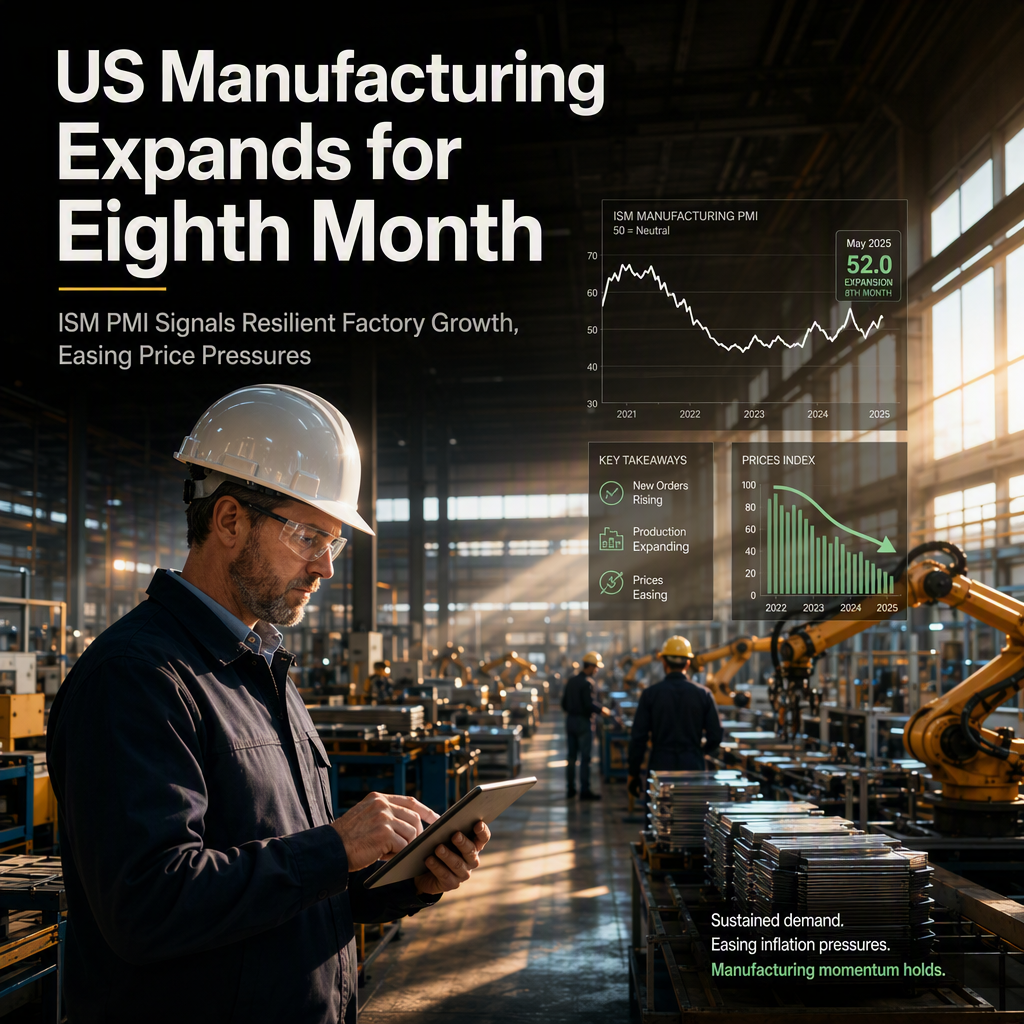
Attention is focused on the upcoming release of the August ISM Manufacturing Purchasing Managers Index (PMI), a key indicator of US manufacturing sector activity and a significant barometer for the broader economy. Market expectations are for the headline index to decline slightly to 55.2 in August from 55.6 in July, which would still mark the eighth consecutive month with the index above the critical 50 level that separates expansion from contraction. This suggests that US manufacturing activity continues to expand despite ongoing challenges [1].
In July, the manufacturing sector reached levels not seen in over four years, with business activity remaining in expansion territory for the seventh consecutive month. The New Orders component rose to a two-month high of 56.7, indicating solid demand, while the Prices Paid Index fell to 71.1 from 73, marking the third consecutive month of easing price pressures and signaling a gradual cooling of inflation in the sector. The Employment Index also improved, rising to 52.8 from 49.7, the highest reading since August 2022, reflecting better hiring conditions [1].
A reading above 50 on the ISM Manufacturing PMI is generally interpreted as a sign of expansion in factory activity, while a reading below 50 indicates contraction. Historically, sustained levels above 42.5 are still consistent with growth in the overall US economy [1].
Market implications hinge on the report's outcome. A stronger-than-expected PMI would likely boost market confidence in the resilience of the US economy, supporting equities and broader risk sentiment. However, the impact on the US Dollar is less clear; a robust report could reinforce expectations that the Federal Reserve will maintain restrictive interest rates for longer, which may support the currency. Conversely, a weaker-than-expected reading could raise concerns about the sector's momentum despite the broader economy's resilience [1].
CONCLUSION
The upcoming ISM Manufacturing PMI is anticipated to show continued expansion in US factory activity, with markets closely watching for signs of demand, employment, and price trends. While a strong report could bolster market sentiment and support the US Dollar, a weaker outcome may heighten concerns about the manufacturing sector's strength. Investors are likely to react to both the headline figure and underlying components for further direction.