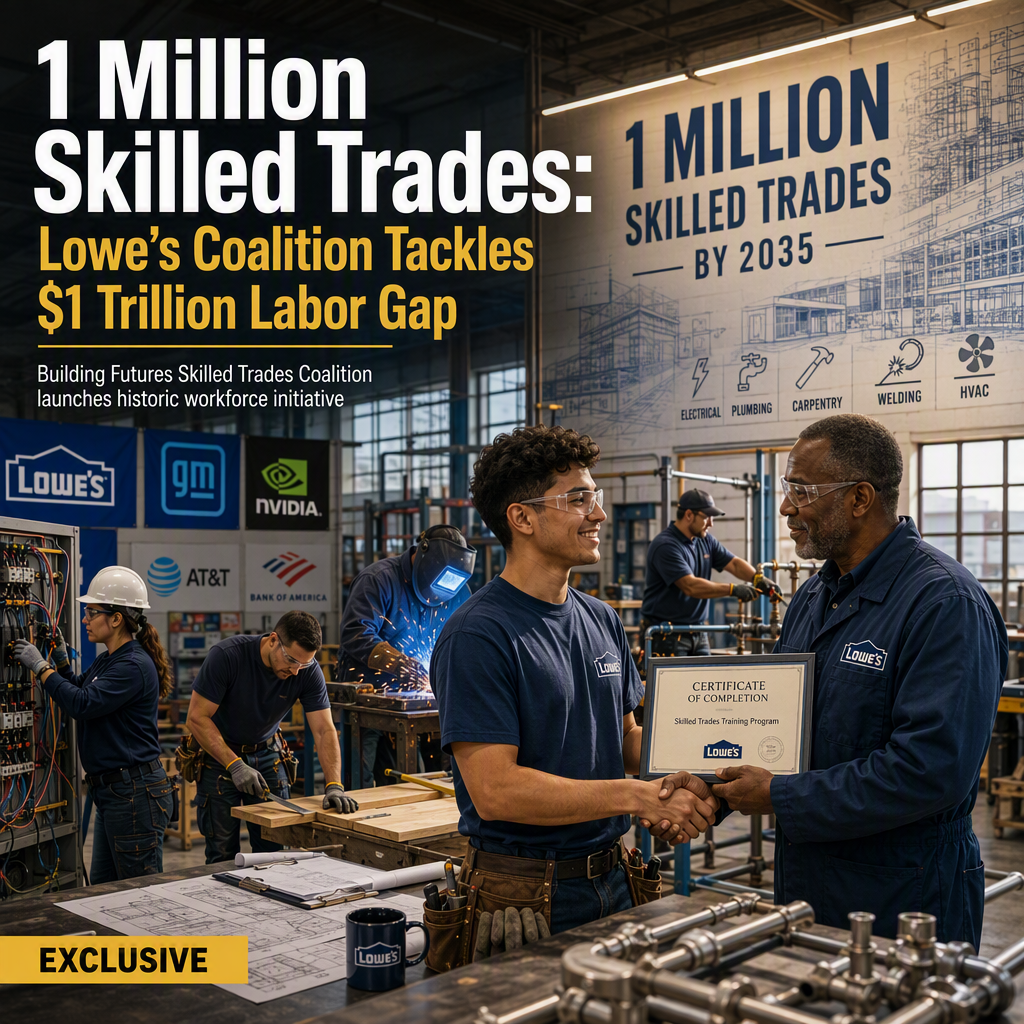
Lowe's announced a significant initiative on Tuesday, partnering with over 75 businesses, educators, workforce organizations, and industry leaders—including Nvidia, General Motors, AT&T, and Bank of America—to form the Building Futures Skilled Trades Coalition. This coalition aims to train and certify 1 million skilled tradespeople by 2035, addressing the acute shortage of skilled workers in the United States [1]. Janice Dupré, executive vice president of human resources and chair of the Lowe's Foundation, highlighted that the U.S. economy is currently facing a shortage of 2 million skilled trades workers, resulting in an estimated $1 trillion annual impact [1].
The coalition is described as the nation's largest cross-sector effort to tackle this labor gap. Lowe's previously launched an initiative four years ago to train 250,000 workers, but recognized the need for a broader approach due to the scale of the problem [1]. Dupré emphasized that the skilled trades workforce is shrinking, with only two new entrants for every five retirees, largely because younger adults have increasingly pursued college degrees instead of skilled trades careers [1].
The initiative aims to provide accessible pathways to higher-paying jobs with less debt and shorter training periods. Some skilled trades programs can be completed in as little as 90 days, while more in-depth certifications may take up to six months, often at a low cost. Dupré noted that master plumbers and electricians can earn six-figure salaries, underscoring the economic opportunity available in these fields [1].
While the announcement did not specify immediate market reactions, the coalition's scale and the involvement of major corporations suggest potential long-term benefits for workforce development and economic infrastructure. The effort is positioned as a solution to restore communities, support infrastructure, and fill critical roles in the economy [1].
CONCLUSION
Lowe's and its partners are launching a large-scale coalition to address the skilled trades labor shortage, aiming to train 1 million workers by 2035. The initiative targets a $1 trillion annual economic gap and offers accessible, high-paying career opportunities. This collaborative approach could have meaningful long-term impacts on workforce development and economic resilience.