
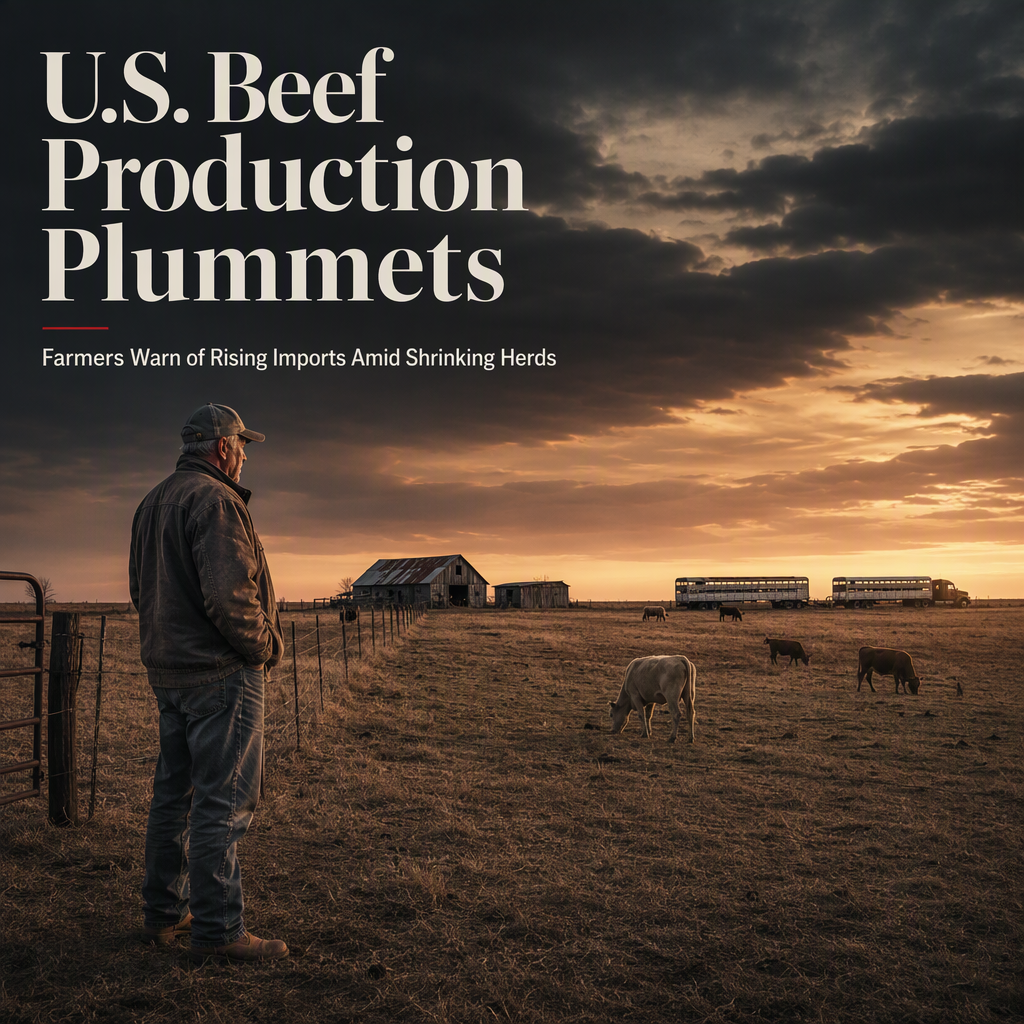
U.S. domestic beef production has experienced a significant decline, with commercial output totaling approximately 14.4 billion pounds from January through July 2026, compared to about 15.2 billion pounds during the same period in the previous year, according to U.S. Department of Agriculture (USDA) data [1]. The number of cattle commercially slaughtered also dropped, falling from roughly 17.5 million in the first seven months of 2025 to 16.2 million during the same period this year [1].
Will Harris, a fourth-generation cattle farmer and owner of White Oak Pastures in Bluffton, Georgia, attributed the shrinking cattle numbers to years of financial pressure on farmers, which has led many to liquidate their herds [1]. Harris stated, "Cattle farmers have for so long not made a profit that they have liquidated their herds, and the numbers are just not here anymore" [1]. Despite higher cattle prices, Harris noted that these have not incentivized producers to expand their operations as seen in previous cycles, citing the high costs associated with land, equipment, and livestock as significant barriers to entry and expansion [1].
Harris also expressed concern about the U.S. becoming increasingly dependent on foreign beef, stating, "What is happening is that the United States is becoming a larger and larger net importer of beef" [1]. The USDA confirms that the U.S. both imports and exports beef, with trade patterns influenced by domestic production, consumer demand, and global markets [1].
The article highlights a shift in farming practices, with Harris moving away from conventional methods toward regenerative agriculture due to concerns about the long-term effects of chemical fertilizers, antibiotics, and growth-promoting technologies on his land and community [1].
No specific market reactions or analyst forecasts are provided in the article. However, the combination of declining domestic production, high prices, and increased reliance on imports suggests ongoing pressure on the U.S. beef market [1].
CONCLUSION
U.S. beef production is declining sharply due to reduced cattle herds and persistent financial challenges for farmers, leading to higher prices and increased reliance on imports. The market faces continued supply constraints, with no immediate signs of herd expansion or relief for consumers. These trends point to sustained volatility and upward pressure on beef prices.