
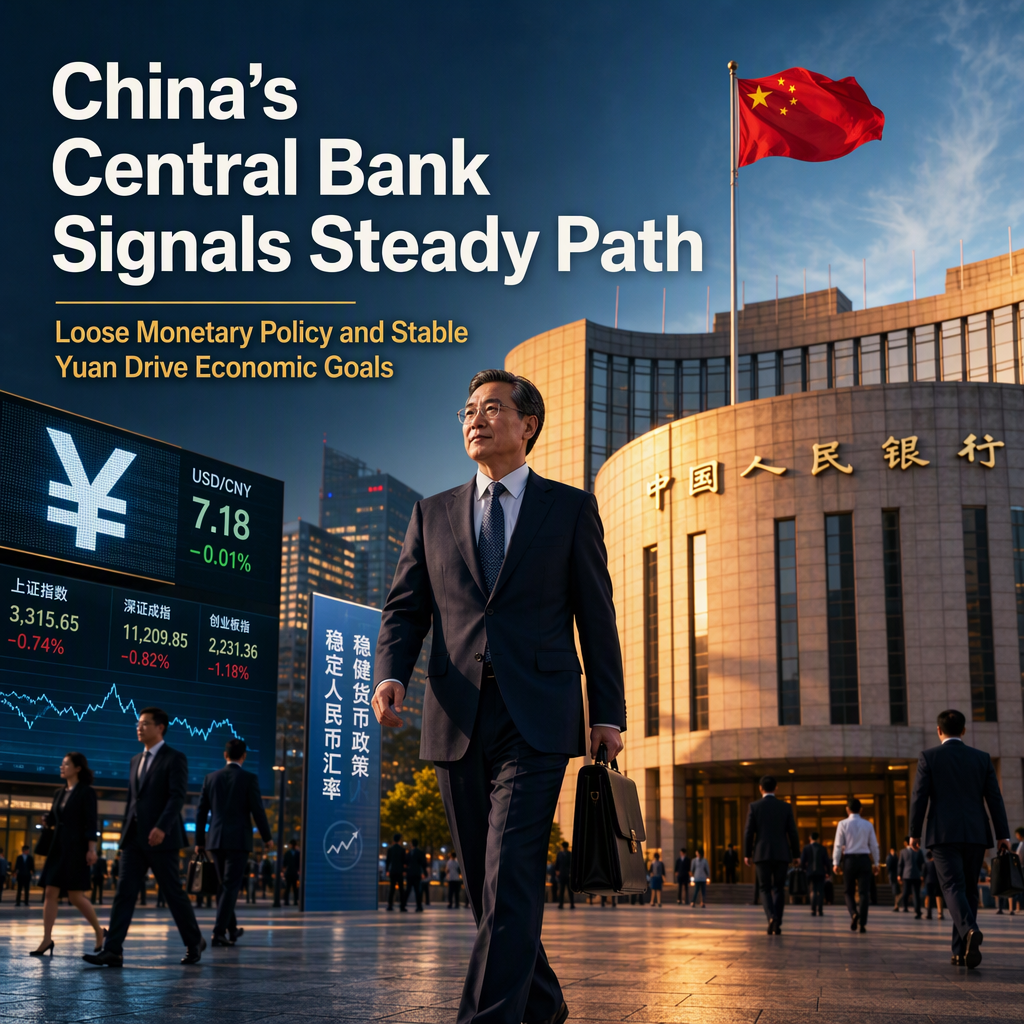
The People's Bank of China (PBoC) announced on Thursday its intention to intensify counter-cyclical adjustments and maintain an 'appropriately loose' monetary policy, as reported by Reuters [1]. The central bank emphasized its commitment to aligning the growth of social financing and money supply with the country's economic growth and price-level targets [1].
On the foreign exchange front, the PBoC reiterated its goal to keep the Chinese Yuan (CNY) exchange rate broadly stable at what it described as a 'reasonable and balanced level' [1]. The central bank also stated it would guide large banks to play a leading role in supporting the real economy and strengthening their capital positions [1]. Additionally, the PBoC highlighted its ongoing efforts to reform its monetary policy operational framework [1].
The article further explains that the PBoC employs a variety of monetary policy tools, including the seven-day Reverse Repo Rate, Medium-term Lending Facility, foreign exchange interventions, and the Reserve Requirement Ratio. The Loan Prime Rate (LPR) is noted as the benchmark interest rate, which directly influences loan and mortgage rates, as well as the exchange rate of the Chinese Renminbi [1].
No specific market reactions, analyst opinions, or forward-looking statements beyond the PBoC's own guidance were provided in the article [1].
CONCLUSION
The PBoC's reaffirmation of a loose monetary policy and commitment to a stable Yuan signals ongoing support for China's economic growth and price stability objectives. While no immediate market reactions were noted, the central bank's guidance suggests a continued accommodative stance in the near term.