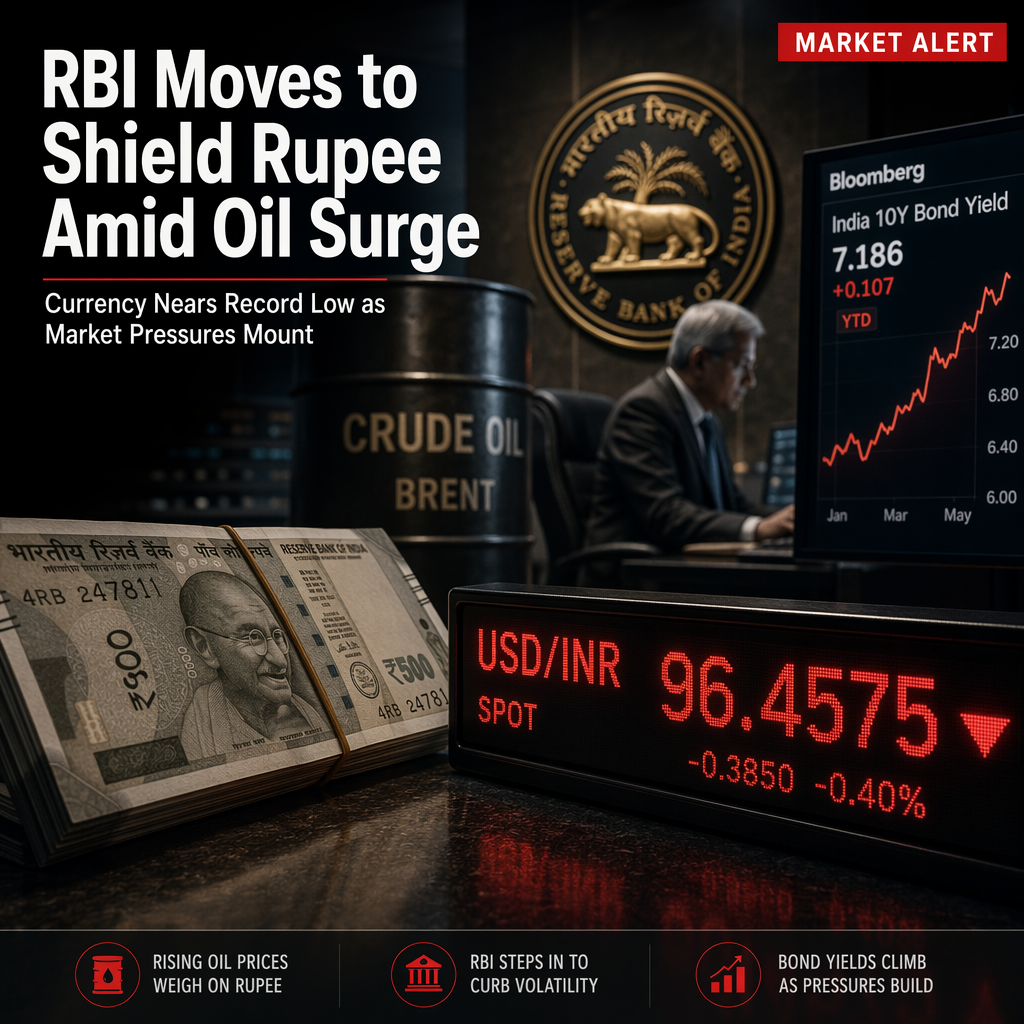
The Reserve Bank of India (RBI) has taken active measures to support the Indian Rupee (INR) as the USD/INR exchange rate approached its all-time low, according to BNY’s Geoff Yu. The RBI intervened in both onshore and offshore foreign exchange markets, selling US dollars to stabilize the rupee after it slipped as much as 0.2% to 96.4575 per dollar, nearing the record low of 96.965 set in late May [1].
In addition to direct market intervention, Indian authorities have implemented policy adjustments aimed at attracting foreign currency inflows. These include easing rules for domestic bond investment and encouraging dollar deposits from non-resident Indians. However, these measures have not been sufficient to fully counteract the increased demand for US dollars from importers and the external pressure caused by higher crude oil prices [1].
The pressure on the rupee has also led to a rise in benchmark 10-year government bond yields, which increased by 4 basis points to 6.82% as currency weakness persisted [1]. The combination of FX intervention and policy tweaks highlights the authorities’ efforts to manage currency volatility and external vulnerabilities, but market sentiment remains cautious due to ongoing importer demand and elevated oil prices [1].
CONCLUSION
The RBI’s interventions and policy adjustments have so far only partially mitigated the downward pressure on the rupee, which remains close to its record low against the US dollar. Persistent importer demand for dollars and high oil prices continue to challenge the currency, resulting in rising bond yields and cautious market sentiment.