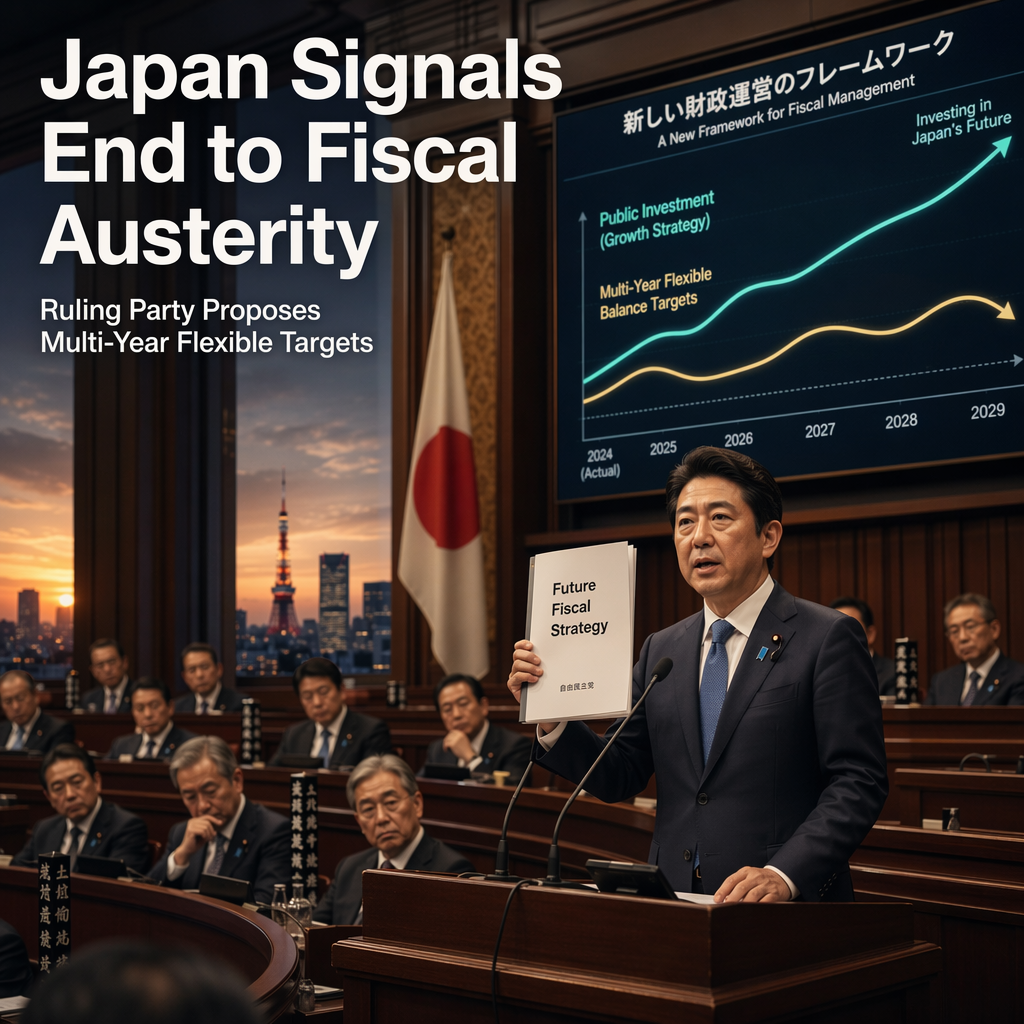
Japan's ruling Liberal Democratic Party (LDP) is considering a significant shift in fiscal policy by proposing to manage the country's primary balance over multiple years instead of adhering to strict annual targets. This draft proposal was compiled by an LDP body on Thursday as part of broader policy changes advocated by Prime Minister Sanae Takaichi [1].
The draft policy specifically calls for an end to what it describes as a long-term trend of 'excessive austerity and insufficient investment in the future.' Instead of focusing on annual primary balance targets, the proposal recommends adopting more flexible fiscal discipline measures, such as debt-to-GDP ratios, to guide government spending and investment decisions [1].
This policy shift reflects the government's intention to prioritize future-oriented investments and reduce the emphasis on rigid austerity measures. The move could have implications for Japan's fiscal management and market perceptions of the country's commitment to fiscal discipline, though no immediate market reaction or analyst opinions were cited in the article [1].
CONCLUSION
Japan's ruling party is advocating for a more flexible approach to fiscal management, moving away from annual primary balance targets in favor of multi-year oversight and debt-GDP ratios. This marks a potential end to a period of strict austerity, signaling a shift toward increased investment in the country's future.