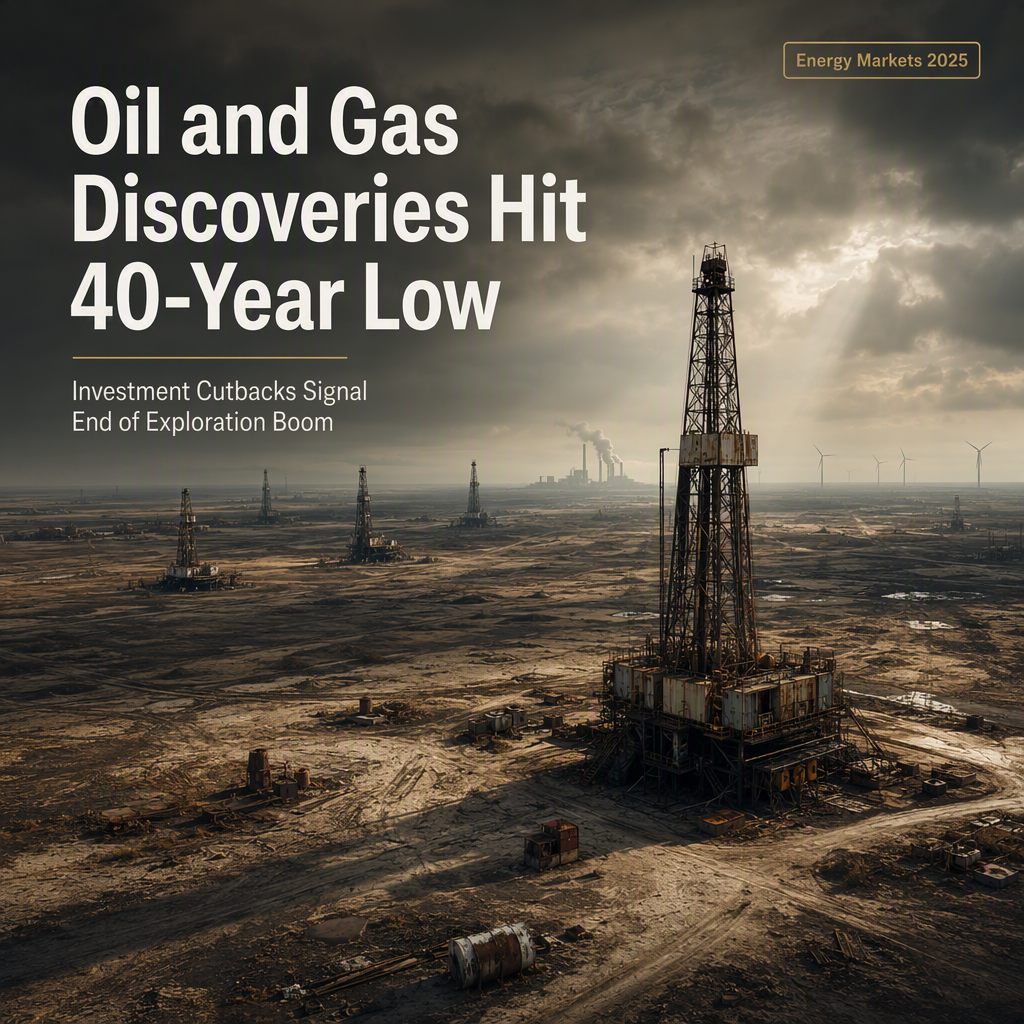
In 2025, the number of new oil and gas field discoveries worldwide dropped to the lowest level in more than 40 years, with the volumes at those fields falling to just one-tenth of the peak recorded in 2013 [1]. This decline is attributed to reduced investment by global energy companies, who have scaled back exploration activities due to a combination of factors, including the global push toward decarbonization and increasing technical challenges in finding new reserves [1]. Companies are now seeking oil and gas fields in previously unexplored regions, such as Japan's Inpex natural gas development in Australia, as traditional areas become less fruitful [1].
Industry analysts have warned that this slowdown in exploration could have significant long-term consequences for global energy supply and market stability, particularly as existing fields mature and production declines [1]. The sharp reduction in discovered reserves highlights a major shift in industry investment priorities, raising concerns about future supply constraints and the potential for increased price volatility [1].
While the article does not provide specific trading advice or technical price levels, the overall market sentiment is one of concern regarding the shrinking number of new discoveries and its implications for energy markets [1].
CONCLUSION
The dramatic drop in global oil and gas discoveries signals a shift in industry priorities and raises concerns about future supply and market stability. Analysts warn that continued investment cutbacks could lead to increased price volatility and supply constraints as existing fields mature. The market takeaway is a heightened sense of caution regarding the long-term outlook for energy supply.