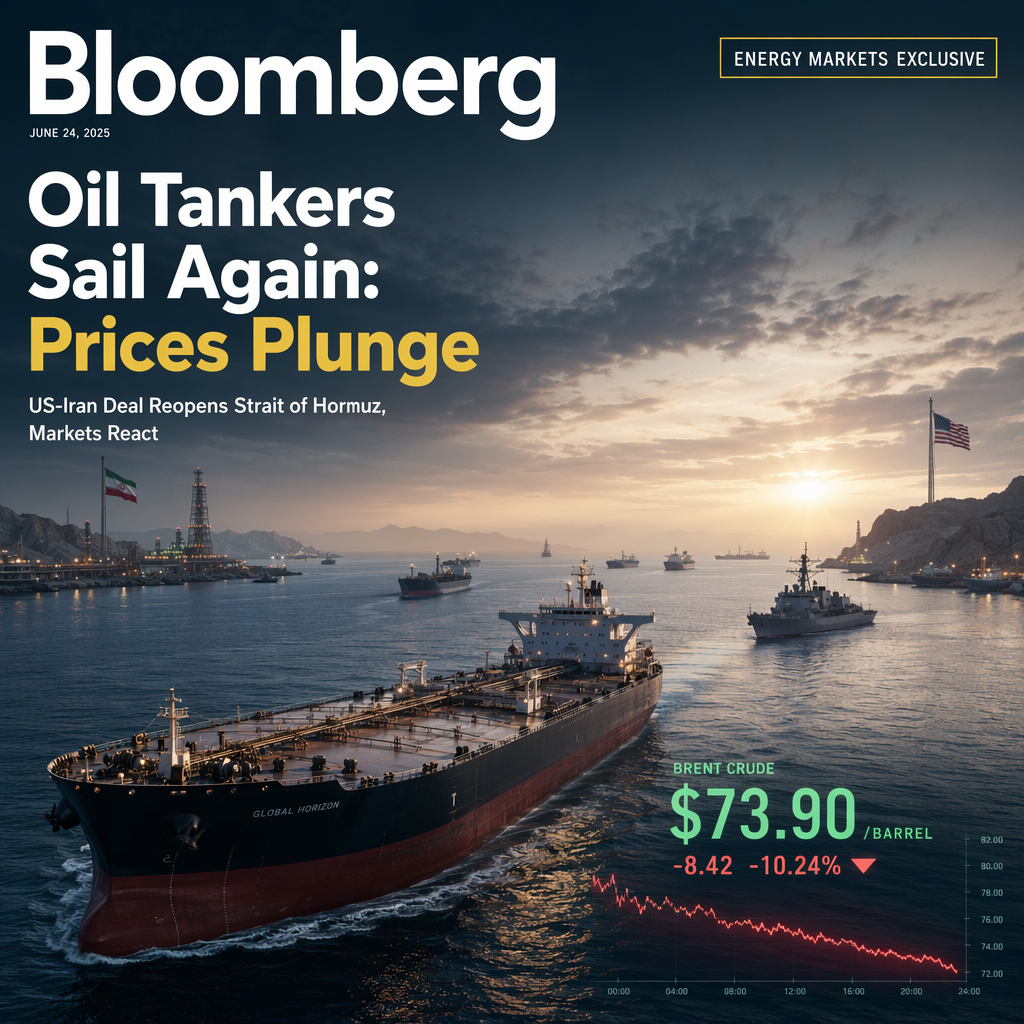
Following the signing of a memorandum of understanding between the United States and Iran to halt the war, at least six oil tankers were confirmed to have sailed through the Strait of Hormuz, marking a resumption of ship traffic through this critical oil transit route [1][2]. The United States lifted its blockade on Iran as the interim deal took effect, though several key issues between the two countries remain unresolved [2]. Crude oil prices fell to below $74 per barrel for the first time since early March, reaching their lowest level since the war began on February 28 [1][2]. Analysts attributed the price drop to expectations that exports through the strait, which handles about one-fifth of global oil supply, could return to normal in the coming months [2].
Despite the reopening, many ships remained near the Strait of Hormuz as of June 18, and analysts cautioned that energy prices could remain elevated for months due to ongoing supply disruptions and lingering uncertainty [1]. Technical analysis indicated support for oil prices around $73 per barrel and resistance at $76, with expectations of continued volatility until shipping patterns stabilize [1]. Japan's Cosmo Oil decided to maintain its reliance on Middle East oil sources, reflecting confidence in the strait's stability, and Japan's naphtha imports have recovered to 80% of pre-war levels [1].
The deal between the US and Iran includes a 60-day negotiation period to resolve the status of Iran's nuclear program and establishes a $300 billion reconstruction fund for Iran, along with other financial incentives [2]. Iran will continue to exert control over the strait by issuing permits and directing traffic during this period, though no fees will be charged [2]. US Vice President JD Vance will lead the American delegation in talks, aiming to limit Tehran's long-range missiles [2].
However, the broader regional situation remains tense. Israel continued its military operations against Hezbollah in Lebanon, raising doubts about the durability of the US-Iran agreement [2]. Some US political figures criticized President Donald Trump for conceding too much in the deal, while Iran's Supreme Leader Ayatollah Mojtaba Khamenei described the US position as desperate and warned that nuclear negotiations would be difficult [2]. Market participants are advised to closely monitor geopolitical developments and shipping data, as any renewed disruption could quickly reverse the current downward trend in oil prices [1].
CONCLUSION
The resumption of oil tanker traffic through the Strait of Hormuz and the sharp drop in oil prices reflect market optimism following the US-Iran deal. However, ongoing regional conflicts and unresolved issues in the agreement suggest that volatility and uncertainty may persist in energy markets. Traders and analysts remain cautious, watching for further developments that could impact supply and prices.