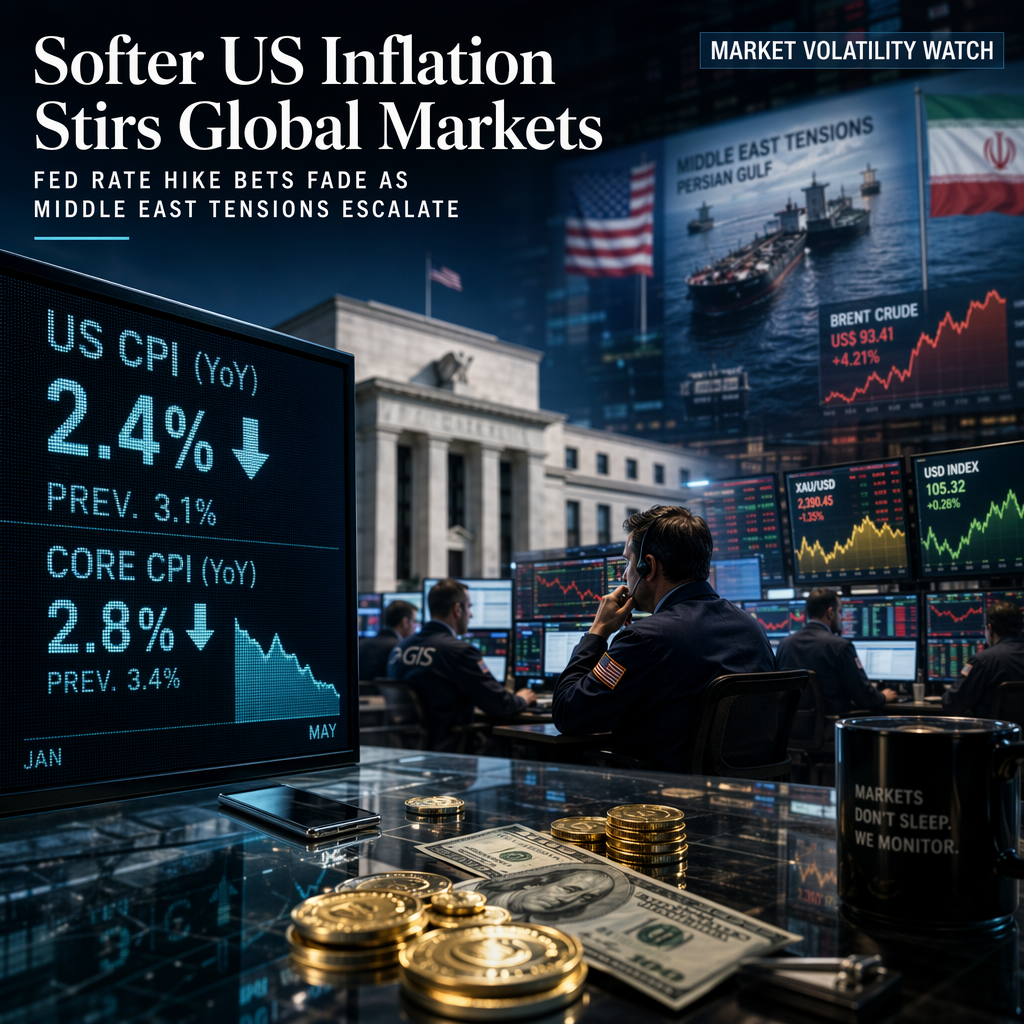
US inflation cooled sharply in June, with headline CPI falling 0.4% month-on-month and the annual rate slowing to 3.5% from 4.2%. Core CPI was flat at 0% month-on-month, and the annual core rate eased to 2.6% from 2.9% [1]. This softer-than-expected inflation data reduced expectations for immediate Federal Reserve rate hikes, briefly lifting Gold (XAU/USD) above $4,100 on Tuesday before it eased to around $4,036, down 0.40% on the day [1]. The US Dollar lost about 0.3% on a trade-weighted basis and against the euro following the inflation release, as markets priced out roughly half a hike by year-end, dropping anticipated hikes from 1.7 to 1.2 [2]. According to the CME FedWatch Tool, the probability of a July Fed rate hike has fallen to 16.6% from 31% last week, with an 85% chance the Fed will leave rates unchanged at its July meeting and a 60% probability of a September hike [1][4].
Fed officials maintained a hawkish stance despite the positive inflation surprise. Chair Kevin Warsh reiterated the commitment to bringing inflation back to the 2% target, stating, "no tolerance for persistently elevated inflation," and noted that "the June CPI was positive relative to expectations" but emphasized that "there is still plenty of work to do" [1]. Fed Governor Waller, while considered hawkish, acknowledged that the labor market is not as tight as in 2022 and that current wage increases of around 3.5% are consistent with 2% inflation due to improving productivity, supporting a wait-and-see approach [2]. Commerzbank’s Volkmar Baur highlighted that AI-related investment and productivity gains are likely to reinforce this stance, keeping the Dollar under pressure, though rising oil prices may slow the adjustment [2].
Geopolitical tensions in the Middle East have intensified, with US President Trump threatening to target Iranian civilian infrastructure unless negotiations resume, and Iran’s IRGC threatening to block energy routes and halt all Middle East energy exports in response to US actions. Iranian authorities reported 30 fatalities from recent US strikes [1][3]. These developments have driven oil prices 17% above early July highs and contributed to risk aversion in currency markets, supporting the US Dollar’s safe-haven status and weighing on the British Pound (GBP/USD), which dipped below 1.3400 [3].
Despite the risk-off mood in some markets, the New Zealand Dollar (NZD/USD) held onto Tuesday’s gains around 0.5820 amid a risk-on environment, reflecting optimism from easing Fed hike fears. S&P 500 futures traded 0.25% higher, indicating strong demand for riskier assets [4]. Technical analysis shows NZD/USD maintaining a constructive tone above key retracement levels, with bullish momentum reinforced by a rising RSI at 60.8 [4]. Market participants are now awaiting the US Producer Price Index (PPI) data, due at 12:30 GMT, for further clues on the inflation outlook [1][3][4].
CONCLUSION
Softer US inflation data has reduced expectations for imminent Fed rate hikes, leading to volatility across gold, currency, and equity markets. However, persistent inflation risks and escalating Middle East tensions have kept the Fed’s hawkish outlook intact and supported the US Dollar’s safe-haven appeal. Investors are now focused on upcoming PPI data for additional direction, as geopolitical risks and oil prices remain key market drivers.