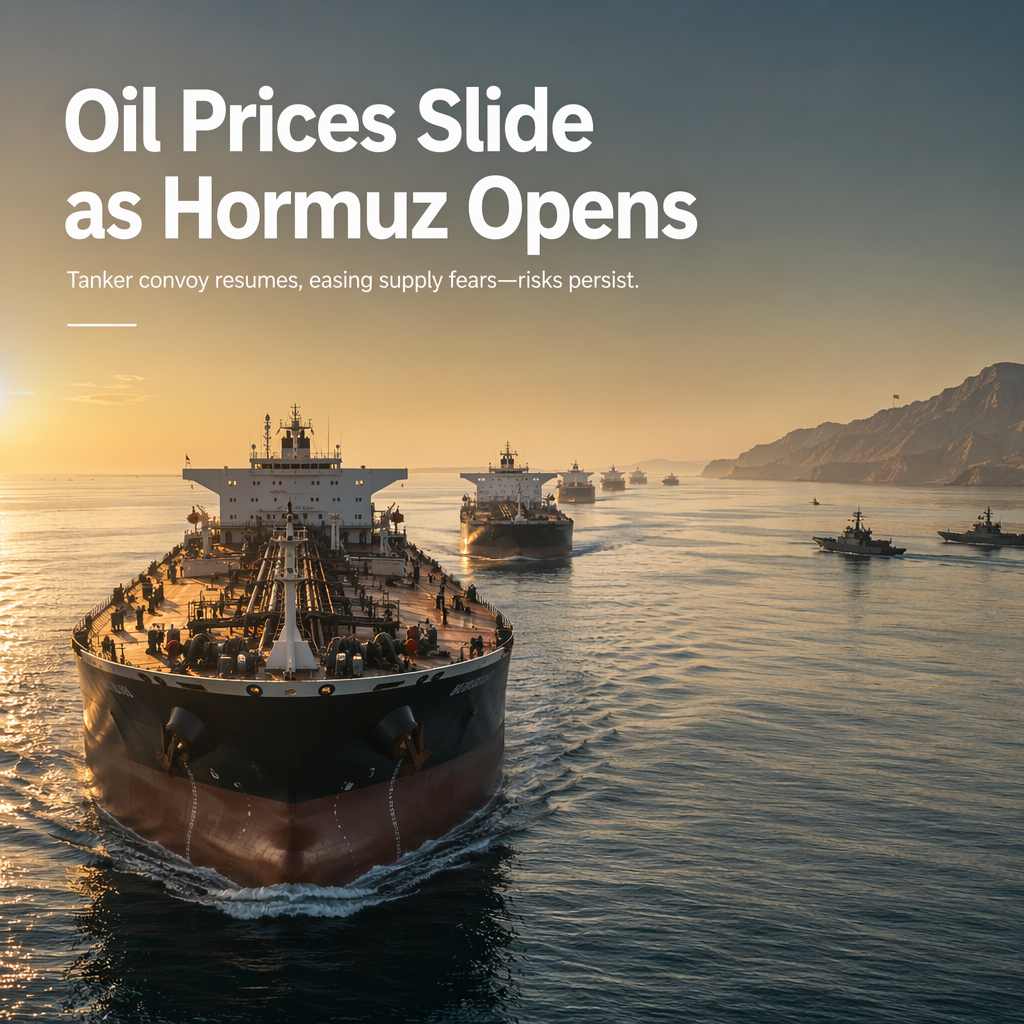
Oil prices declined on Thursday, with both Brent and WTI crude erasing gains made during the recent Middle East conflict, as supply concerns eased following the resumption of tanker traffic through the Strait of Hormuz [1]. U.S. crude for August delivery fell 1.66% to around $69 a barrel, while Brent dropped 1.79% to below $73 a barrel, returning to levels last seen before the war began in late February [1].
The improvement in supply outlook comes after more than 20 oil tankers, carrying approximately 35 million barrels of crude, passed through the Strait of Hormuz since the U.S. and Iran reached an agreement to reopen the vital shipping route [1]. These non-Iranian vessels had been stranded in the Persian Gulf for over three months due to Tehran's closure of the waterway earlier in the conflict, and most are expected to reach Asian destinations by early August [1].
Citi analysts noted that the worst may be over for commodities curve-carry strategies, which suffered during the U.S.-Iran war as oil's front-end price spike disrupted trades. The bank now sees a major de-escalation as its base case and forecasts Brent crude to fall to $60 to $65 a barrel over the next six to twelve months as flows through the Strait of Hormuz normalize. Citi also advised that any temporary summer rally in oil prices should be 'faded' [1].
Despite the improved outlook, risks remain. Iran's Islamic Revolutionary Guard Corps Navy warned on Thursday that safe passage through the Strait of Hormuz would only be allowed via routes designated by Tehran, and that vessels violating these instructions would 'face action' [1].
CONCLUSION
The resumption of tanker traffic through the Strait of Hormuz has eased oil supply concerns, leading to a significant drop in prices and a more optimistic outlook from analysts. However, ongoing warnings from Iran's military indicate that risks to the key shipping route persist, suggesting that market volatility could return if tensions escalate.