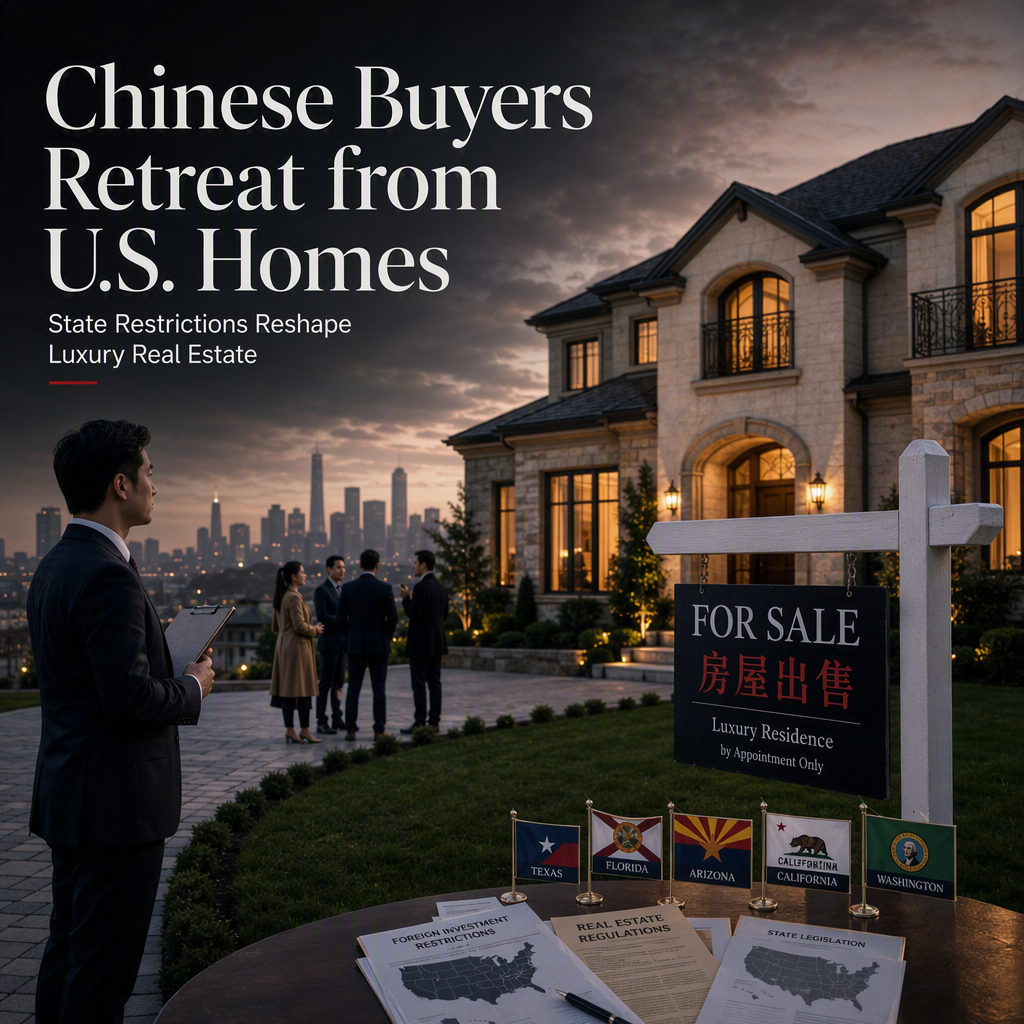
Chinese buyers have significantly reduced their purchases of U.S. homes in the 12 months through March, falling from their previous position as the top foreign buyers to third place, according to recent data. This decline is attributed to new state-level laws in several U.S. states that prohibit or severely limit property purchases by individuals from certain countries, including China [1].
Despite the drop in transaction volume, Chinese buyers who are able to navigate these legal hurdles continue to purchase higher-priced properties compared to other foreign groups, maintaining strong demand for premium real estate. The most common reasons cited by foreigners who did not make a purchase were the inability to find suitable properties and affordability concerns [1].
Market analysts note that these restrictions are reshaping the landscape for Chinese buyers, leading to increased selectivity and a shift toward markets with fewer regulatory barriers. Real estate professionals warn that ongoing regulatory changes could further impact both the luxury segment and broader market sentiment, potentially causing volatility in local markets that previously relied on international demand, particularly from China [1].
Quotes from industry experts highlight the uncertainty: "Chinese buyers have traditionally been a driving force in the luxury real estate sector, but state restrictions are creating new challenges for both buyers and sellers," said a New York-based agent. The article does not provide specific trading advice or technical chart analysis, but emphasizes that state-level restrictions are likely to affect price levels, demand, and long-term investment strategies in the U.S. property market [1].
CONCLUSION
State-level restrictions have led to a notable decrease in Chinese purchases of U.S. homes, especially in the luxury segment. While demand for premium properties remains strong among Chinese buyers who can navigate legal barriers, ongoing regulatory changes are expected to increase market volatility and reshape investment strategies. The U.S. real estate market may see continued shifts in foreign demand as these restrictions persist.