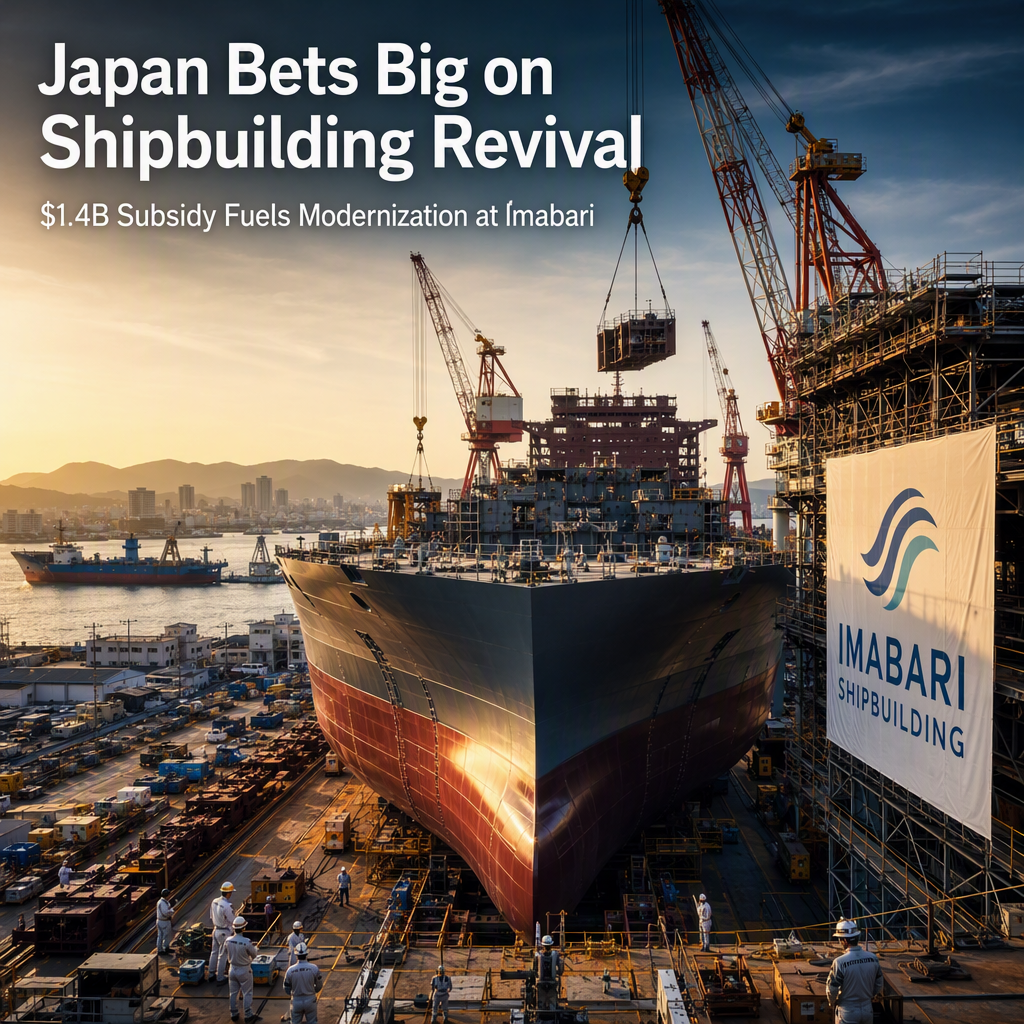
The Japanese government has announced a substantial subsidy package totaling 213.1 billion yen ($1.37 billion) over a ten-year period to support Imabari Shipbuilding and other domestic shipbuilders, marking the first round of aid for capital spending in the industry [1]. This initiative is part of a broader revival plan aimed at doubling Japan's shipbuilding capacity by 2035 [1]. Key capital investments supported by the subsidies include new cranes and hull block facilities at Imabari Shipbuilding, reflecting a focus on modernization and efficiency improvements [1].
The government's move represents its first concrete step to revitalize the domestic shipbuilding sector, which has been struggling against intense competition from South Korea and China [1]. The financial support is expected to encourage Japanese shipbuilders to modernize their operations and enhance their competitiveness in the global market [1].
While the announcement does not specify immediate market reactions or analyst opinions, the scale and long-term nature of the subsidies suggest a significant positive impact on the industry, potentially positioning Japanese shipbuilders for future growth [1].
CONCLUSION
Japan's $1.4 billion subsidy plan signals a strong commitment to revitalizing its shipbuilding industry and enhancing global competitiveness. The targeted capital investments and industry-wide support are likely to drive modernization and efficiency, with high market impact expected over the coming decade. This initiative positions Japanese shipbuilders for sustained growth amid international competition.