
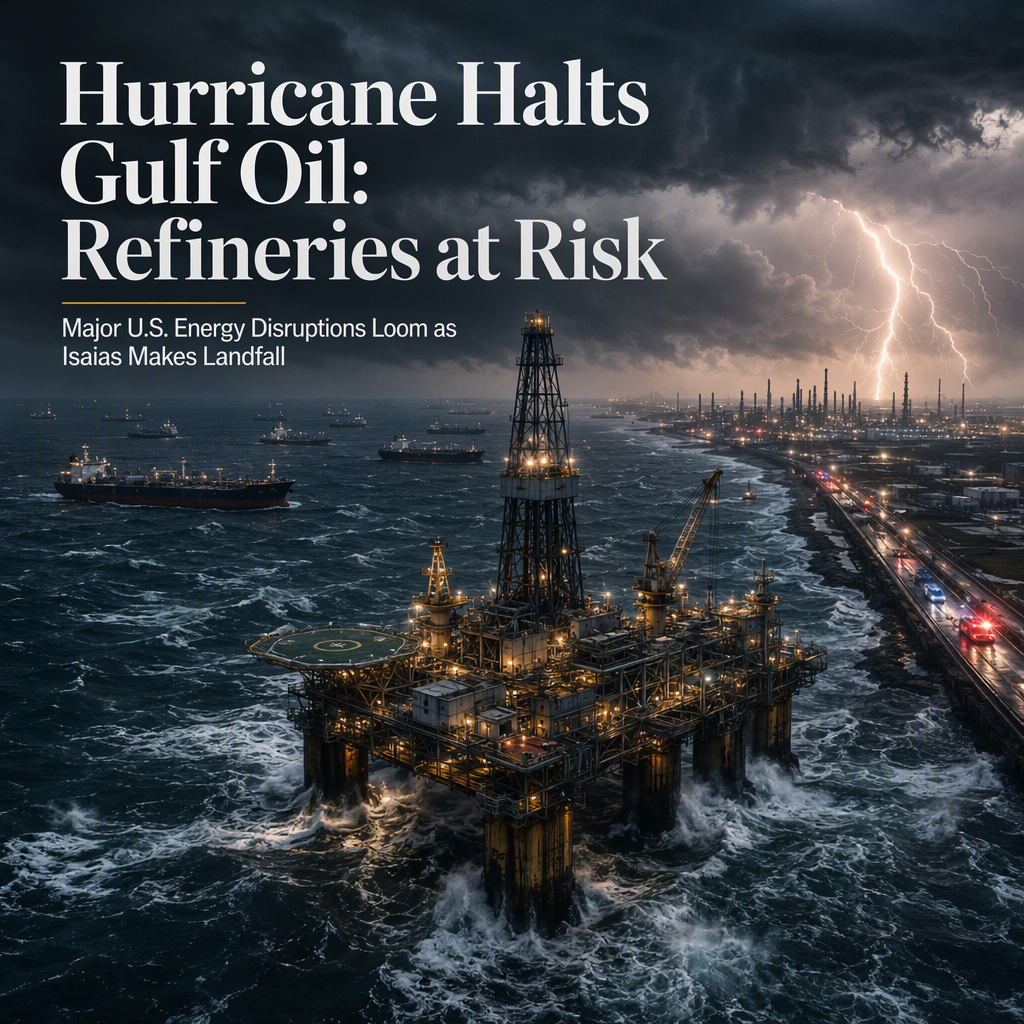
Hurricane Isaias is significantly disrupting U.S. crude oil production in the Gulf of Mexico, with oil companies shutting in about 1.3 million barrels per day, which represents roughly 63% of total U.S. Gulf production, according to the Bureau of Safety and Environmental Enforcement [1]. The hurricane, classified as a Category 3 storm with maximum sustained winds of 120 miles per hour, is heading toward Mississippi, Alabama, and the Florida panhandle, and is expected to make landfall Friday night or early Saturday, as reported by the National Hurricane Center [1].
The storm poses a threat to approximately 2.4% of U.S. refining capacity, specifically targeting Chevron's refinery in Pascagoula, Mississippi, and a Vertex Energy refinery in Saraland, Alabama, which together can produce 466,000 barrels per day [1]. Both facilities are under hurricane warnings, though Chevron's Pascagoula refinery remained operational as of Thursday, according to spokesperson Ross Allen, while Vertex officials were not immediately available for comment [1]. Analyst Andy Lipow noted that the greatest risks to these refineries are loss of electricity or flooding damage, and if shutdowns occur, restarts could take one to two weeks if no significant damage is sustained [1].
The disruption comes at a time when fuel markets are already tight globally. Diesel supplies are at their lowest seasonal level since the Energy Information Administration began reporting in 1982, and diesel prices have surged due to ongoing conflicts in Eastern Europe and the Middle East, which have reduced refining capacity and led to export bans and attacks on refineries [1]. U.S. refiners have been exporting diesel to Europe to capitalize on high profit margins [1].
Refineries on the Gulf Coast are currently operating at 95% capacity, leaving little room to compensate for any lost production [1]. Analyst Kevin Book explained that outages at Gulf refineries typically result in higher fuel prices and lower crude prices, as refineries reduce crude demand and fuel output simultaneously [1]. Lipow also warned of tanker traffic disruptions, which could delay deliveries of crude oil to refineries and shipments of gasoline, jet fuel, and diesel, particularly affecting Florida [1].
CONCLUSION
Hurricane Isaias has caused major disruptions to U.S. Gulf oil production and threatens to further tighten already stressed fuel markets by endangering key refineries. With refineries operating near full capacity and global diesel supplies at historic lows, any additional outages could exacerbate fuel price volatility and supply challenges.