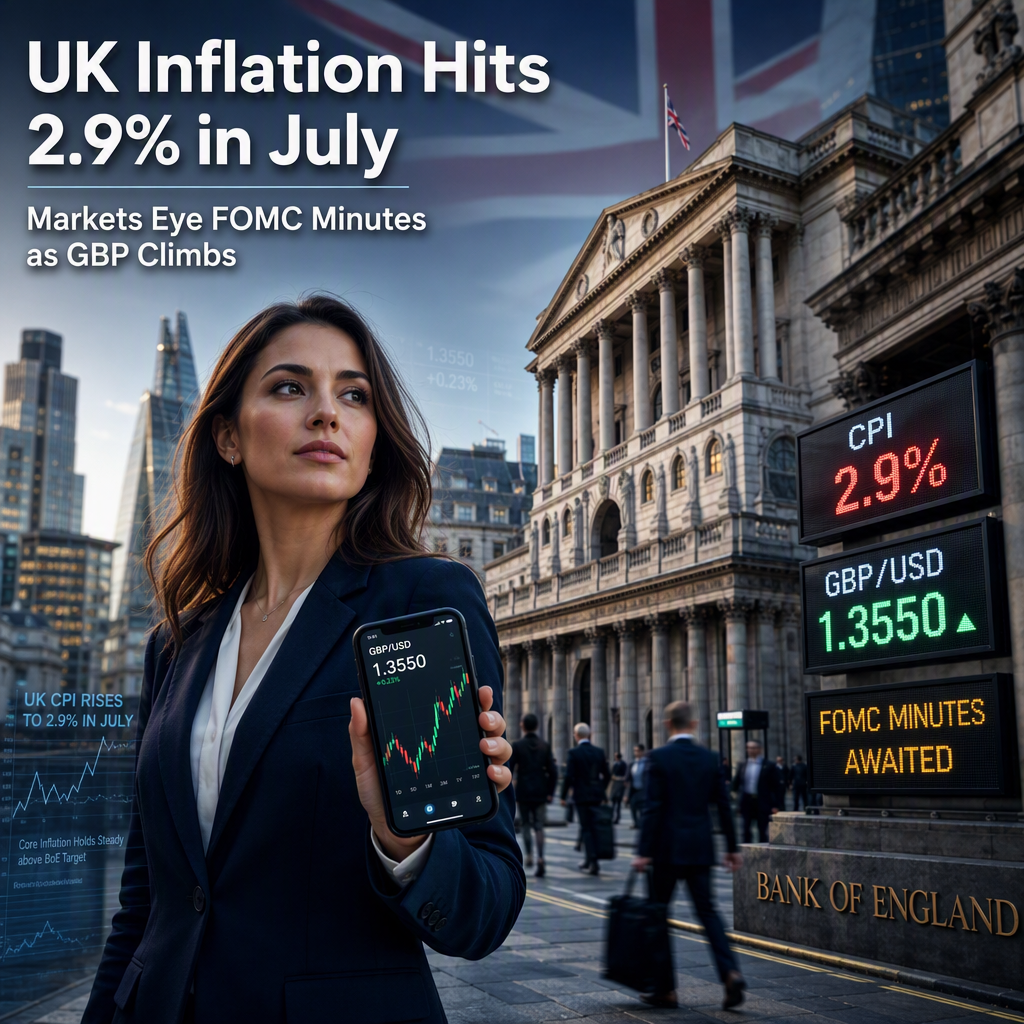
The UK's Office for National Statistics (ONS) reported that annual inflation, as measured by the Consumer Price Index (CPI), increased to 2.9% in July from 2.6% in June, aligning with analysts' expectations. The core CPI also rose by 2.6%, unchanged from June's figure. Meanwhile, the Producer Price Index - Input declined by 1.7% on a monthly basis, contrary to market forecasts for no change. Following these data releases, GBP/USD edged higher in the European morning, trading around 1.3550 after closing marginally lower on Tuesday [1].
In the broader currency markets, the US Dollar (USD) was the weakest against the Euro this week, with a 0.25% decline, and also fell 0.19% against the British Pound. The USD Index ended Tuesday with small gains due to a risk-averse market atmosphere but struggled to maintain momentum early Wednesday, remaining near 99.50 as US stock index futures stayed flat [1].
Analysts at ING noted that the unresolved conflict in the Middle East is keeping energy prices elevated, which is contributing to upward pressure on long-end US Treasury yields. They observed that longer-dated US Treasuries found some demand at yields above 5.30% but cautioned that risks remain skewed to the upside, indicating persistent upward pressure at the back end of the US yield curve [1].
Market participants are now shifting their focus to the upcoming release of the Federal Reserve's July policy meeting minutes, which could provide further direction for currency and bond markets [1].
CONCLUSION
UK inflation data for July met expectations, with headline CPI rising to 2.9% and core CPI steady at 2.6%. The GBP showed modest strength following the release, while the USD remained rangebound ahead of the FOMC minutes. Market attention is now turning to US monetary policy signals for the next catalyst.