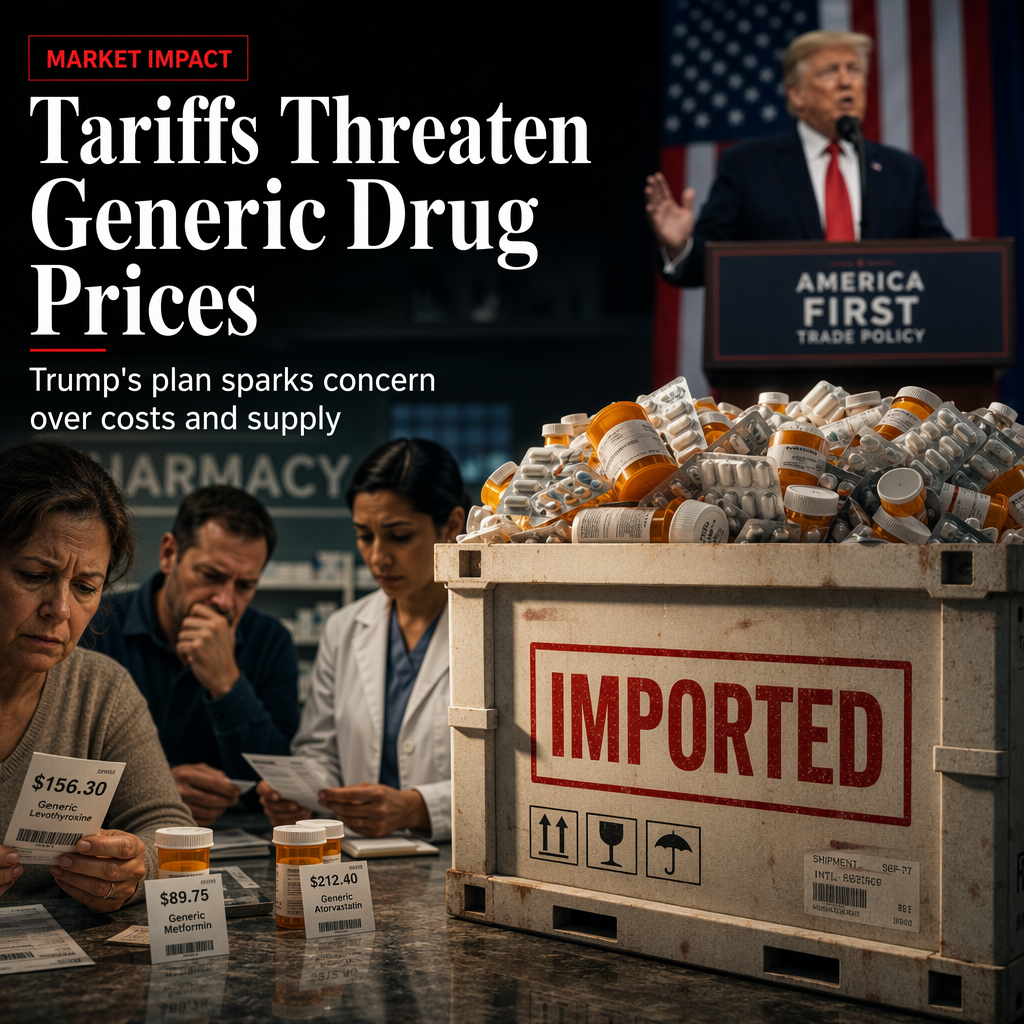
President Donald Trump has announced a proposal to impose tariffs of up to 200% on imported generic medicines, a move that has sparked significant debate regarding its potential impact on drug prices, manufacturers, and the pharmaceutical supply chain [1]. Under the plan, imported generic drugs would be exempt from tariffs for two years, after which duties would rise to 100% for one year and then to 200%, providing manufacturers with a window to shift production to the United States [1]. The global generic drug industry, currently valued at nearly $500 billion, is the primary target of this policy [1].
The Trump administration argues that these tariffs will incentivize pharmaceutical manufacturing to return to the U.S. However, industry representatives, including John Murphy III, president and CEO of the Association for Accessible Medicines, contend that longstanding structural challenges—beyond trade policy—limit domestic production capacity [1]. Murphy noted that while the industry has expanded its U.S. supply chain presence over the past two years, persistent issues with purchasing and reimbursement for many generic medicines continue to discourage further domestic manufacturing investment [1].
Generic drugmakers, who account for about 90% of U.S. prescriptions but a smaller share of overall drug spending due to lower prices, operate on thin margins and face intense price competition [1]. Industry experts warn that tariffs as high as 100% or 200% would leave manufacturers with few options: absorb the increased costs, pass them on to customers, invest in U.S. production, or withdraw uneconomic products from the market [1]. Namit Joshi, chairman of an unspecified organization, stated that building a domestic generic drug manufacturing ecosystem would require a minimum of four to five years [1].
The market implications are significant, as the proposed tariffs could lead to higher prices for generic medicines and potential disruptions in supply if manufacturers are unable or unwilling to shift production domestically within the proposed timeline [1].
CONCLUSION
Trump's proposed tariffs on imported generic drugs could dramatically reshape the pharmaceutical landscape, with the potential for higher prices and supply challenges if manufacturers cannot quickly adapt. Industry leaders emphasize that structural barriers, not just tariffs, hinder domestic production, and warn that building a robust U.S. generic drug manufacturing base will take several years. The market is likely to experience heightened uncertainty and volatility as stakeholders assess the feasibility and impact of these sweeping trade measures.