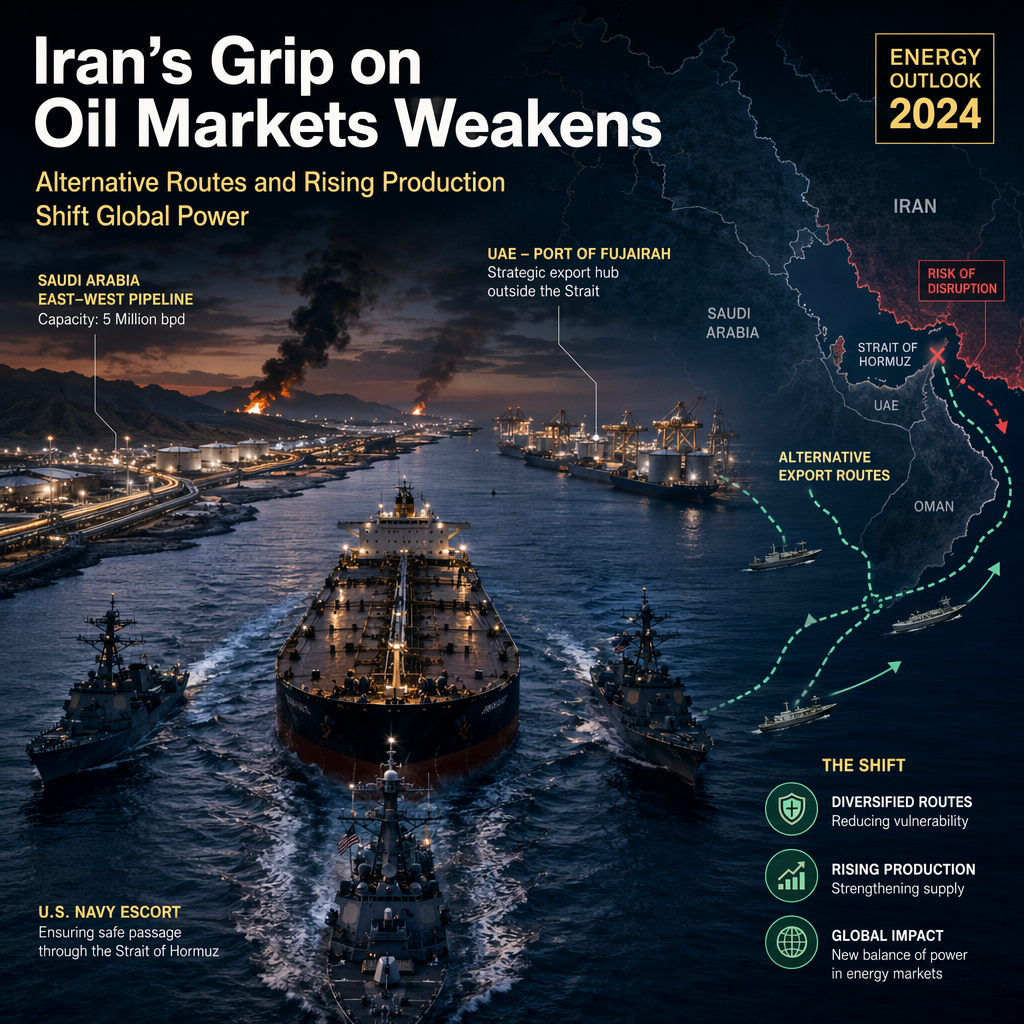
Iran's recent attacks on commercial shipping in the Strait of Hormuz have caused oil prices to rise sharply, underscoring Tehran's continued ability to disrupt global energy markets in the short term [1]. However, the incident has also raised questions about whether Iran's leverage over the United States via the strategic waterway is waning, as global oil production increases and alternative export routes become more prominent [1].
Vice President JD Vance, in a late June interview, emphasized the importance of global oil supplies in negotiations with Iran, referencing a memorandum of understanding (MoU) aimed at stabilizing the world's oil economy [1]. Following the renewed attacks, President Donald Trump declared the U.S.–Iran MoU and ceasefire "over" and warned that the U.S. could impose a naval blockade on Iran if such attacks persist [1].
The U.S. Energy Information Administration recently forecast that worldwide crude production and trade flows will rebound to near pre-conflict levels by the end of the year, with most previously shut-in production expected to return during the first quarter of 2027 [1]. The agency anticipates that increased global production will lower crude oil and gasoline prices in the coming months, despite ongoing instability in the Gulf region [1]. This outlook is supported by OPEC+ production increases, Gulf producers restoring output, and the expansion of infrastructure that allows crude exports to bypass the Strait of Hormuz [1].
Saudi Arabia and the United Arab Emirates have enhanced their export capabilities through the East-West Pipeline and the port of Fujairah, respectively, enabling millions of barrels of crude to avoid the Strait altogether [1]. Commercial shipping has also adapted, with more vessels shifting to routes along Oman's coastline [1]. While these developments do not eliminate Iran's ability to influence markets, they are making it increasingly difficult for Tehran to use oil prices as leverage in negotiations with the United States [1].
CONCLUSION
Iran's recent actions in the Strait of Hormuz have demonstrated its capacity to cause short-term oil price spikes, but structural changes in global oil logistics are reducing its long-term leverage. Increased production, alternative export routes, and adaptive shipping patterns are expected to mitigate Iran's influence over energy markets moving forward.