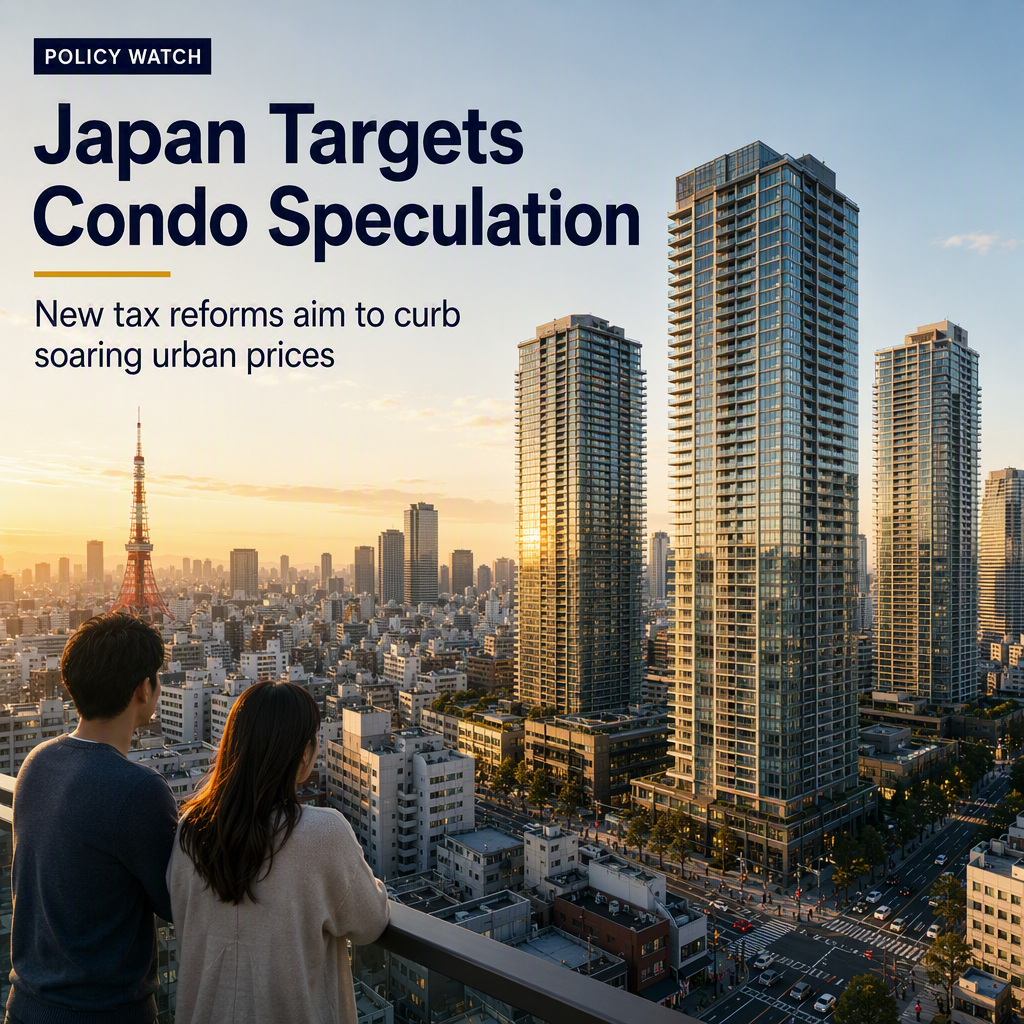
Japan's land ministry is planning to propose changes to the tax code for fiscal 2027, aiming to discourage speculative condominium transactions that have been driving up urban home prices, according to Nikkei Asia [1]. The initiative is a response to concerns that regular homebuyers are being priced out of the market, as average prices for new condominiums in central Tokyo reached a record high in the first half of 2026 [1].
The proposed measures are intended to address mounting evidence that speculative investment is contributing to soaring property values, particularly in major urban centers such as Tokyo and Osaka [1]. Authorities are considering modifications to the tax treatment of condo sales, with sources indicating that a review of capital gains tax rules or other measures targeting short-term resale activity may be included [1]. These changes would aim to make speculative flipping less attractive by increasing the tax burden on quick turnover transactions [1].
The plan reflects growing public concern about housing affordability, as record-high prices for new condominiums in central Tokyo have made it increasingly difficult for first-time buyers and families to enter the market [1]. This move is part of a broader effort by Japanese policymakers to rein in property speculation and ensure more sustainable growth in the real estate sector [1].
Details of the tax code changes are still under discussion, and no specific figures or percentages regarding the proposed reforms have been disclosed [1].
CONCLUSION
Japan's land ministry is taking steps to address property speculation by considering tax reforms targeting short-term condo sales. While the specifics are still under discussion, the initiative signals a medium market impact and reflects heightened concern over housing affordability in urban centers. The proposed changes aim to create a fairer environment for regular buyers and promote sustainable real estate growth.