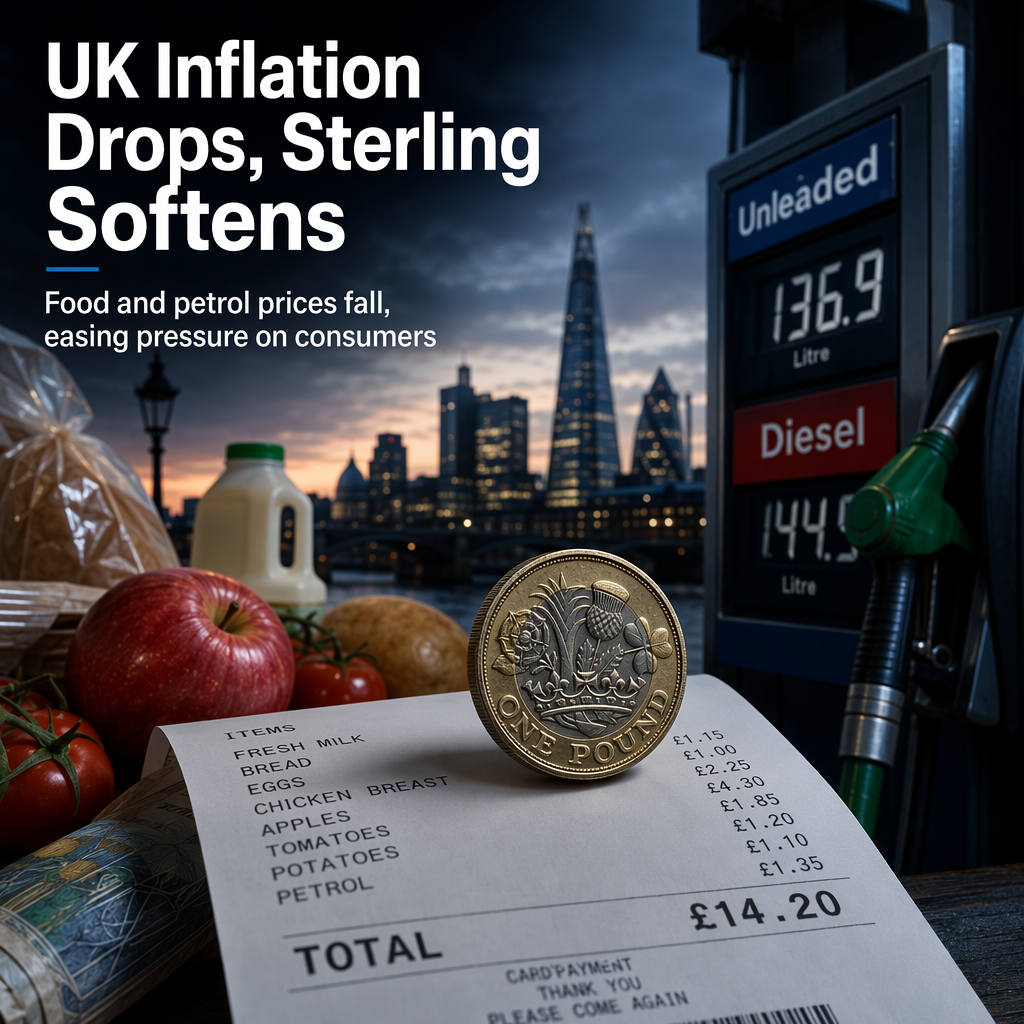
According to ING's UK economist James Smith, underlying inflation in the United Kingdom is showing positive signs despite a slightly higher-than-expected core inflation reading for June [1]. Headline inflation fell more than anticipated, driven by a second consecutive monthly decline in food prices—a rare occurrence that was not expected, especially following the Iran war [1]. Both food and petrol prices decreased in outright terms between May and June, which is seen as favorable news for the Bank of England, particularly for those concerned about the impact of these prices on consumer inflation expectations [1].
Additionally, the Bank of England's preferred 'core services' inflation metric, which excludes volatile and indexed categories, dropped more sharply than overall services inflation, moving from 3.8% to 3.6% [1]. This, combined with low private-sector wage growth, suggests that domestically generated inflation is currently benign [1].
In response to the data, the British Pound weakened slightly, and the EUR/GBP currency pair may have established a significant low at 0.8455 last week [1]. No forward-looking statements or analyst opinions regarding future monetary policy or market direction were provided beyond these observations [1].
CONCLUSION
The latest UK inflation data points to easing price pressures, particularly in food and petrol, which has contributed to a softer Sterling. Market reaction was modest, with the Pound weakening slightly and EUR/GBP potentially setting a notable low. The overall trend suggests benign domestic inflation, reducing immediate concerns for the Bank of England.