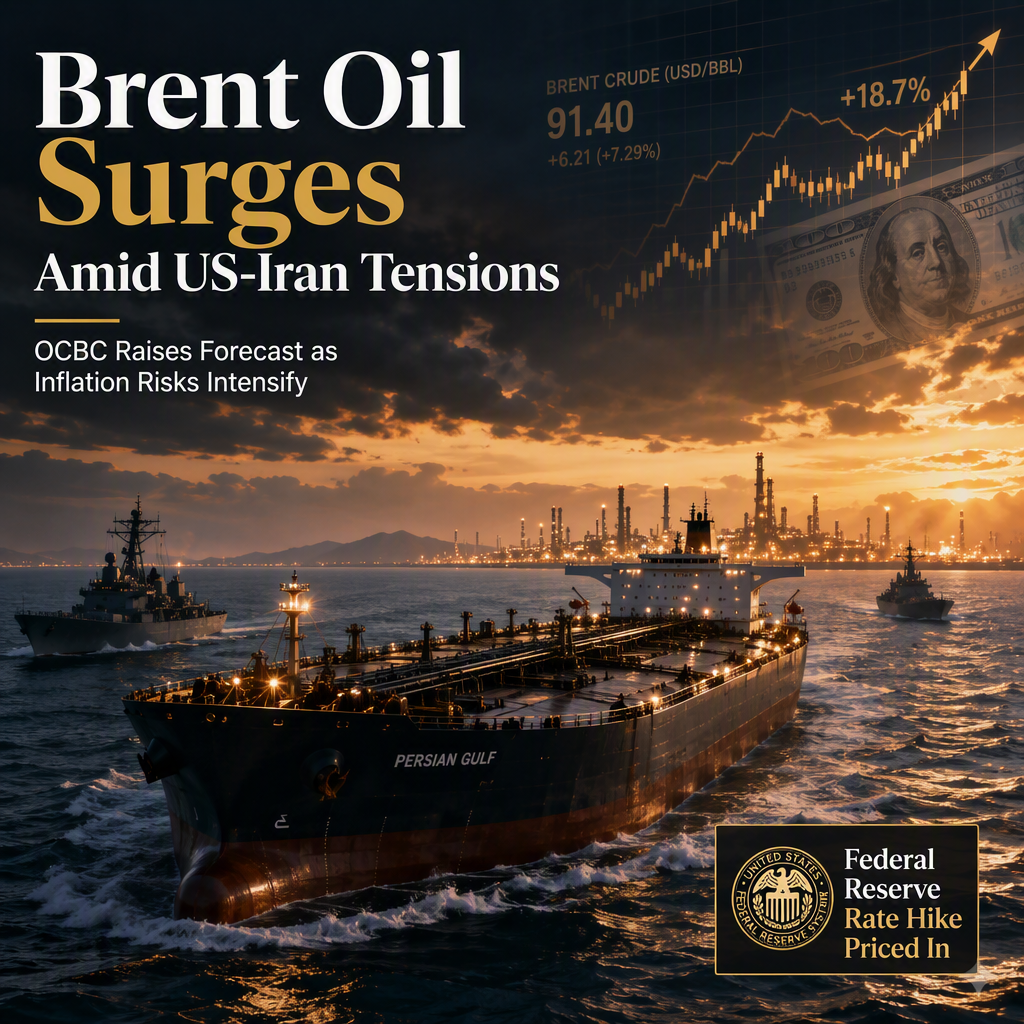
According to OCBC analysts Sim Moh Siong and Christopher Wong, renewed tensions between the US and Iran have led to an increase in oil prices and revived global inflation concerns [1]. The escalation follows US strikes on Iran in response to attempted attacks on commercial shipping, which lifted energy prices overnight [1]. This comes after a brief period of relative calm that had allowed Persian Gulf producers to move crude through the Strait of Hormuz using a clandestine shuttle system [1].
OCBC has raised its end-2026 Brent crude oil forecast to USD 80 per barrel from the previous USD 75 per barrel, citing expectations of a slower recovery in Middle East supply due to stalled negotiations between the US and Iran on reopening the Strait of Hormuz [1]. The analysts note that the renewed geopolitical tensions have not only lifted oil prices but also increased bond yields and strengthened the US dollar [1].
As a result of these developments, markets are now fully pricing in a Federal Reserve rate hike by October, reflecting heightened inflation risks and the impact of delayed Middle East supply recovery on the energy market outlook [1].
CONCLUSION
Renewed US-Iran tensions have pushed oil prices higher and prompted OCBC to raise its Brent crude forecast, citing ongoing supply constraints and inflation risks. Markets are now anticipating a Federal Reserve rate hike by October, highlighting the broader financial implications of the geopolitical situation.