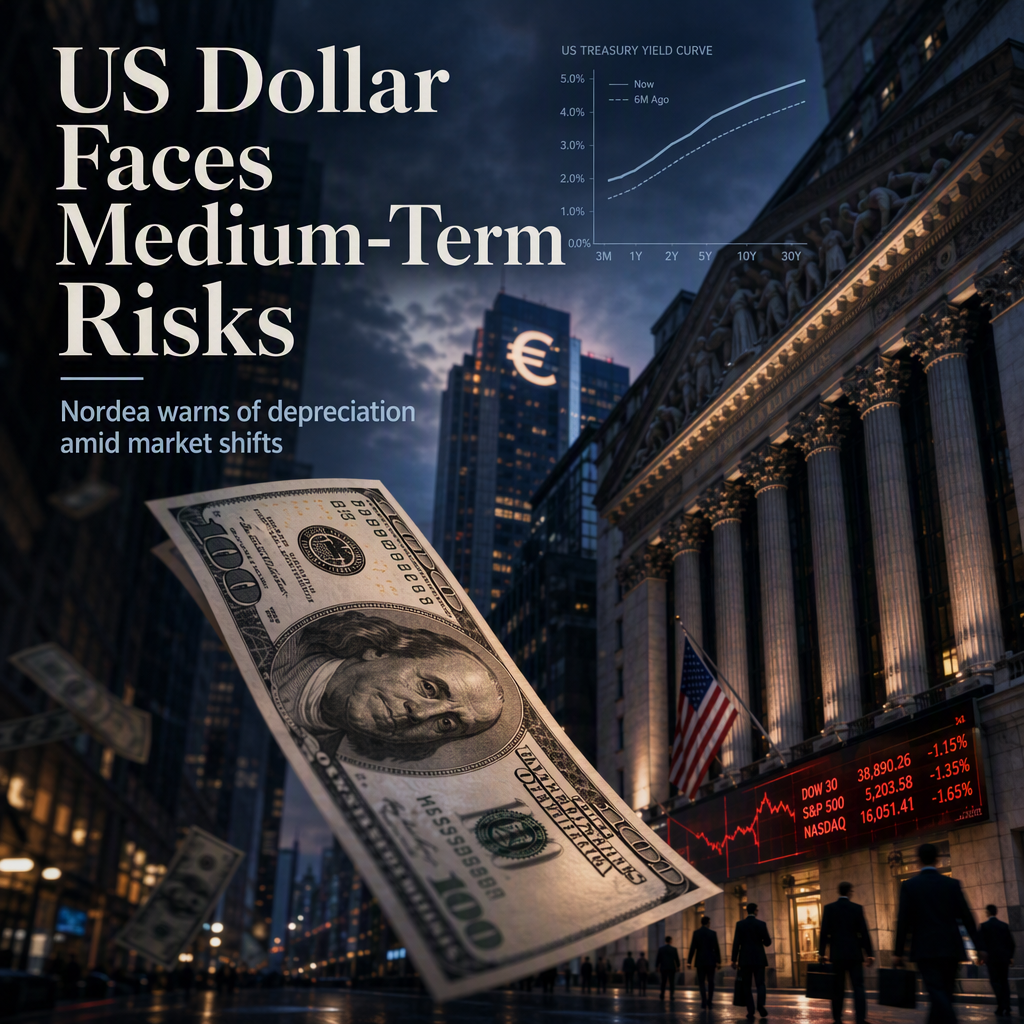
Nordea strategists have highlighted that while the near-term risks for the US Dollar are broadly balanced, the medium-term outlook points towards depreciation. The analysis cites several factors contributing to this view, including recent weaker US economic data, shifting expectations regarding Federal Reserve policy, low foreign exchange volatility, a steepening yield curve, rising term premium risks, and stretched US asset valuations. These elements are expected to weigh on the Dollar and provide support for the EUR/USD exchange rate over time [1].
In the short term, Nordea notes that the Dollar could experience both appreciation and depreciation, depending on incoming US activity data and market expectations for Fed tightening. A rebound in US activity data that leads markets to anticipate renewed Fed tightening could temporarily support the Dollar [1].
However, the strategists maintain that the medium-term risks are skewed towards a weaker Dollar. They expect the US yield curve to steepen further over the next two years, which is anticipated to ultimately put downward pressure on the Dollar. Additionally, concerns about rising fiscal and term premiums, combined with elevated US asset valuations, are seen as factors that will increasingly outweigh the support from a relatively resilient US economy [1].
CONCLUSION
Nordea's outlook suggests that while the US Dollar may remain stable in the near term, medium-term risks are building for depreciation due to a combination of macroeconomic and market factors. Investors should be mindful of these evolving risks as they assess Dollar exposure in the coming years.